
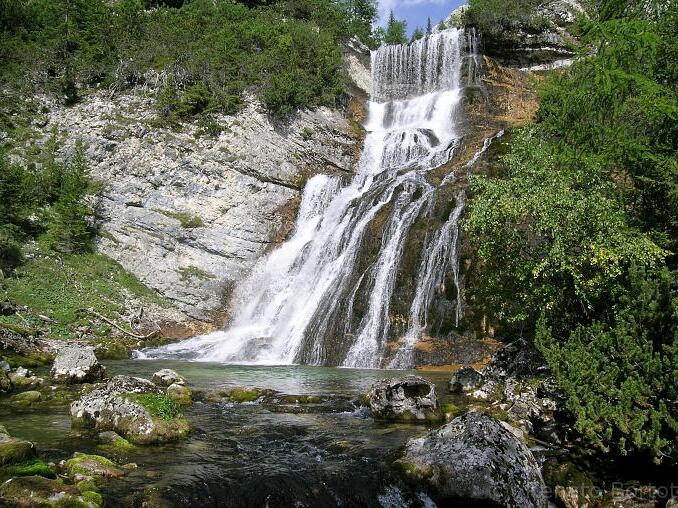

In the heart of the Dolomites, Cascate di Fanes stands as a breathtaking testament to Italy's natural beauty. With a vertical drop of 120 meters, this majestic waterfall is divided into two parts: the Cascate di Fanes di Sotto and the Cascate di Fanes di Sopra, offering visitors not only stunning views but also the unique experience of walking behind the falls. The sound of cascading water mingles with the rustle of alpine trees, creating an enchanting atmosphere that captures the spirit of the Italian Alps.
### History and Origins
The Cascate di Fanes is steeped in both natural and cultural history. The Fanes valley, where the waterfalls are located, is named after the ancient Fanes people, a mythical tribe celebrated in Ladin folklore. This area was once inhabited by the Celtic tribes, who revered the natural landscape and its mystical qualities. The legends of the Fanes, including tales of love, betrayal, and mystical creatures, are still a significant part of the local culture, passed down through generations.
Historically, the region became known for its strategic importance during the Roman Empire as a trade route through the Alps. Today, it is a part of the Fanes-Sennes-Braies Natural Park, established in 2009, which protects the unique biodiversity and geological formations of the area.
### Art and Architecture
While the Cascate di Fanes is a natural wonder, the surrounding landscapes are dotted with traditional Tyrolean architecture. The nearby villages feature rustic wooden chalets and ornate churches, such as the Chiesa di San Giovanni Battista in San Vito di Cadore. The architectural styles here reflect a blend of Gothic and Baroque influences, harmonizing with the stunning mountainous backdrop.
The waterfalls themselves have also inspired numerous artists and photographers, who have sought to capture their beauty. Artists from the Alpine region often depict the falls in various forms, celebrating the interplay of light and water.
### Local Culture and Traditions
The culture surrounding the Cascate di Fanes is rich and vibrant, deeply influenced by the Ladin heritage of the region. Local customs often revolve around agriculture and the changing seasons. One unique tradition is the Sagra del Fanes, held annually in late summer, where locals celebrate with traditional music, dance, and food, honoring the legends of the Fanes people.
Additionally, the area is known for its craftsmanship, particularly in woodworking and textile arts. Visitors may find handmade goods that reflect the rich cultural tapestry of the community, from intricately carved wooden figures to beautifully woven fabrics.
### Gastronomy
After a long hike to the Cascate di Fanes, indulging in the local gastronomy is a must. The cuisine of this region is hearty and flavorful, emphasizing the use of local ingredients. Speck, a type of cured ham, is a staple, often served with polenta and cheese. Another local favorite is canederli, a type of dumpling made from bread, eggs, and cheese, typically served in broth.
For dessert, don't miss the opportunity to try Strudel, a pastry filled with apples, raisins, and spices, accompanied by a cup of rich Italian coffee or a glass of grappa. These culinary delights not only satisfy the palate but also tell the story of the region's agricultural roots and cultural influences.
### Lesser-Known Curiosities
While many flock to the Cascate di Fanes for its beauty, few know that the area is also home to diverse wildlife. The Fanes-Sennes-Braies Natural Park boasts a variety of species, including the elusive chamois and the majestic golden eagle. Birdwatchers and nature enthusiasts will find plenty to marvel at, especially during the early morning hours when the park comes alive with the sounds of wildlife.
Moreover, local legends speak of hidden treasures and mystical beings residing in the mountains surrounding the waterfalls. The Fanes folklore includes tales of enchanted forests and mythical creatures that have fascinated generations, adding an air of mystery to this stunning location.
### Practical Visitor Information
The best time to visit the Cascate di Fanes is during the late spring and early summer when the melting snow creates a spectacular flow of water, enhancing the waterfall's grandeur. Fall also offers breathtaking views as the foliage transforms into vibrant shades of orange and gold.
To reach the waterfalls, drive from Cortina d’Ampezzo north along SS51 to Schluderbach. After about 7.5 kilometers, take a left turn onto a narrow road leading to a small parking area (coordinates: 46.602269, 12.107296). From there, follow the well-marked trail that leads to both the upper and lower parts of the falls.
As you hike, be sure to wear sturdy shoes and carry sufficient water. The trail offers various vantage points, so take your time to soak in the views and capture the beauty of the falls.
To plan a personalized itinerary for your visit, consider using the Secret World app for tailored recommendations.
In a land where nature meets legend, the Cascate di Fanes is not just a destination but a journey into the heart of Italian folklore.


