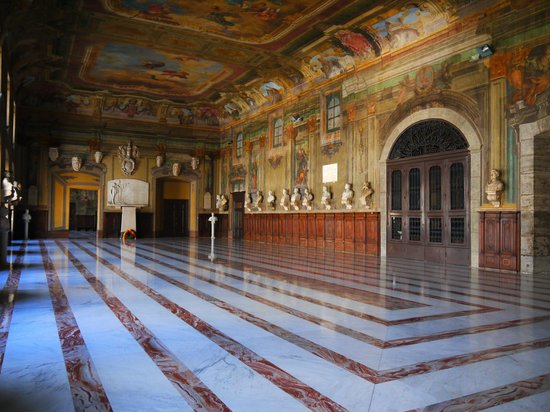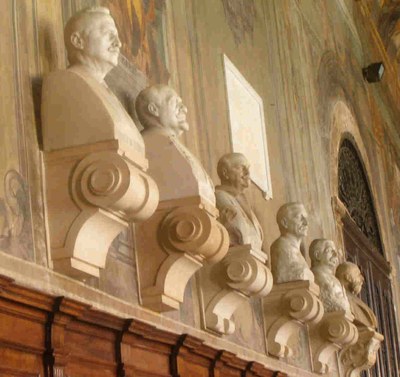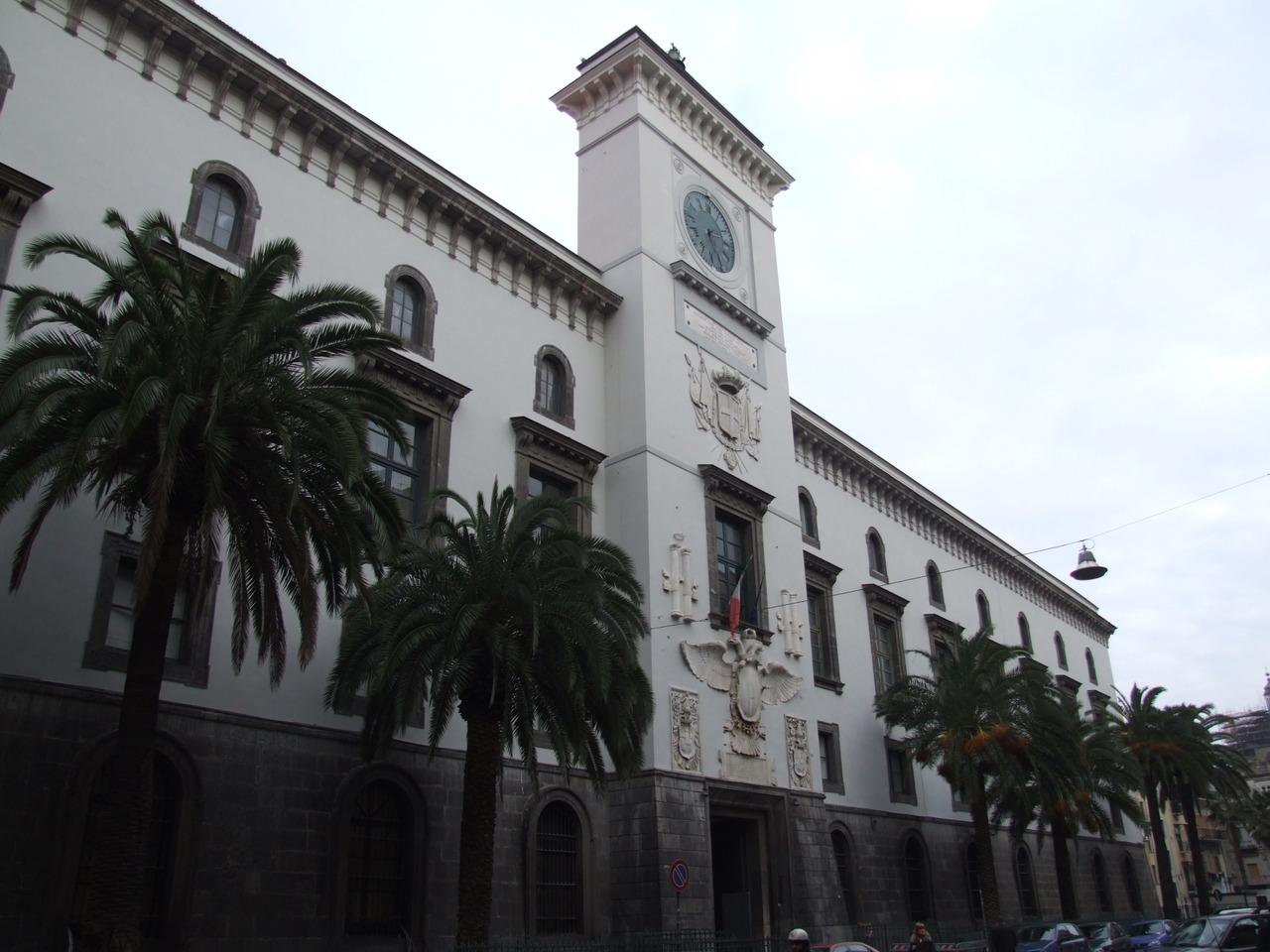


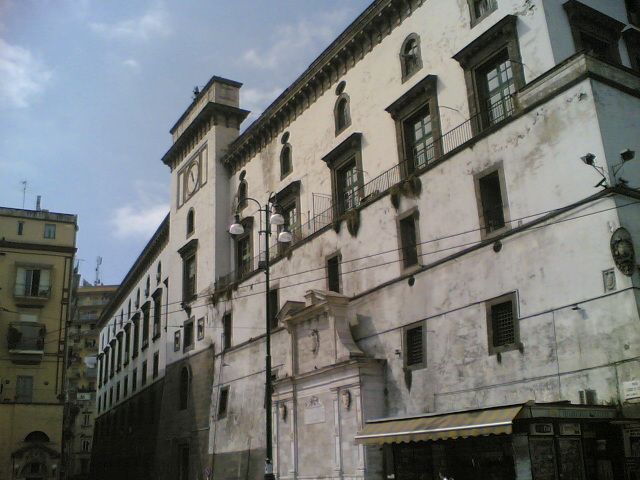
Founded in the second half of the 12th century by Norman princes, the castle was named after the nearby Porta Capuana. According to some ancient sources (Capasso) there must have already existed on that site a fortress from the Byzantine duchy period, which was later restored and enlarged by the Norman king William I known as Malo. In 1231 the castle was enlarged by Frederick II of Swabia and played the role of royal residence even after the construction of Castel Nuovo. In the late 15th century Ferdinand I d’Aragon expanded the city walls and included Castel Capuano. It was the scene of lavish wedding celebrations of princes and rulers and was also the site of conspiracies and famous crimes, such as the assassination of Grand Siniscalco Ser Gianni Caracciolo, a favorite of Queen Giovanna II (1432). In 1540 the Viceroyè Pietro di Toledo wanted to reunite all the courts there until then scattered in different locations in the cityà and he availed himself of the work of architects Ferdinando Manlio and Giovanni Benincasa, who carried out radical transformations to adapt it well to a Palace of Justice. As such the castle was since then called “Palazzo della Vicaria”, since the Vicar of the Kingdom presided over the government of the judiciary. Further improvement works both aesthetic and functional occurred in the 18th (1752 and 1770), 19th (1857-58) centuries and in recent times. In 1540 the Viceroyè Pietro di Toledo wanted to unite in Castel Capuano all the courts until then scattered in different locations in the cityà and he availed himself of the work of the architects Ferdinando Manlio and Giovanni Benincasa to carry out radical transformations that would adapt it to its new function as a Palace of Justice. As such, the castle was since then called "Palace of the Vicar", since the Vicar of the Kingdom presided over the government of the judiciary. The Sacred Royal Council; the Royal Chamber of the Sommaria; the Grand Court of the Vicariate; the Mint Court and the Court of the Bagliva met there. Later it was also home to the Supreme Magistrate of Commerce, founded by Charles III of Bourbon in 1739. In the Great Hall, now better known as the "Salone dei Busti", and in the adjoining Saloncino, are the busts of the jurists who made the Forum of Naples famous, placed from 1882 until the 20th century.A visit to Castel Capuano illustrates many other moments in the history of Neapolitan justice, its institutions and its protagonists The dating of the numerous frescoes in Castel Capuano begins from the 16th century, that is, following the castle's transformation into a Palace of Justice, therefore, the subjects represented also pertain to the themes related to the castle's new use.The oldest frescoes, are those that decorate the entire ceiling and walls of the Chapel of the Sommaria by Pedro Rubiales, with Scenes from the New Testament, created around 1547. Chronologically they follow the frescoes, datable to around the first half of the 17th century, covering the entire pavilion vaults of the room preceding the Library, assigned to the workshop of Belisario Corenzio. Also seventeenth-century, but later than the former, are fragments of wall paintings attributed to Giovanni Balducci known as Cosci, with beautiful landscape scenes and ornamental motifs, found in the present Judicial Council Chamber. During the Bourbon era the building underwent several renovations. At the behest of Charles III of Bourbon, the Hall of the Sacred Royal Council was frescoed by Carlo Amalfi and Giovan Battista Natali in 1752 with a cycle of Allegories on the Royal Virtues; while the adjoining Hall (now known as the Hall of the Busts) was embellished in 1770 with Allegories of the Twelve Provinces of the Kingdom by Antonio Cacciapuoti assisted in the ornamental parts by Francesco De Ritiis and Vincenzo Bruno known as the Abbot. When in 1856 work began on the rebuilding of the building by architect Giovanni Riegler, the vault of the hall was also decorated by Biagio Molinaro, with the Allegory of the Kingdom of Justice, and by Ignazio Perricci for the decorative aspects, who signed and dated their work on the vault of the hall (1858).