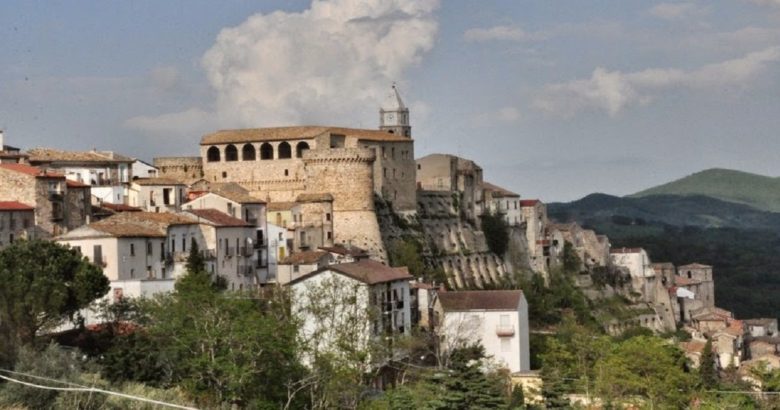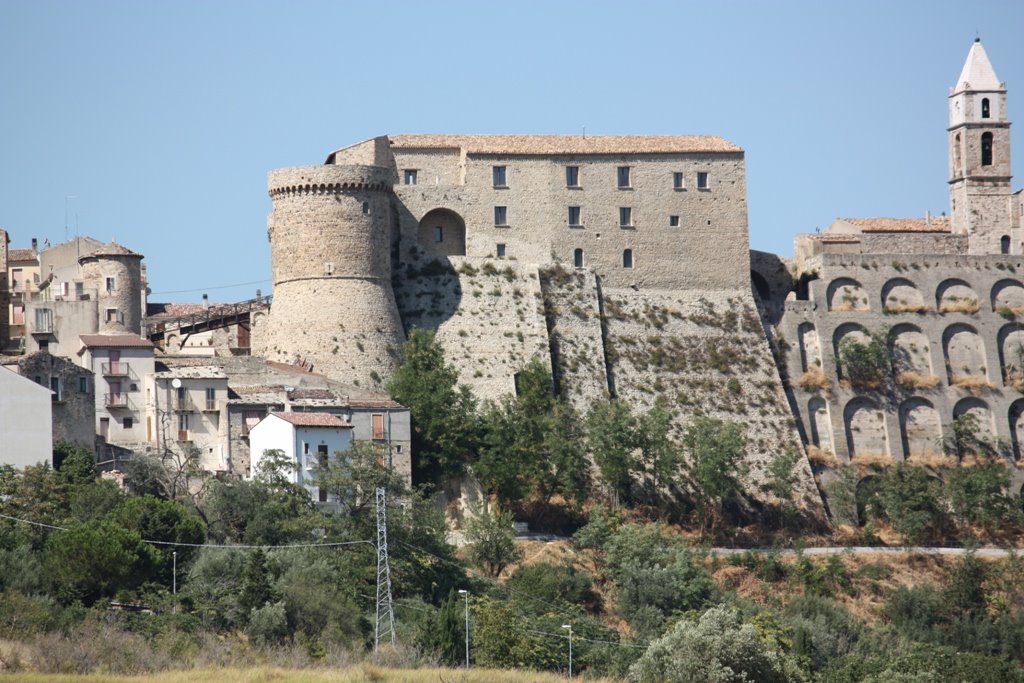

The Castle rises majestically in the upper part of the village of Civitacampomarano, on a sandstone hill previously occupied by a Samnite settlement. The name of the castle and of the village perhaps refers to the existence of landed property in Roman times (Campus Maurunus).
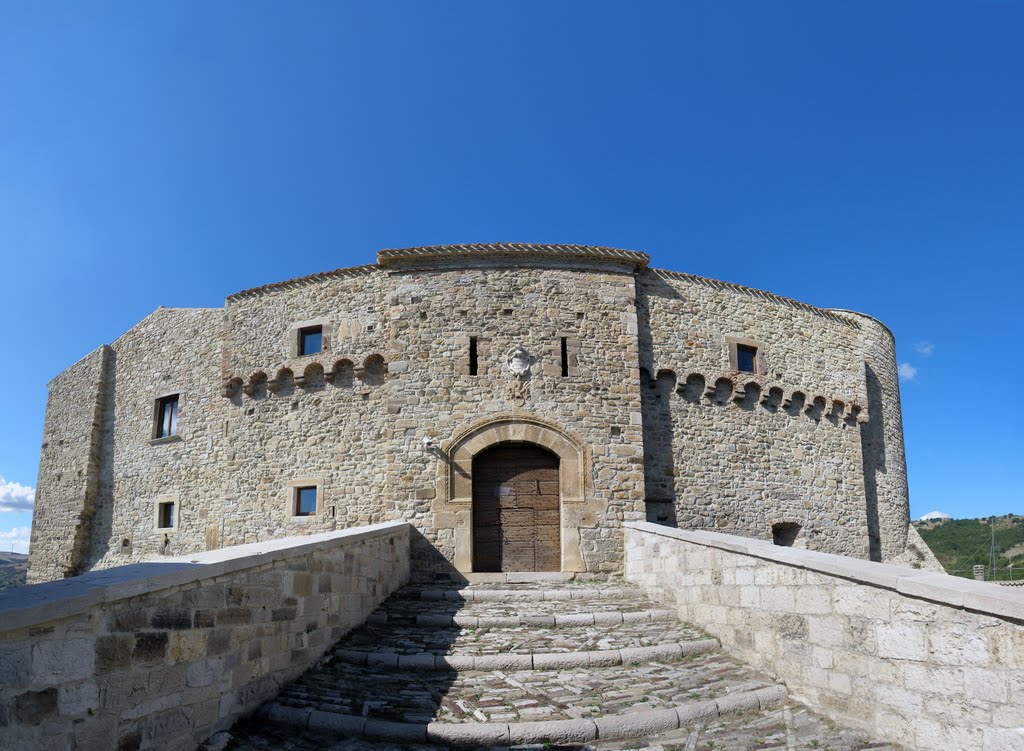
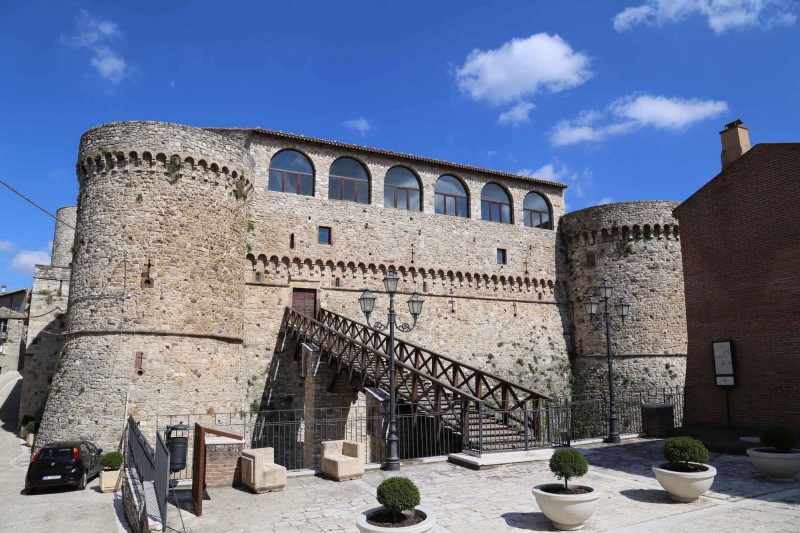
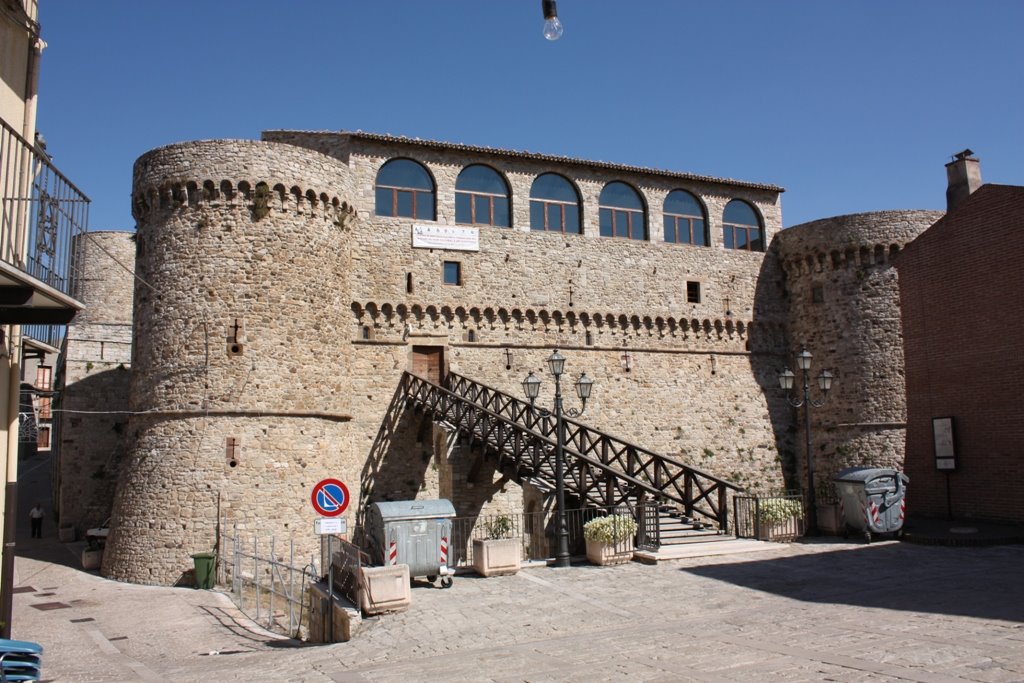
The first rests allow to go back to a first construction of Norman epoch (XII century), but it is in the XV century that the definitive plan of the imposing military fortitude was outlined: a quadrangular surrounding wall with three cylindrical embattled towers. Each tower is characterized on the outside by loopholes and hanging arches supported by stone brackets. The walls were equipped with a patrol walkway and housings for arquebuses and cannons.The castle of Civitacampomarano was at the center of one of the most sensational episodes of betrayal during the conflicts between the Angevins and the Aragonese for the conquest of the Kingdom of Naples, consumed during one of the clashes between the two factions in the Plain of Sessano in 1442: for the fate of the battle in fact was decisive the decision of the captain of fortune Paolo di Sangro, in the pay of the Angevins, that in the crucial moment passed with his men on the side of the Aragonese to the cry: "Aragona, Aragona!". For his betrayal Paolo obtained as a reward several properties, including that of Civitacampomarano. A few years later in the castle was signed the marriage contract between Cola Monforte and Altabella Di Sangro, daughter of Paolo. And always here lived Cola di Monforte and Antonella di Sangro, the latter passed into history for her numerous betrayals, especially when her husband, count of Campobasso, began to fall into disgrace.
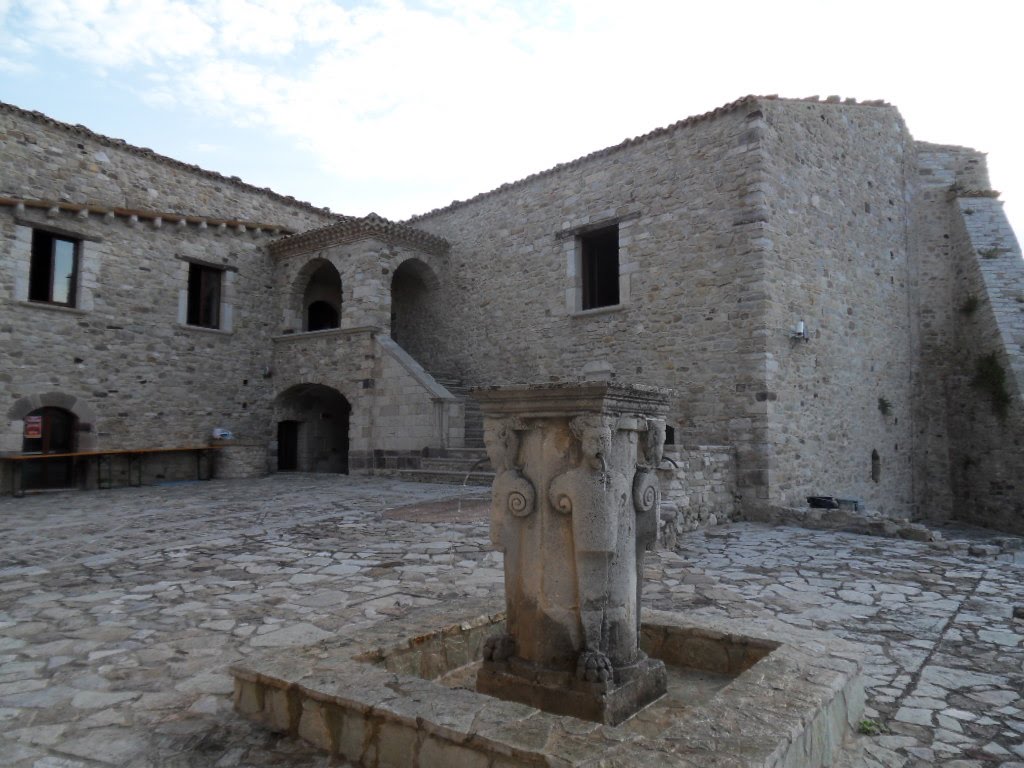
In 1795 a popular revolt imposed to the Mirelli, lords of the time, the filling of the north moat and the construction of a road linking the two wings of the country, until then separated by the presence of the Castle. To the Mirelli succeeded several owners; in 1979 the last owner sold the Castle to the Superintendence for Architectural Heritage of Molise. Today Civitacampomarano appears as one of the most suggestive castles of the region. The monument in fact maintains almost intact its ancient architecture, despite the passage of history and earthquakes that in the past have caused landslides and collapses. Whichever way you look at it, the building amazes for its size and architectural audacity. The main entrance is via a staircase and a remarkable entrance portal with a beautiful lowered arch typical of the Catalan-Aragonese style of the fifteenth century. Above the keystone there are two coats of arms: the upper one is that of the Carafa della Spina family; the lower one is that of Paolo di Sangro: it is a Gothic shield with seven bands in gold and blue with a helmet on the crest, united with that of the Monforte family, represented by the two rosettes placed next to the shield. This fusion represents the union of the two families. The coat of arms is then surmounted by a dragon which has under its legs two lilies turned upside down, allegorical evidence of the betrayal of the two families against the Angevins in favor of the alliance with the Aragonese. Above the arch there are still two rectangular recesses that were used for the sliding of the chains of the drawbridge, today no longer preserved. In the inner courtyard is preserved the pretty fountain c.d. "sannita" formed by a sculpture with four anthropomorphic figures, here placed by the last owners in modern times. Not far away there is a well for the collection of rainwater, connected to a cistern with a capacity of 120000 liters which in the past supplied the whole village. A small uncovered staircase leads to the second floor with the noble halls and service rooms that in part retain the pictorial decoration. In the lower floors there were the stables, the warehouses, the granary and from here there was access to the towers and the patrol paths. Under the main tower an internal staircase led to the moat and the prisons. Over the centuries, the monument has undergone several interventions: the filling of the moat, the collapse of part of the northern side, changes to the interior spaces; nevertheless, it maintains intact its charm of "ancient giant" in perfect harmony with the historic center and the surrounding landscape.