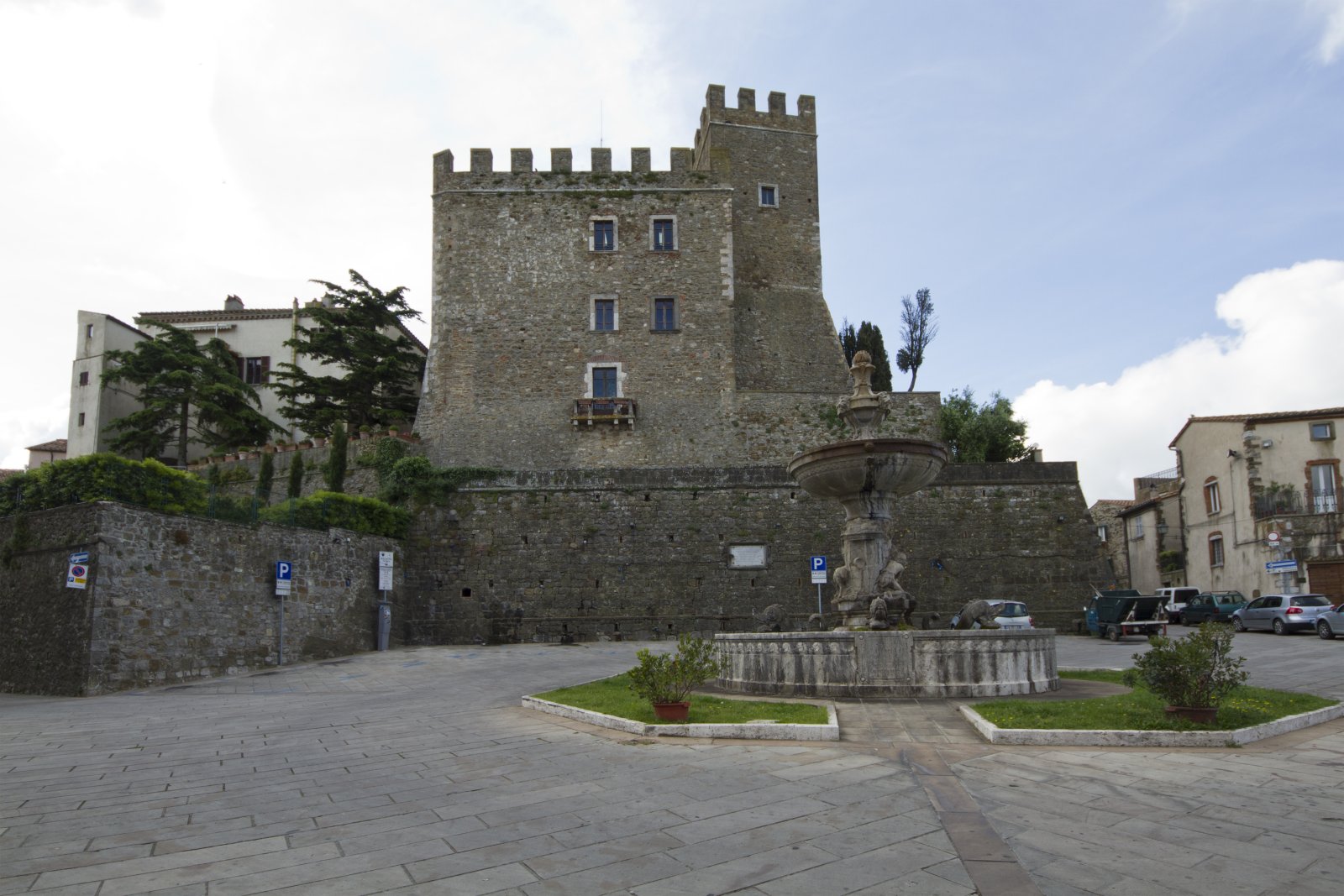
Nestled atop a commanding hill in the picturesque valley of the river Albegna, the Castle of Manciano stands as a sentinel of history and an emblem of medieval grandeur. This fortress, which has watched over the Tuscan landscape for centuries, offers a window into the past, inviting visitors to explore its storied walls and captivating tales.
### History and Origins The origins of the Castle of Manciano are steeped in medieval lore, tracing back to 1118, when it was first mentioned in a decree by Pope Clement III concerning the church in Sovana. Constructed under the auspices of the Aldobrandeschi family in the 12th century, the castle was a pivotal stronghold in the region. Its strategic importance grew, and by 1424, it had become a target for the ambitious Sienese Republic, who restored and fortified it. In 1772, under the watchful eye of the Grand Duchy of Tuscany, the castle underwent significant renovations, including the relocation of its main entrance from the south to the west, solidifying its imposing presence.
### Art and Architecture The architectural style of the Castle of Manciano is a testament to its enduring legacy, featuring a crenellated silhouette typical of medieval fortresses. The robust shoe base provides a formidable foundation, enhancing its defensive capabilities. Within its walls, remnants of the past whisper stories of artistry and craft, though less adorned than other Tuscan castles, its architectural elegance lies in its fortified simplicity and the strategic genius of its design.
### Local Culture and Traditions Manciano is not just a town with a castle; it is a vibrant tapestry of Tuscan culture and tradition. Each year, the town celebrates the Festa delle Cantine, a festival dedicated to the local wines, where the streets come alive with music, dance, and the clinking of glasses. The Palio delle Botti, a unique barrel-rolling race, captures the competitive spirit of the locals and highlights their enduring connection to the land and its produce.
### Gastronomy No visit to Manciano is complete without indulging in its culinary delights. The region is renowned for its wild boar dishes, savory and rich, often paired with porcini mushrooms and fresh pasta. The pecorino cheese, a staple of Tuscan gastronomy, is another highlight, best enjoyed with a glass of robust Morellino di Scansano, a local red wine that perfectly complements the flavors of the area.
### Lesser-Known Curiosities While the grandeur of the castle is undeniable, there are hidden stories that many visitors overlook. Legend has it that a secret tunnel connects the castle to the nearby town of Saturnia, a refuge for inhabitants during times of siege. Though yet to be verified, this tale adds an air of mystery and intrigue. Additionally, the castle's well-preserved frescoes depicting medieval life offer a glimpse into the daily lives of its former inhabitants.
### Practical Visitor Information The best time to visit Manciano and its castle is during the spring and autumn months, when the weather is mild and the Tuscan landscape is at its most breathtaking. When exploring the castle, wear comfortable shoes as the terrain can be uneven. Don’t miss the panoramic views from the castle’s ramparts, providing a sweeping vista of the surrounding countryside.
For a truly personalized experience, use the Secret World app to plan your itinerary and uncover the hidden gems of Manciano.