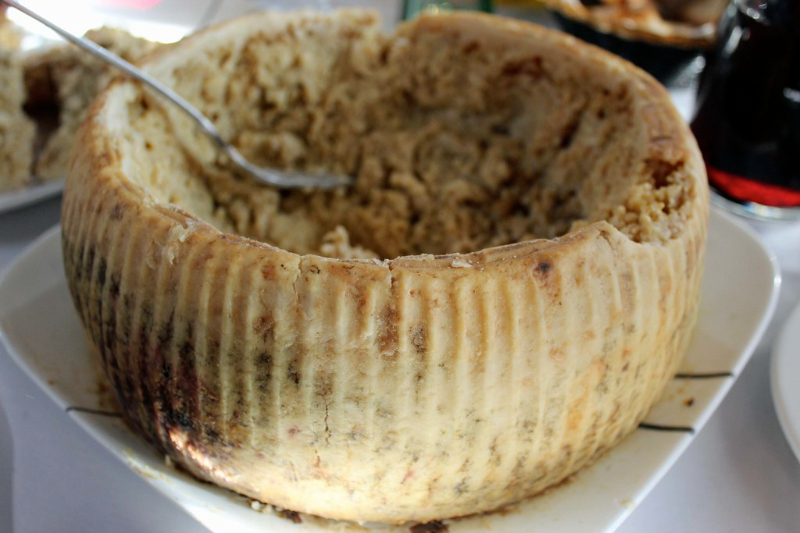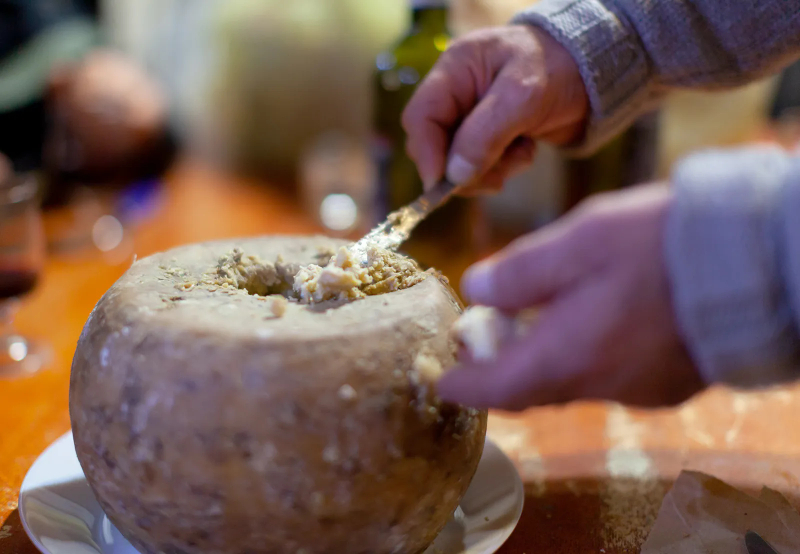

The Italian island of Sardinia sits in the middle of the Tyrrhenian Sea, gazing at Italy from a distance. Surrounded by a 1,849-kilometer coastline of white sandy beaches and emerald waters, the island's inland landscape rapidly rises to form hills and impervious mountains. And it is within these edgy curves that shepherds produce casu marzu, a maggot-infested cheese that, in 2009, the Guinness World Record proclaimed the world's most dangerous cheese. Casu Marzu is creamy and soft—and also happens to contain thousands of live maggots. This Sardinian delicacy, which literally translates to “rotten cheese,” is made by allowing flies to lay eggs on the surface of Pecorino cheese that has had the top cut off to allow for easy access. When the eggs hatch, the larvae eat through the cheese, breaking down the fats and softening the usually hard middle. Strong and rich, the aftertaste of this pungent cheese lasts for hours. Banned for sale by the European Union, this creamy, spreadable cheese is best enjoyed slathered on Sardinian flatbread (pane carasau) accompanied by a full-bodied glass of red wine. Casu marzu – famed for its texture and slightly spicy taste – is supposedly an aphrodisiac.