
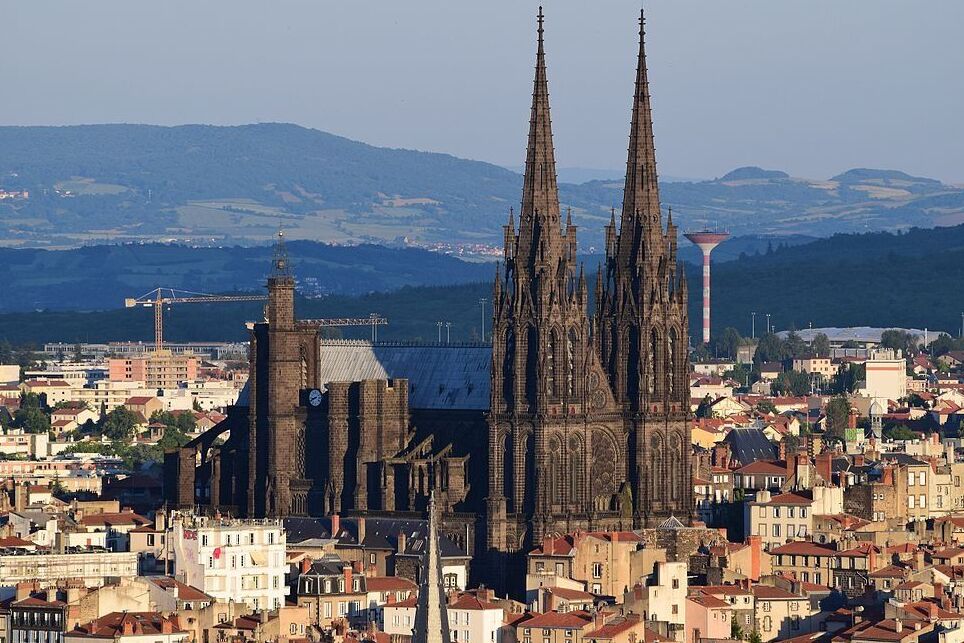

Amid the picturesque landscape of Clermont-Ferrand, the Cathedral stands as a testament to Gothic architecture, crafted from local volcanic stone. Its dark silhouette, rising prominently above a sea of apricot-colored roofs, captivates every passerby. This architectural gem has a rich history, tracing its origins back to the 13th century when construction began on the site of an earlier church dedicated to Saint Peter. The cathedral was completed over centuries, with various styles reflecting the artistic evolution of the period.
History and Origins The Cathedral of Clermont-Ferrand was built upon the foundations of the earlier Romanesque church, which itself was constructed during the 9th century. The decision to erect a new cathedral was heavily influenced by the desire to showcase the wealth and power of the local clergy. Construction began in 1248 and, due to various interruptions and the complexities of Gothic architecture, it saw its completion in 1884. One of the most dramatic moments in its history occurred during the French Revolution, when revolutionaries sought to demolish the sacred site. It was only through a clever proposal of converting the cathedral into a revolutionary assembly hall that it was spared destruction.
Art and Architecture A true Gothic masterpiece, the cathedral is renowned for its striking façade, adorned with intricate carvings and a multitude of gargoyles that seem to come alive against the backdrop of the sky. Built entirely from volcanic stone, its dark hue adds a dramatic contrast to the lighter tones of the surrounding architecture. The cathedral's twin turrets rise to a height of 108 meters, making it one of the tallest in France. Inside, visitors are treated to a breathtaking array of stained glass windows that date back to the 13th century. These windows depict biblical scenes and local lore, reflecting the region's deep-rooted spirituality and connection to its history. The Labyrinth within the cathedral is another highlight, a stunning mosaic of stonework that invites contemplation and admiration.
Local Culture and Traditions Clermont-Ferrand is a city that thrives on its rich cultural heritage. Festivals throughout the year celebrate both the cathedral and the city’s volcanic landscape. The Fête de la Saint-Pierre, held in June, features processions and music that echo the city’s historical connection to the church. Additionally, the Festival International du Court Métrage showcases the artistic talents of filmmakers and attracts visitors and locals alike to explore the creative spirit of the region. Such events emphasize the community's commitment to preserving their cultural identity and celebrating their local customs.
Gastronomy To truly experience Clermont-Ferrand, one must indulge in its culinary offerings. The region is famous for its cheese, particularly Saint-Nectaire, a creamy, cow's milk cheese that is integral to local dishes. Another must-try is the puy lentils, often served with meats or as a hearty salad. For those with a sweet tooth, Coussins de Lyon, a chocolate confection filled with almond paste, is a delightful treat to sample while exploring the city. Pair your meal with a glass of Côtes d'Auvergne wine, a local varietal that complements the region's robust flavors.
Lesser-Known Curiosities While many will admire the cathedral’s towering spires, few know that hidden within its walls is an ancient relic: the Crown of Thorns, said to belong to Christ. This relic adds a layer of sacred significance that enhances the spiritual atmosphere of the cathedral. Additionally, the cathedral's bell tower houses a set of bells, each with its own unique story, including one named after Blaise Pascal, the famous mathematician who hailed from the region. These hidden gems often go unnoticed but contribute to the cathedral's profound legacy.
Practical Visitor Information The best time to visit Clermont-Ferrand is during the spring and early autumn months, when the weather is mild and conducive to exploration. For an enriching experience, consider attending a guided tour to gain deeper insights into the cathedral’s history and architecture. Don’t miss the chance to climb the stairs to the top of the towers for a panoramic view of the city and the awe-inspiring volcanic landscape surrounding it. Ensure you take time to explore the nearby Place de la Victoire, where local artisans often showcase their crafts, adding to the artistic vibrancy of the area.
Visiting the Cathedral of Clermont-Ferrand is not just an architectural journey; it's a deep dive into the soul of a city that has thrived through centuries of history, culture, and tradition. For a personalized itinerary that captures the essence of this captivating destination, consider using the Secret World app.


