
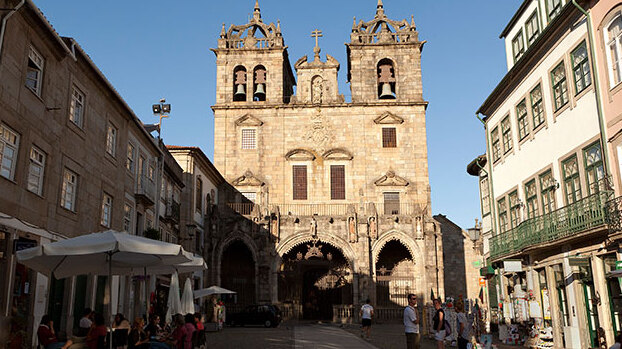

The Cathedral of Braga is the oldest cathedral in the country, which ഉത്ഭവിച്ചത് a popular saying in Portugal: "older than the Cathedral of Braga". നിർമ്മാണം ആരംഭിച്ചു മുമ്പായി പോർച്ചുഗൽ ആയിരുന്നു. ഒരു ജാതി, which explains why the whole city has grown around the Cathedral തന്നെ. നിരവധി architectural styles visible on its facades and walls, ഹനിക്കപ്പെടുകയോ Romanesque and Simple, with a mostly ഡച്ചു ഇന്റീരിയർ, over the years the Cathedral has ഉൾപ്പെടുത്താറുണ്ട് അഞ്ച് chapels, രണ്ട് cloisters, ഒരു Galilee, ഒരു Apse chapel, ഒരു chevet, ഒരു sacristy. യഥാർത്ഥ Romanesque രീതിയിൽ ആണ്. കൊലപാതകങ്ങളില് ഏറ്റവും രസകരമായ അതിജീവിച്ചു in the general structure of the cathedral, തെക്കൻ പ്രവേശന and in the അത്ഭുതകരമായ പാശ്ചാത്യ പോർട്ടൽ, on which രംഗങ്ങൾ നിന്ന് മധ്യകാല legend of Reynard ഫോക്സ് have been കൊത്തിയെടുത്ത (ഇപ്പോൾ അഭയം കീഴിൽ ഒരു ഗോഥിക് ശൈലിയിലുള്ള portico). As for the exterior, ഏറ്റവും ശ്രദ്ധേയമായ details are the towers, with refined കല്ല് inlays in Manueline style, and the roof, ഒരു ആദ്യകാല work by ഡയസ്സിൻറെ de Castilho, who later built the Mosteiro dos Jerónimos in Lisbon. You can access the cathedral from the west പോർട്ടൽ വഴി അല്ലെങ്കിൽ ഒരു മുറ്റത്ത് ആൻഡ് പിന്നെ surrounded by ഗോഥിക് chapels on the north side. Inside the church, നോക്കി മനോഹരമായ inlaid Manueline altar, the tall chapel അലങ്കരിച്ച azulejos illustrating the story of Braga ' s first bishop, and the stunning ഇരട്ട ഡച്ചു അവയവങ്ങളുടെ supported by impressive and satyrs tritons, which are played during Mass every Sunday at 11:30 am. Dalla chiesa si accede al tesoro, che custodisce una vera e propria miniera di oggetti d'arte sacra, come l'incantevole Nossa സെൻഹോറാ do Leite, ഓപ്പറ cinquecentesca che raffigura la vergine nell'atto di allattare il Cristo, attribuita allo scultore francese നിക്കോളസ് Chanterène. Da non perdere, inoltre, la croce di ferro usata nel Cinquecento per celebrare la കാല്ച്ചുവട്ടില് messa in Brasile. La visita prosegue con la Capela de ↑ Geraldo (risalente അല് XII secolo എം. എ. rimaneggiata più volte nel corso del tempo) rivestita di azulejos e la Capela da Glória del പതിനാലാമൻ secolo, il cui interno ഫു dipinto nel പതിനാറാമൻ secolo con motivi geometrici tipicamente moreschi.


