



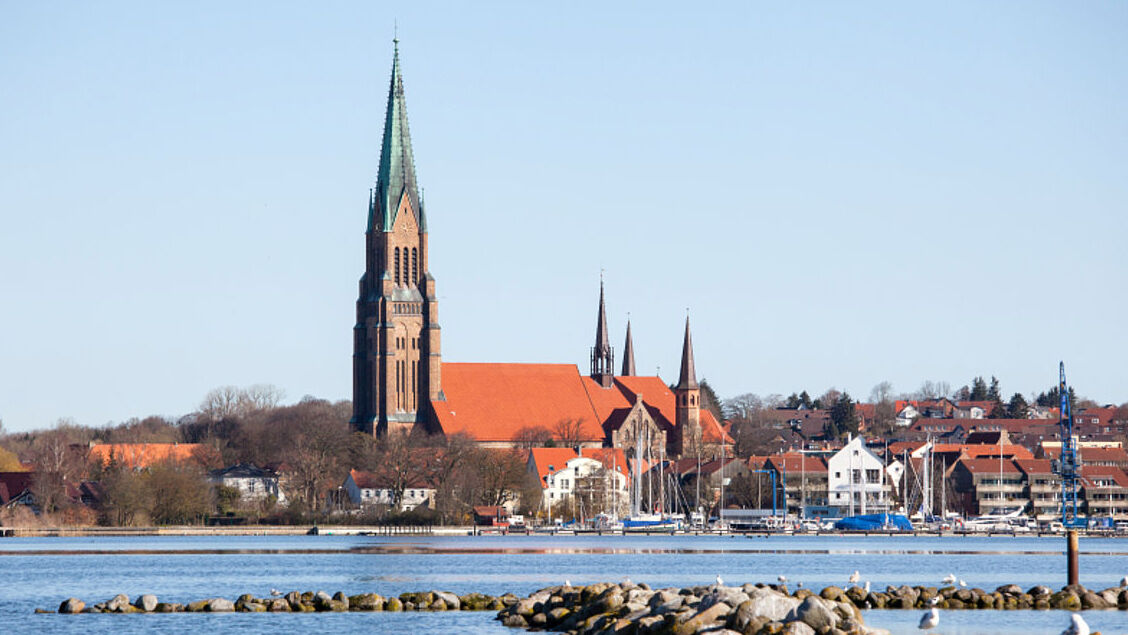
The Cathedral of St Peter in Schleswig, Germany, stands as a remarkable testament to the architectural and cultural richness of the Schleswig-Holstein region. With its roots reaching back to the 10th century, this cathedral is a blend of Romanesque and Gothic styles, showcasing the evolution of ecclesiastical architecture over the centuries. Originally founded by Saint Ansgar, a key figure in the Christianization of Scandinavia, the cathedral has witnessed numerous historical events that shaped the region, including the establishment of the Duchy of Schleswig.
As you approach the cathedral, its grand façade, constructed from granite, tuff, and brick, captures the eye. The impressive twin towers, rising majestically above the surrounding landscape, invite visitors to explore its hallowed interiors. Inside, the Bordesholm Altar, carved by Hans Brüggemann in the 16th century, stands as the cathedral's artistic highlight. This magnificent piece, with its intricate carvings and vivid depictions of biblical scenes, serves as a reminder of the artistic fervor of the North German Renaissance.
The cathedral not only serves as a religious site but also as a cultural hub for the local community. It hosts various events throughout the year, including concerts and festivals that celebrate both the church's heritage and the vibrant traditions of Schleswig. One such event is the Schleswig Cathedral Music Festival, attracting musicians and audiences from across the region to experience the unique acoustics of this historic space.
As you wander through the nave, take a moment to admire the marble sarcophagus of King Frederick I of Denmark, a stunning example of Dutch-Renaissance sculpture. The intricate details and craftsmanship reflect the high esteem in which this monarch was held, making it a significant historical artifact. This tomb is not only a resting place but also a symbol of the intertwined histories of Denmark and Schleswig-Holstein.
Local culture in Schleswig is rich and diverse, with traditions that have been preserved over generations. Festivals such as Schleswig's Christmas Market are celebrated with enthusiasm, where locals gather to enjoy traditional foods like Grünkohl (kale) and Pinkel (smoked sausage) amidst the festive decor of the cathedral square. The market embodies the warmth and spirit of the community, blending culinary delights with seasonal cheer.
The gastronomy of Schleswig is deeply influenced by its coastal location, offering fresh seafood that plays a vital role in local cuisine. Try the Schleswig fish soup, a hearty dish made with locally caught fish and seasonal vegetables, or indulge in a piece of Schwarzwälder Kirschtorte (Black Forest cake) for dessert, showcasing the region's penchant for rich flavors.
As you delve deeper into the cathedral's history, you may uncover lesser-known curiosities that enrich your visit. For instance, the cathedral was once part of a monastic complex that included schools and hospitals, reflecting its role in the community far beyond just a place of worship. Additionally, during the Reformation, the cathedral served as a battleground of faith, with shifting allegiances shaping its liturgical practices.
The best time to visit the Cathedral of St Peter is during the summer months when the weather is pleasant, and many cultural events take place. Ensure to check the cathedral’s schedule for guided tours, which provide insights into its rich history and architectural details. Don’t forget to look up at the stunning Gothic vaulting overhead as you explore, and take a moment to sit in quiet reflection in this sacred space.
For those planning a visit, be sure to check out local resources for a more personalized experience. Exploring the heritage of Schleswig and its beloved cathedral offers a unique glimpse into a pivotal part of German history.
To truly make the most of your journey to Schleswig, consider using the Secret World app to plan a personalized itinerary that fits your interests.
