
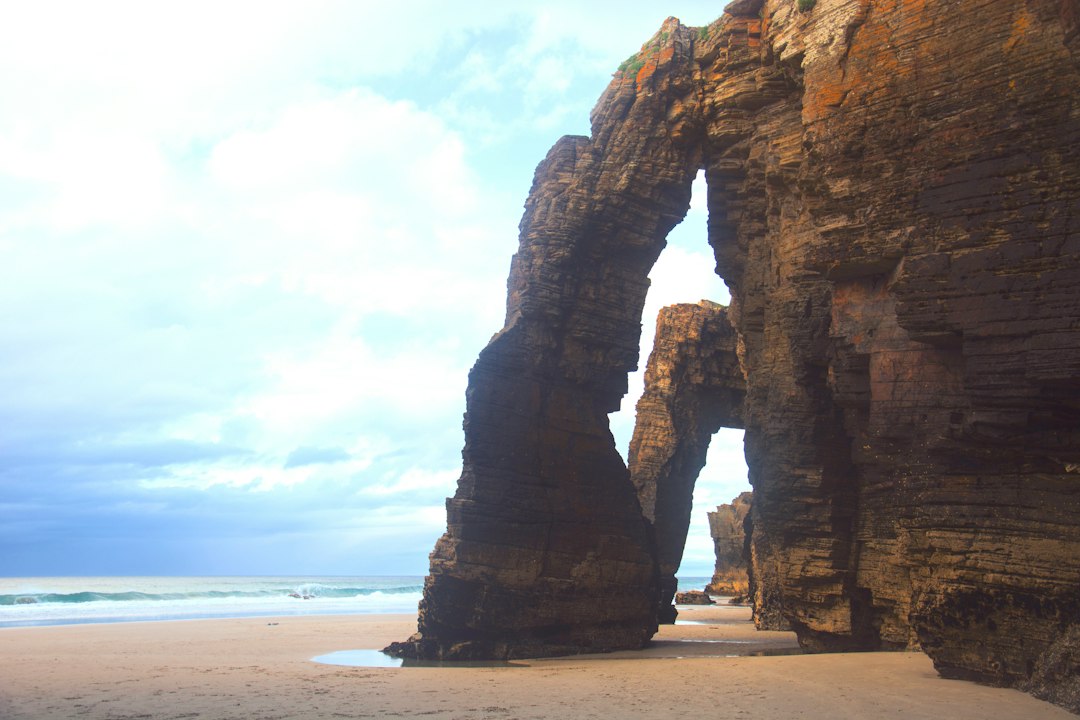

When the tide recedes, it reveals a landscape that seems to have come out of a geological dream: stone arches rising up to 32 meters from the golden sand like the naves of a natural cathedral, while the caves carved by the Atlantic open along the rocky coast of Ribadeo, in northern Galicia. The beach, whose official name is Praia de Augas Santas, owes its popular nickname to these limestone and shale formations that marine erosion has shaped over millennia, creating buttresses, pillars, and vaults that resemble Gothic architecture.
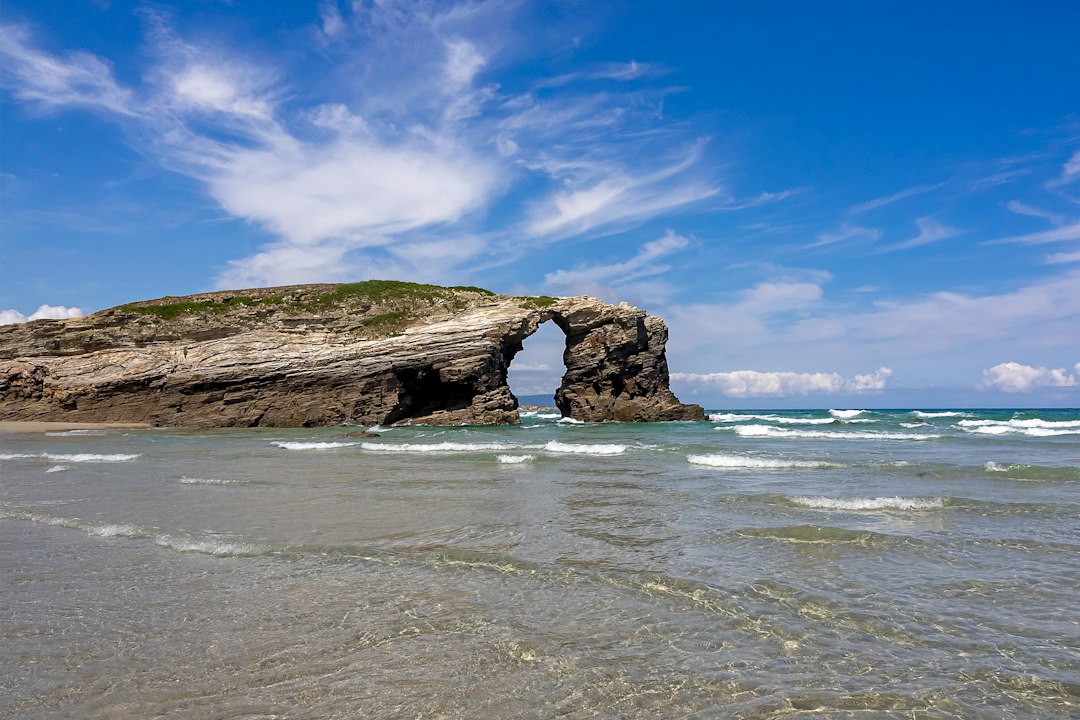
The beach stretches for about 1.5 kilometers along the coast of the province of Lugo, and is accessible from the city of Ribadeo, the capital of the area, which is just a few kilometers away. The Atlantic water lapping at these arches takes on colors that change with the light of day: emerald green in the morning hours, when the low sun illuminates the pools left by the tide, and deep blue in the afternoon, when the sky reflects on the stretches of water still present among the rocks. The sand, compact and light ochre in color, retains footprints for hours, a sign of its particular consistency.
The rock formations: what to observe up close
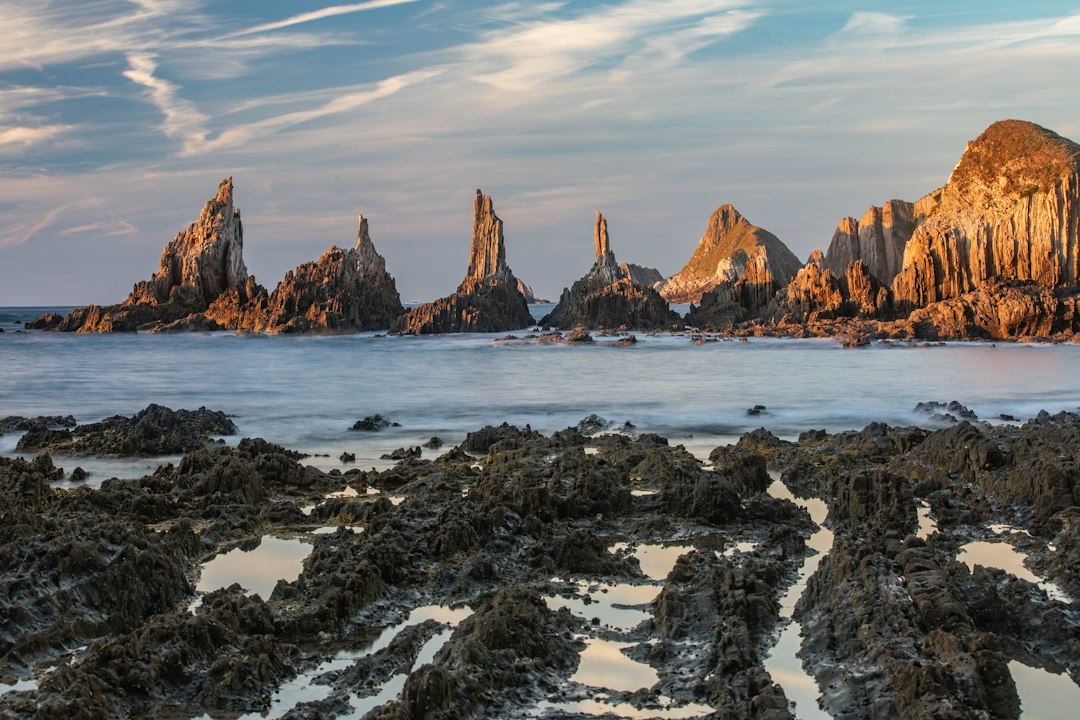
Walking under the arches during low tide, it is possible to feel the layering of the rock: the horizontal veins of gray schist alternate with lighter layers, a testament to the different periods of sedimentary deposition. The larger caves allow entry and observation of how the ceiling has been smoothed by the action of the waves over time, with concave and smooth surfaces contrasting with the roughness of the outer walls. In some cavities, during low tide, small natural pools form where water remains trapped, with an intense green coloration due to algae.
The rocky outcrops that project toward the sea, when viewed from the main beach, create a perspective that actually resembles the side aisles of a Gothic cathedral: light filters between one arch and another, casting long shadows on the sand. This effect is particularly evident during the central hours of the day, when the sun is high and the shadows become sharp and dramatic.
Colors and atmosphere: how the beach changes
The atmosphere of Playa de las Catedrales is closely linked to the rhythm of the Atlantic tides. At high tide, the beach shrinks considerably and the rock formations are almost completely submerged: a darker, wet strip of sand remains, where waves crash producing a persistent white foam. In these conditions, the beach takes on a wilder and less accessible character, but visually very striking, with arches partially emerging from the sea like remnants of a submerged architecture.
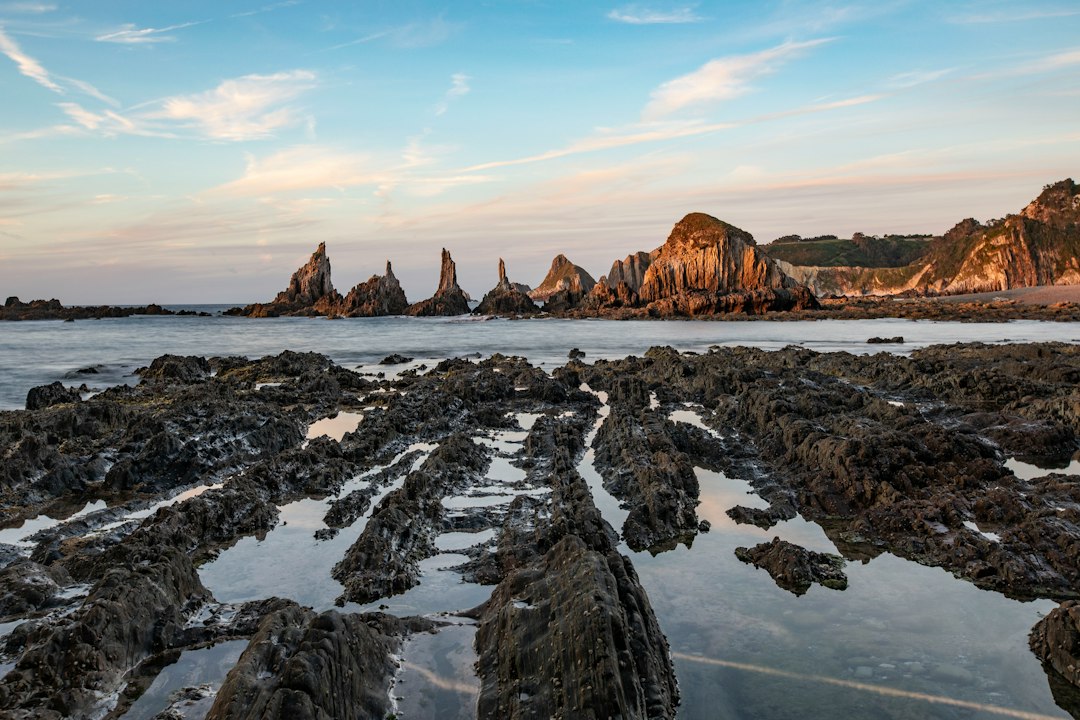
At low tide, on the other hand, the landscape transforms radically: the sand stretches for hundreds of meters towards the sea, and the rocks reveal their complexity. The dominant colors become the beige of the dry sand, the gray-green of the wet rock, and the turquoise of the natural pools. The chromatic contrast between these elements, especially on sunny days in late spring, is one of the most visually characteristic aspects of the place.
Practical information for the visit
The visit is only possible during low tide, and in the summer months, from June to September, free reservation is mandatory through the online system of the Xunta de Galicia, the regional authority that manages access to the beach to limit tourist influx. The number of visitors per time slot is limited, so it is essential to check the tide times before planning the day: ideally, arrive about an hour before the maximum low tide point, to have time to walk the entire beach with the accessible rock formations. Local tide prediction sites accurately indicate the low tide times for each day.
From Ribadeo, the beach can be reached by car along the coastal road heading west, with parking available nearby. In summer, the parking lot fills up quickly, so it is advisable to arrive early in the morning. Light sneakers or hiking shoes are preferable to sandals, as some areas between the rocks require caution when walking. The path between the rock formations typically takes between 60 and 90 minutes for those who want to calmly explore all the main caves and arches.
The context of the Galician coast
The Playa de las Catedrales is located in a stretch of Atlantic coast characterized by complex geology, where the meeting of the Precambrian and Paleozoic rocks of Galicia and the erosive force of the Atlantic Ocean has over time produced coastal landscapes of great variety. The area is part of the Ría de Ribadeo, the estuary that marks the natural border between Galicia and Asturias, and the humid oceanic climate of the region contributes to the presence of dense coastal vegetation on the overhanging cliffs, with heather and maritime pine lining the access paths to the beach.
Ribadeo itself offers a convenient base for visiting: the historic center preserves buildings from the Indian bourgeoisie of the early 20th century, built by Galicians who emigrated to Latin America and returned with the fortunes they accumulated. The city has a good range of accommodations and restaurants where you can try the local fish and seafood, a characteristic gastronomic element of the entire Galician coast.


