
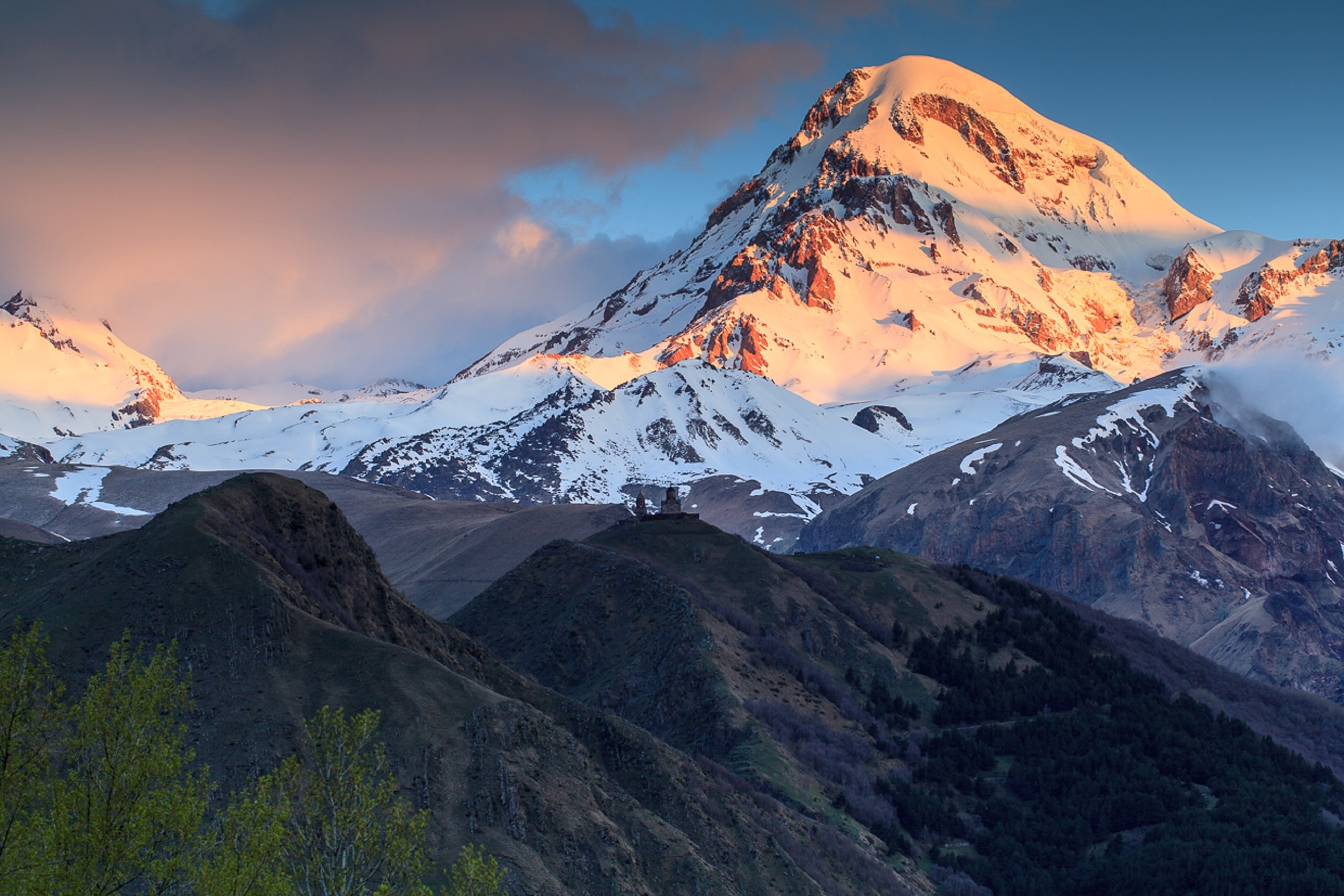

Rising majestically above the verdant landscapes of Kazbegi in Georgia, Mount Kazbek is not just a geographical wonder but a cultural emblem steeped in history and tradition. With a height of 5,047 meters, it is the third-highest peak in Georgia and the second-highest volcanic summit in the Caucasus Mountains. Its name in Georgian, Mqinvartsveri, translates to 'Glacier Peak', aptly describing the snow-capped beauty that dominates the skyline and attracts adventurers from around the world.
History and Origins The story of Mount Kazbek is intertwined with the rich tapestry of Georgian history. Often steeped in myth and legend, local folklore depicts it as the resting place of Prometheus, who was said to be chained to the mountain after defying the gods. This connection to ancient mythology gives Kazbek a unique significance that resonates with hikers and historians alike.
The region has been inhabited since ancient times, with evidence of early settlements dating back to the early Bronze Age. The mountain itself has been a crucial landmark for both travelers and traders navigating the rugged Caucasus. During the Middle Ages, it served as a strategic point for the defense of the Kingdom of Georgia against various invaders. Notably, the Gergeti Trinity Church, perched on a hill near Stepantsminda, dates back to the 14th century and stands as a testament to the region's religious and architectural heritage.
Art and Architecture The Gergeti Trinity Church (or Tsminda Sameba) is one of the most iconic architectural landmarks near Mount Kazbek. Built from local stone, the church features a simple yet striking design, harmonizing beautifully with the natural landscape. The medieval architecture and serene setting have made it a popular subject for photographers and artists alike. Artworks depicting Kazbek often highlight its majestic silhouette against the changing hues of the sky, capturing the essence of this untouched wilderness.
Local Culture and Traditions The culture surrounding Mount Kazbek is as rich as its history. The Kazbegi region is known for its warm hospitality, where locals often greet visitors with open arms. Traditional customs are deeply embedded in the daily lives of the people, with polyphonic singing and folk dances being integral to celebrations. The annual Kazbegi Festival, held every August, showcases traditional music, dance, and crafts, drawing both locals and tourists to celebrate the region's vibrant culture.
One local custom worth experiencing is the preparation and sharing of Khinkali, Georgian dumplings filled with various meats and spices, which are often enjoyed at gatherings and festivals. This dish reflects the communal spirit of the region, encouraging sharing and togetherness among friends and family.
Gastronomy The culinary scene in Kazbegi is a delightful journey through the flavors of Georgia. In addition to Khinkali, visitors should try Khachapuri, a cheese-filled bread that is an emblematic dish of Georgian cuisine. The Adjarian Khachapuri, shaped like a boat and topped with a runny egg and butter, is a must-try delicacy that will tantalize your taste buds.
Pair these dishes with local wines, particularly Saperavi, a robust red wine that complements the hearty flavors of the region. The high-altitude vineyards thrive in this climate, making Georgia one of the oldest wine-producing countries in the world.
Lesser-Known Curiosities Beyond its stunning scenery and rich history, Mount Kazbek holds some lesser-known surprises. For instance, the mountain is home to unique flora and fauna, including the endangered Caucasian tur and rare alpine plants that thrive in the harsh conditions. Furthermore, the Kazbek Glacier, which is easily accessible, offers a mesmerizing spectacle, with its icy blue crevasses and shimmering surface — a hidden gem for those willing to explore beyond the usual hiking trails.
Another intriguing aspect is the local legend surrounding the mountain's name. Some believe that the title 'Kazbek' derives from the Persian words 'Kaz' (to be frozen) and 'Bek' (king), translating to 'Frozen King'. This poetic interpretation adds another layer of mystique to the already enchanting landscape.
Practical Visitor Information The best time to visit Mount Kazbek is during the summer months, from June to September, when the weather is mild and the trails are accessible. For those interested in climbing, it’s advisable to go with experienced guides who are familiar with the mountain's routes and conditions. Stepantsminda serves as the gateway to Kazbek, offering various accommodations ranging from guesthouses to hotels, allowing visitors to immerse themselves in local culture.
When exploring the area, don't miss the breathtaking views from the Gergeti Glacier, and be sure to pack your camera — the sunsets over Mount Kazbek are nothing short of magical.
In conclusion, Mount Kazbek is not just a peak to conquer; it is a destination steeped in history, culture, and culinary delight. Whether you are drawn by its majestic beauty, its rich traditions, or its tantalizing gastronomy, Kazbek promises an unforgettable experience.
For a personalized itinerary that captures the essence of this stunning destination, consider using the Secret World app to plan your journey.


