
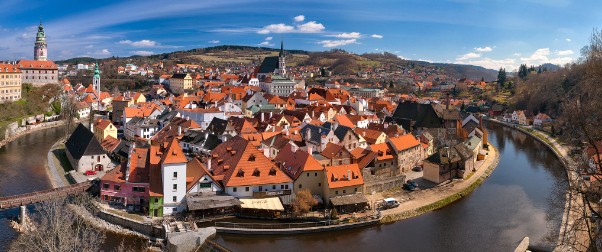

Nestled in the heart of the southern Czech Republic, Český Krumlov unfurls like a page from a medieval fairytale, with its cobblestone streets winding along the banks of the Vltava River. This enchanting town, not far from the Šumava Hills and the border with Austria, captivates visitors with its rich tapestry of history, art, and culture.
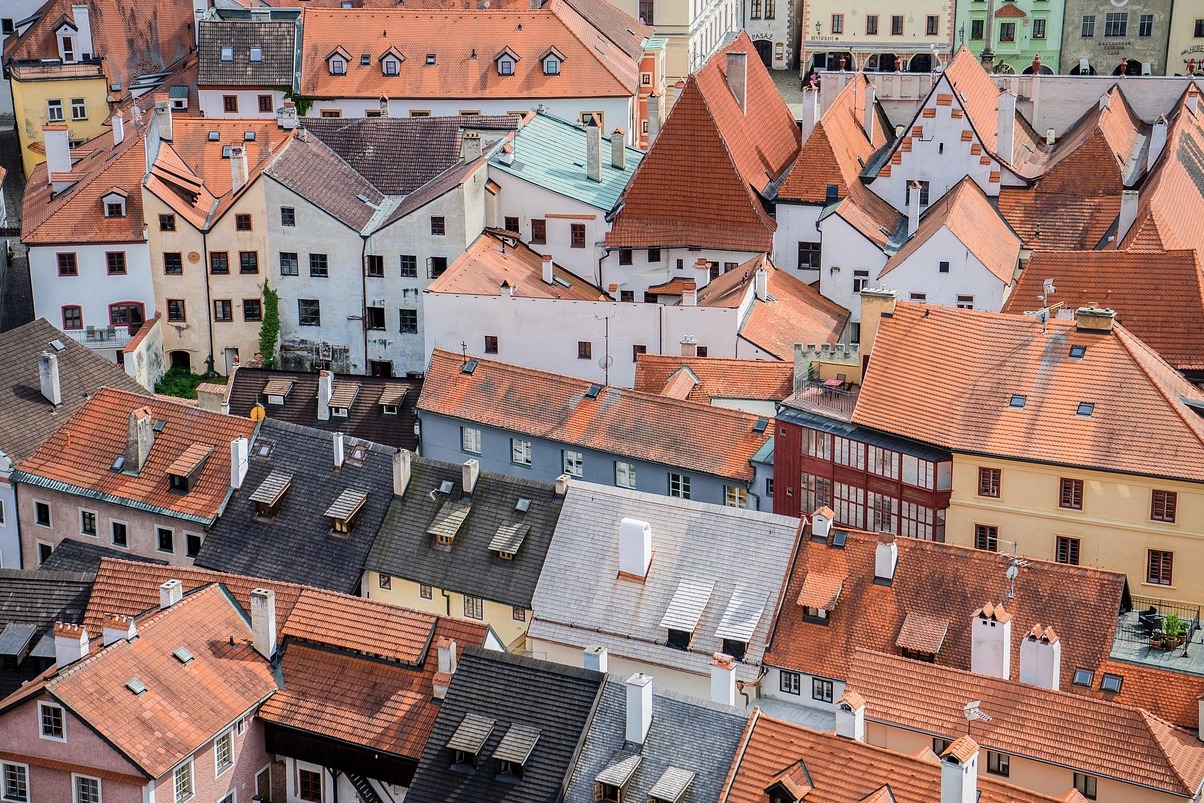
Český Krumlov traces its origins back to the 13th century, when it was founded by the powerful Vítkovci family. Its strategic location along a vital trade route encouraged prosperity, leading to its flourishing during the Middle Ages. Over the centuries, the town changed hands among noble families, with the Rosenbergs and later the Eggenbergs leaving significant marks on its development. In 1992, the entire historic center was designated a UNESCO World Heritage Site, a testament to its remarkable preservation and historical significance.
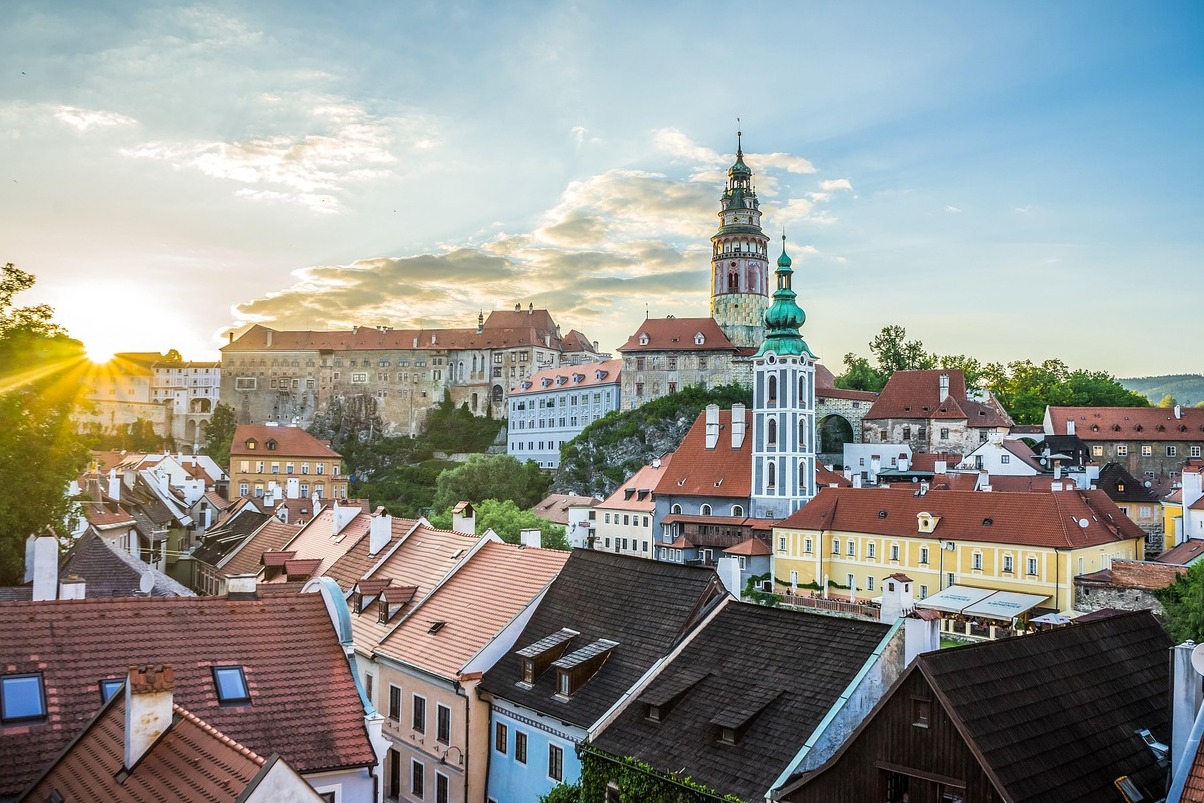
The town's architectural marvels transport you to another era. Dominating the skyline is the Český Krumlov Castle, a stunning example of Renaissance and Baroque architecture. The castle complex, one of the largest in Central Europe, boasts the Castle Tower, offering panoramic views of the labyrinthine town below. Inside, the Baroque Theatre, one of the few preserved in its original form, continues to host performances, allowing visitors to experience the grandeur of 18th-century entertainment. The town's streets are lined with Gothic, Renaissance, and Baroque buildings, each telling its own story through ornate facades and intricate details.
The cultural heartbeat of Český Krumlov pulses with vibrant traditions and lively festivals. One of the most anticipated events is the Five-Petalled Rose Festival, held every June. This celebration sees the town transformed with medieval costumes, markets, and jousting tournaments, honoring the legacy of the Rosenberg family whose emblem was a five-petalled rose. Throughout the year, the town is alive with music, from classical concerts in the Castle to the contemporary beats of the Krumlov Summer Music Festival.
No visit to Český Krumlov would be complete without savoring its gastronomic delights. The local cuisine is hearty, with dishes like Svíčková na smetaně (marinated beef with creamy sauce) and Trdelník (a sweet pastry rolled in sugar and nuts) tempting palates. The town's breweries, such as the historic Eggenberg Brewery, offer a chance to sample traditional Czech beers, a perfect accompaniment to any meal.
Beyond its more famous attractions, Český Krumlov hides lesser-known curiosities that enrich the visitor experience. Few know about the Cloak Bridge, a unique three-story covered bridge within the castle complex, or the fascinating tale of the town's alchemist, Jakob Krčín, who dabbled in the mystical art of gold-making. Exploring the town's alleyways, you might stumble upon the Museum of Torture, offering a macabre glimpse into the past punishments meted out to wrongdoers.
For practical tips, the best time to visit Český Krumlov is in the spring or early autumn, when the weather is mild, and the crowds are fewer. To fully appreciate the town's charm, consider staying overnight, allowing the evening's tranquility to envelop you once day-trippers have departed. While navigating the town, wear comfortable shoes to tackle its uneven cobblestones, and don't miss a leisurely stroll along the Vltava River, where the reflection of the castle shimmers on the water's surface.
In Český Krumlov, history is not just preserved; it is a living, breathing entity that invites you to step back in time, to experience the splendor of its past, and to become part of its enduring story.


