
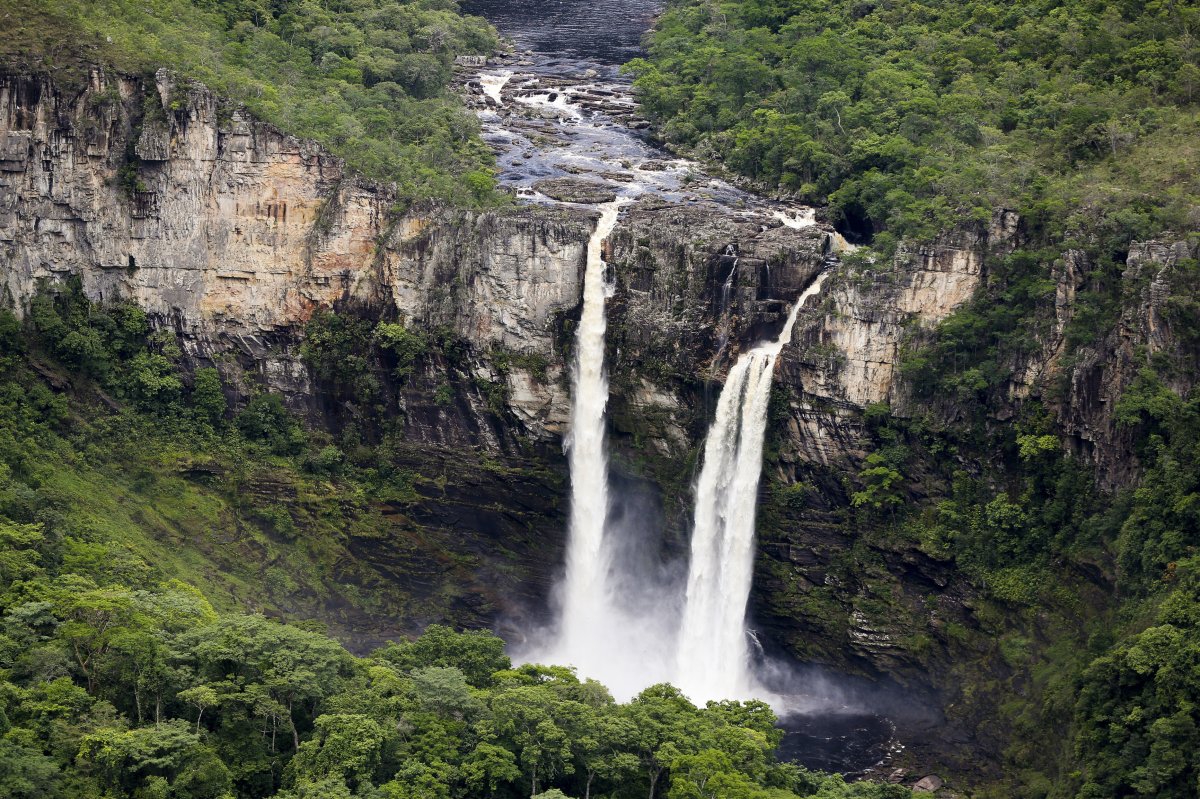

At over 1,000 meters above sea level, the Chapada dos Veadeiros National Park extends over approximately 240,000 hectares in the heart of the Brazilian Cerrado, in the state of Goiás. Here, quartz is exposed everywhere: in the canyon walls, in the riverbeds, and on the trails that cross one of the oldest tropical savannas on the planet. The rocks that make up this plateau are estimated to be around 1.8 billion years old, making them among the oldest geological formations in the entire Western Hemisphere.

The park was recognized by UNESCO as a World Natural Heritage Site in 2001, a distinction that reflects not only its extraordinary geology but also the exceptional density of endemic species of the Cerrado, a biome that hosts about 5% of all the biodiversity on the planet while being among the most threatened ecosystems in the world.
The Cerrado and its unforgettable fauna
Those who walk the trails of Chapada dos Veadeiros at dawn have a real chance of encountering the maned wolf, the lobo-guará in Portuguese, one of the faunal symbols of the Cerrado. With its long legs and reddish coat, this solitary canid moves through the tall grasses in search of fruits and small animals. It is not a guaranteed sighting, but the population density in the park area is among the highest in central Brazil.
Equally emblematic is the tamanduá-bandeira, the giant anteater, which moves slowly along the open areas of the park with its tubular nose and huge front paws adapted to break into termite mounds. Among the birds, the park hosts over 300 recorded species, including the toco toucan and several species of macaw, the brightly colored ara parrots that fly in pairs above the low canopies of the savanna.
The canyon, the rivers, and the shining quartz
The Rio Preto and the Rio Claro are the water arteries of the park. Their waters, transparent and blue-green due to the presence of minerals, flow over beds of polished quartz and form waterfalls and natural pools accessible via guided trails. The Cariocas waterfall and the pools of the Rio Preto are among the most frequented destinations, reachable with treks lasting between two and five hours.
Walking on the trails, one immediately notices the presence of white quartz that emerges from the iron-red soil typical of the Cerrado: the crystals reflect sunlight and give the landscape an almost lunar appearance in certain areas. This abundant quartz is also the reason why the region has attracted spiritual communities and crystal therapy enthusiasts for decades, who have settled around Alto Paraíso de Goiás, the municipality that serves as the gateway to the park.
How to organize the visit
Access to the park is regulated and most trails require the presence of an accredited guide, which can be booked through local agencies in Alto Paraíso de Goiás. The average cost for a guided day is between 150 and 300 Brazilian reais per person, depending on the chosen itinerary. The entrance ticket to the park has a separate cost, which can be checked on the official website of ICMBio, the Brazilian federal agency that manages protected areas.
The best time to visit is from May to September, during the dry season: the trails are safer, the rivers have stable levels, and the pools are accessible for swimming. During the rainy season, from October to April, some areas are closed due to flood risk and the trails become slippery. Alto Paraíso is about 250 kilometers from Brasília, reachable by car via the BR-020 in about three hours: there are no direct train or fast bus connections, so renting a car is the most practical solution for those coming from the federal capital.
Where to sleep and what to expect
Alto Paraíso de Goiás offers a modest variety of pousadas, the typical Brazilian guesthouses, with prices that are affordable compared to international standards. The town has a calm and alternative atmosphere, with restaurants offering vegetarian cuisine and shops selling local crafts. Do not expect luxury facilities: the charm of the place lies in its intimate size and immediate proximity to nature.
Those planning at least three nights in the area can combine multiple excursions and have time to acclimate to the altitude and the slow rhythms of the Cerrado. Bringing trekking shoes with non-slip soles, high-protection sunscreen, and plenty of water is essential: the trails expose you to the sun for long periods, and temperatures during the day can exceed 30°C even in the dry season.


