
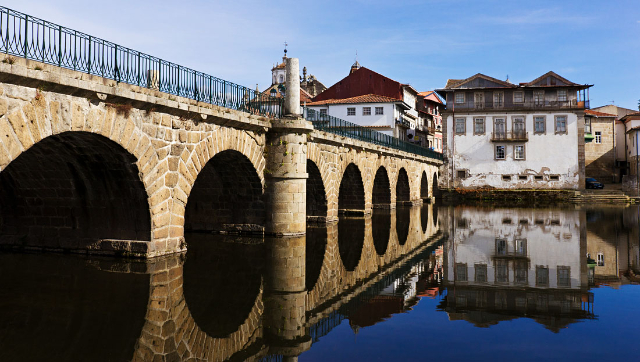

Nestled in the northern reaches of Portugal, the city of Chaves holds a treasure trove of history and architectural marvels, chief among them the magnificent Ponte Trajano. This ancient bridge, with its elegant span over the River Tâmega, is a testament to Roman engineering prowess and a sentinel of the city's storied past.

The origins of Chaves trace back to its Roman founding under Emperor Trajan in the 1st century AD, when it was known as Aquae Flaviae. This name was inspired by the healing hot springs that bubble beneath its surface, drawing settlers and travelers alike. The Ponte Trajano itself, constructed in the early 2nd century, served as a vital link across the river, enabling the movement of troops and goods, and contributing to the region's prosperity. Over the centuries, as empires rose and fell, the bridge remained a steadfast fixture, witnessing the transformation of Chaves from a Roman outpost to a bustling modern town.
Architecturally, Ponte Trajano is a marvel. Stretching 140 meters, it is supported by 12 robust arches that have withstood the test of time. Built primarily from granite, a material abundant in the region, the bridge showcases the Roman mastery of engineering and design. Along its span, two Roman columns still stand, inscribed with Latin commemorations of its construction, offering a tangible connection to the ancient world. The simple elegance of its design, with clean lines and solid craftsmanship, speaks volumes of its enduring legacy.

The cultural tapestry of Chaves is rich and varied, deeply rooted in its Roman origins yet evolving through the centuries. The city celebrates its heritage with numerous festivals, such as the Festas de São João in June, when locals and visitors alike fill the streets with music, dance, and traditional costumes. The Roman Days festival is another highlight, where the town comes alive with reenactments, markets, and parades, paying homage to its ancient past.
No visit to Chaves is complete without indulging in its gastronomic delights. The region is famous for its hearty, flavorful cuisine. Pastéis de Chaves, a delectable pastry filled with minced meat, is a must-try, often enjoyed alongside a glass of robust local wine. The local fare is rich in cured meats, with presunto (smoked ham) being a particular specialty. For those with a sweet tooth, folar de Chaves, a sweet bread traditionally eaten at Easter, offers a unique taste of local tradition.
Beyond the well-trodden paths and guidebook highlights, Chaves holds many lesser-known curiosities. One such tale is the legend of the Fonte do Povo, a spring believed to have miraculous healing properties, hidden just a short walk from the bridge. Another intriguing aspect is the city's network of subterranean tunnels, rumored to have been used by the Romans for hot water distribution.
For travelers planning a visit, the best time to experience Chaves is during the spring or early autumn when the weather is mild, and the city’s natural beauty is at its peak. The town itself is compact and easily explored on foot, allowing visitors to soak in its historic atmosphere. A stroll along the Ponte Trajano at sunset offers a breathtaking view, with the golden light casting a warm glow on the ancient stone.
In conclusion, Chaves is a city that captivates with its blend of history, culture, and culinary delights. The Ponte Trajano is not just a bridge but a gateway into a world where time stands still, and the echoes of the past resonate in every corner. Whether you're a history buff, an architecture enthusiast, or simply a traveler in search of authentic experiences, Chaves offers a rich tapestry of stories waiting to be discovered.


