
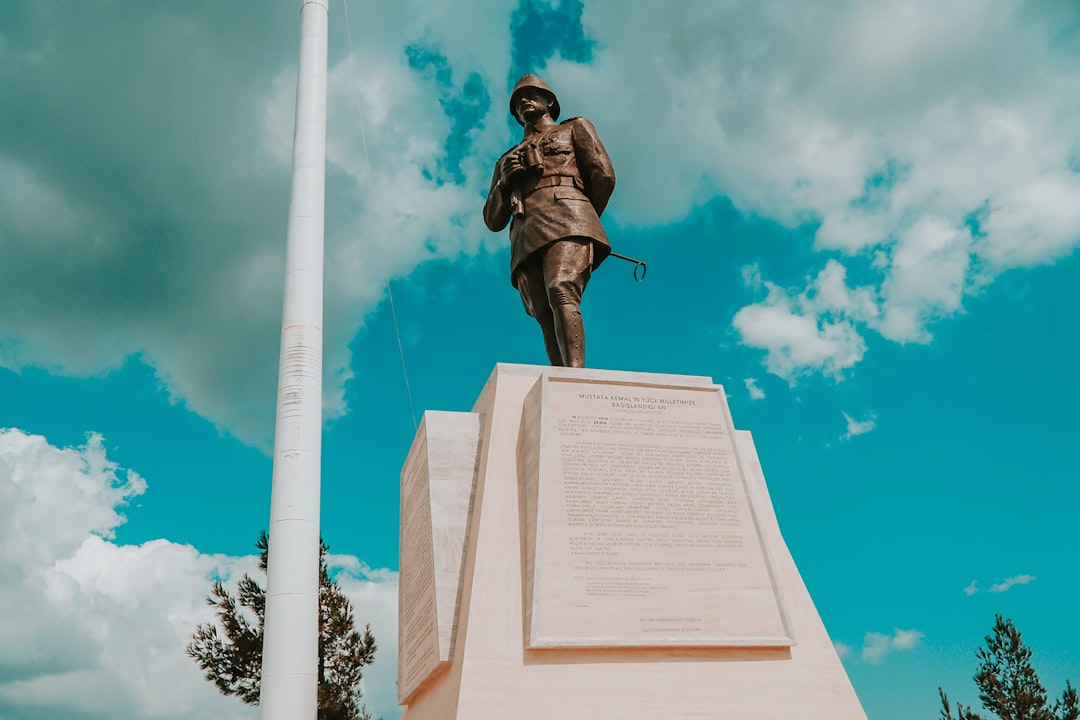

A bronze figure over eight meters tall dominates the Plaza de la Revolución in Santa Clara, the left arm bandaged and the rifle held tightly in the right hand. It is the statue of Ernesto "Che" Guevara, created by Cuban sculptor José Delarra and inaugurated in 1987, marking the site where in December 1958 the decisive battle of the Cuban revolution was fought. Beneath the feet of that monumental sculpture, housed in a mausoleum carved into the rock, rests the Argentine guerrilla along with other fallen fighters.

Santa Clara is located about 300 kilometers east of Havana, and can be reached by bus from the capital in about four hours. The monumental complex — known as Complejo Escultórico Comandante Ernesto Che Guevara — is one of the most visited secular pilgrimage sites in Cuba, but it maintains an atmosphere of reflection that surprises those who arrive expecting only a tourist attraction.
The battle of 1958 and the historical significance of the site

In December 1958, the forces led by Che Guevara conquered Santa Clara in a few days, intercepting an armored train sent by the regime of Fulgencio Batista and derailing the tracks with a bulldozer. That victory paved the way for the revolutionaries to take power on January 1, 1959. The site of the armored train is preserved not far from the statue, with some original cars still visible, and serves as a complementary stop to the visit of the main complex.
The square on which the statue stands was designed to evoke the grandeur of the historical event: the light stone base on which the sculpture is positioned bears engraved words from the farewell letter that Guevara wrote to Fidel Castro before leaving for his last revolutionary missions. Reading those phrases carved in stone, under the Caribbean sun, is a concrete and not abstract experience.
The mausoleum: where Guevara and his companions rest
Under the statue is the mausoleum inaugurated in 1997, when the remains of Che Guevara — found in Bolivia where he was killed in 1967 — were brought back to Cuba. Inside, in a sober room illuminated by a perpetual flame, the urns of Guevara and thirty other fallen fighters during the revolutionary operations in Latin America are preserved. Access to the mausoleum is free, but requires respectful clothing: covered shoulders and knee-length pants or skirts are the unwritten norm that is enforced at the entrance.

The atmosphere inside is that of a place of civil worship: visitors walk in silence, photography is prohibited in the urn room, and an honor guard oversees the entrance. This is not a tourist spectacle, but a ritual that Cubans maintain with evident conviction. Even those who do not share the ideology feel the emotional weight of the place.
What to physically observe: details of the statue and the complex

The statue of José Delarra is made of bronze and depicts Guevara in an upright posture, with his arm in a cast — a tribute to the injury the guerrilla sustained during the battle of Santa Clara. The face is stern, the gaze directed towards the horizon. At the base of the pedestal are relief panels that recount episodes from Guevara's life, from his Argentine youth to his campaigns in Africa and Bolivia. It is worth stopping to observe them closely: they are a visual summary of the character's biography.
The complex also includes a small museum with photographs, original documents, and personal items that belonged to Guevara. The captions are in Spanish, but the photographic material is self-explanatory. Among the displayed pieces are handwritten letters and images of the military operations of 1958, which help to place the location in its historical context without the need for a guide.
Practical tips for the visit
The best time to visit the complex is early in the morning, preferably between 8 and 10, when the side light enhances the bronze details of the statue and the square is still cool and not crowded. The complex is open every day except Monday, and entry to the square and the museum is free. Allow at least an hour and a half to see the statue, the mausoleum, and the museum with the necessary attention.
From Santa Clara, it is easy to organize a visit to the Monument to the Armored Train, which is just a few minutes by taxi from the Plaza de la Revolución. Private taxis — the so-called particulares — are the most convenient way to get around the city and can be easily found outside the main entrance of the complex. It is advisable to bring water: the square is exposed to the sun and there are few shadows during the central hours of the day.


