



Chengyang 'Wind and Rain' Bridge in Liuzhou, China is a masterpiece of traditional Dong architecture and a symbol of cultural resilience. Nestled in the heart of Sanjiang County, the bridge stands as a testament to the ingenuity and craftsmanship of the Dong people, who have lived in the region for centuries. Built in 1916, the bridge represents more than just a crossing over the Linxi River; it embodies a rich tapestry of history, art, and local tradition.
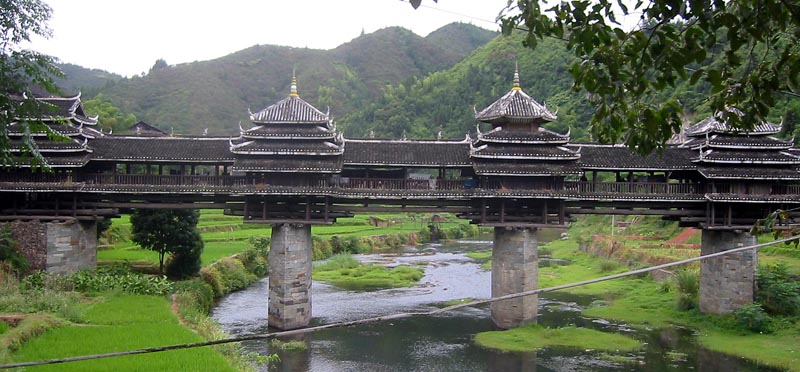
The history of the Chengyang Bridge is deeply interwoven with the Dong ethnic minority, known for their skill in timber construction without using a single nail. The bridge's construction, led by renowned Dong craftsmen, was a community effort, reflecting the cooperative spirit that is a hallmark of Dong society. For over a century, the bridge has withstood the elements, serving as a vital link between the villages of the Chengyang area and a symbol of unity and endurance.
Architecturally, Chengyang Bridge is a stunning example of Dong craftsmanship. Its art and architecture reflect a unique blend of functionality and artistic expression. The bridge's five pagoda-like towers rise majestically, with intricate wooden carvings that tell stories of local legends and daily life. Each of these towers is reminiscent of traditional Chinese pagodas, offering a haven for travelers and locals alike to pause and admire the landscape. The extensive use of wood, combined with the meticulously placed grey tiles on the roof, creates a harmonious balance between strength and elegance.

The bridge is not just a physical structure but a cultural hub, deeply embedded in the local culture and traditions of the Dong people. It plays a central role during local festivals such as the Dong New Year and the Fireworks Festival, where villagers gather to celebrate with music, dance, and traditional costumes. The bridge is also a popular setting for courtship and social gatherings, fostering a sense of community and belonging.
A visit to Chengyang would be incomplete without indulging in the region's gastronomy. The local cuisine, known for its simplicity and rich flavors, includes specialties such as sour fish soup and glutinous rice cakes. These dishes, often prepared using age-old recipes, offer a delicious insight into Dong culinary traditions. Visitors are encouraged to try the locally brewed rice wine, a staple at festive occasions and a testament to the area's agricultural bounty.
Among the lesser-known curiosities of the Chengyang Bridge is its role as an unofficial 'weather station.' Locals have long observed that the bridge can predict weather changes; the wooden beams emit a particular scent before rain, a natural phenomenon that intrigues both locals and visitors. Additionally, hidden within the bridge's carvings are symbols and motifs that represent protective charms and blessings for safe passage.
For those planning to visit, the best time to experience Chengyang Bridge is during the spring or autumn, when the natural beauty of the surrounding landscape is at its peak. Practical visitor information includes wearing comfortable shoes, as exploring the nearby villages and scenic routes involves walking. Take time to interact with the local Dong people, who are known for their hospitality and willingness to share their heritage.
Planning your visit to such a culturally rich site can be made seamless with the Secret World app, offering a personalized AI itinerary to explore the wonders of Liuzhou.
