
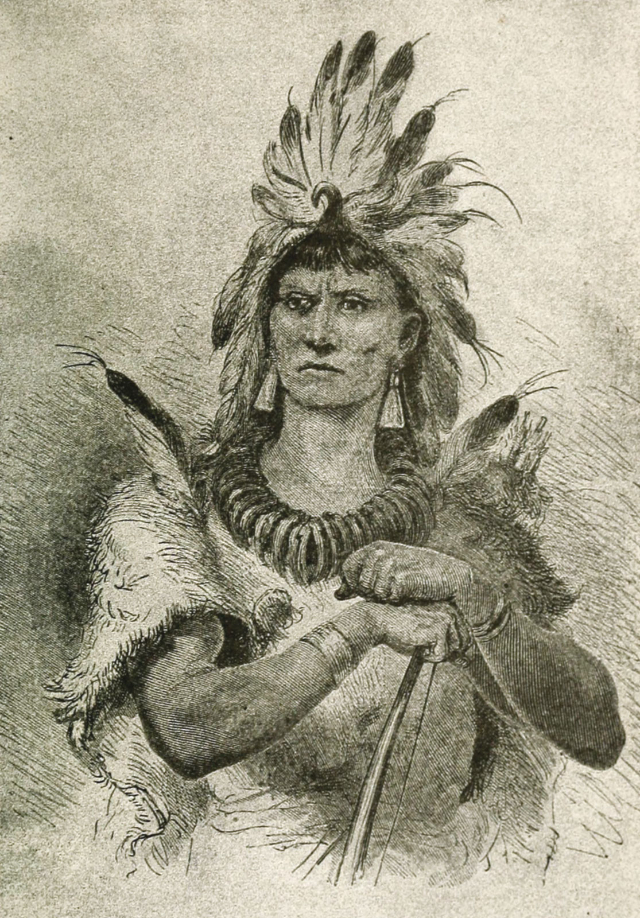

Among fashionable shops and busy cafés in Henrico, Virginia, an imposing statue tells the story of a powerful Indigenous leader who ruled these lands long before the first English colonists arrived.
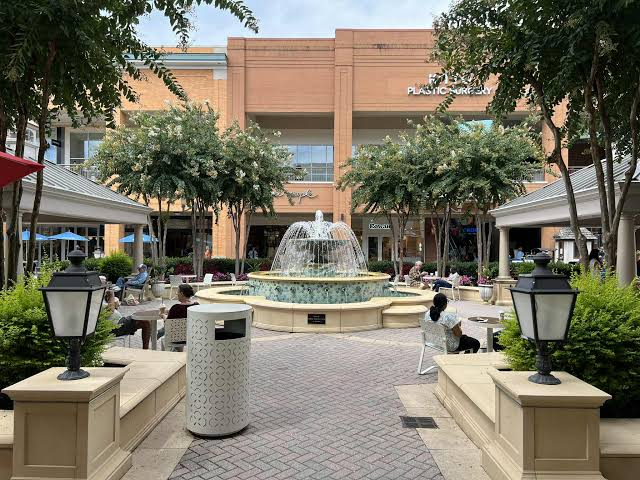
There are places where history announces itself through ancient ruins, imposing castles, or magnificent museums. And then there are places where it catches you completely by surprise.
Imagine strolling through an open-air shopping center in suburban Richmond, surrounded by storefronts, restaurants, and people carrying shopping bags. Suddenly, rising above the contemporary surroundings, you encounter a striking bronze figure holding a staff, standing on an intricately carved stone column.
This is Chief Powhatan, one of the most influential Indigenous leaders in early American history.
His monument at Short Pump Town Center is an unexpected reminder that beneath Virginia's modern roads, shopping districts, and neighborhoods lies a much older world, one whose stories began centuries before America existed.
The Powerful Leader Behind the Legend of Pocahontas Most people have heard of Pocahontas, the young Indigenous woman whose life became intertwined with the earliest English settlement in America. Far fewer know much about her father.
His name was Wahunsenacawh, commonly known as Chief Powhatan, and around the beginning of the 17th century he led a powerful alliance of Indigenous communities across Virginia's Tidewater region.
The Powhatan paramount chiefdom, often called the Powhatan Confederacy, brought together approximately 30 communities spread across thousands of square miles of coastal Virginia.
This was no simple collection of scattered villages. The region was home to established societies with complex political relationships, agricultural traditions, trade networks, and deep spiritual connections to the land.
Powhatan exercised influence through diplomacy, alliances, tribute, and military power. Under his leadership, the alliance became one of the most formidable political forces in the region.
When English settlers arrived at Jamestown in 1607, they were not entering an empty wilderness. They had arrived in a land inhabited and governed by Indigenous peoples for countless generations.
And they were about to encounter one of its most powerful leaders.
When Two Worlds Collided The arrival of the English at Jamestown marked the beginning of a complicated and often violent relationship between the colonists and the Powhatan peoples.
At first, the two sides depended on uneasy exchanges. The English desperately needed food and local knowledge to survive, while Powhatan sought to understand and manage the presence of these newcomers.
Trade, diplomacy, suspicion, and conflict became inseparable.
Chief Powhatan's relationship with Captain John Smith, one of Jamestown's best-known settlers, would later become part of America's founding mythology.
Then there was Pocahontas.
Her real life was far more complex than the romanticized version familiar from popular culture. She became an important figure in relations between the English and her people, but her story also involved captivity, religious conversion, and a marriage to English colonist John Rolfe.
Chief Powhatan lived through these turbulent early encounters, witnessing the gradual transformation of a world his people had inhabited for generations.
He died in 1618, but the struggle over land, sovereignty, and survival continued long after his death.
A Bronze Figure Above the Modern World The Chief Powhatan monument is especially memorable because of where it stands.
Located within Short Pump Town Center, one of the Richmond area's popular outdoor shopping destinations, the statue seems almost to belong to another world.
The bronze figure rises above a tall stone pedestal, dressed in an interpretation of traditional Indigenous attire. In one hand he holds a staff, while the other carries a necklace.
Below him, carved decorative bands feature deer and patterns inspired by Indigenous culture.
The monument is known as the Powhatan Column, and its dedication extends beyond a single historical figure. It also honors seven Virginia Indian tribes: the Chickahominy, Eastern Chickahominy, Mattaponi, Nansemond, Pamunkey, Rappahannock, and Upper Mattaponi.
The Virginia Council on Indians provided guidance in its design, helping connect the memorial to the Indigenous heritage it seeks to recognize.
There is something striking about this encounter between past and present.
Around the statue, people go about their daily routines. Children play, shoppers browse stores, and conversations drift across the courtyard.
Yet above it all stands a reminder of a time when these lands were part of an entirely different political and cultural landscape.
It is worth stopping for a few moments, looking up at the figure, and imagining how dramatically this part of Virginia has changed over the centuries.
The History That Never Disappeared One of the most important things to remember when visiting the monument is that Indigenous Virginia is not simply a chapter of the distant past.
The descendants of the communities that lived here long before European settlement are still present today.
Virginia's Native tribes continue to preserve their cultural traditions, identities, and connections to ancestral lands, even after centuries of displacement, discrimination, and profound historical change.
That living continuity gives the Powhatan Column a deeper significance.
The statue commemorates a leader who died more than 400 years ago, but it also offers an opportunity to recognize the resilience and enduring presence of Indigenous peoples in Virginia.
In that sense, the monument is not just about remembering what once existed. It is also about understanding what remains.
An Unexpected Discovery Near Richmond Short Pump might not be the first place that comes to mind when planning a historical journey through Virginia.
Travelers usually head toward Colonial Williamsburg, Historic Jamestowne, or the museums and historic neighborhoods of Richmond.
But that is part of what makes this monument interesting.
You don't need to plan an elaborate excursion or venture into the countryside. The statue is right in the middle of an accessible, lively shopping district, where you can combine an ordinary afternoon with an encounter with an extraordinary story.
If you're already exploring the Richmond area, it's worth making a detour to see it.
And if the monument sparks your curiosity, consider continuing east toward Jamestown, where you can discover more about the first encounters between English colonists and the Powhatan peoples.
Visiting both places offers a fascinating contrast: one monument standing amid modern commerce, and another landscape where the events of the early 1600s unfolded.
A Reminder to Look Beyond the Obvious Travel is often about discovering what isn't immediately visible.
Sometimes an ordinary-looking place holds a history far more interesting than its surroundings suggest.
At Short Pump Town Center, Chief Powhatan stands above a world of modern shops and restaurants, quietly reminding visitors that Virginia's story did not begin with the arrival of European settlers.
Long before the roads were built and the storefronts appeared, this region belonged to Indigenous communities with their own leaders, cultures, political traditions, and histories.
And although the landscape has changed almost beyond recognition, those stories still deserve to be told.
The Chief Powhatan monument may not be the reason most people visit Short Pump, but it might become the most memorable thing they discover there.


