



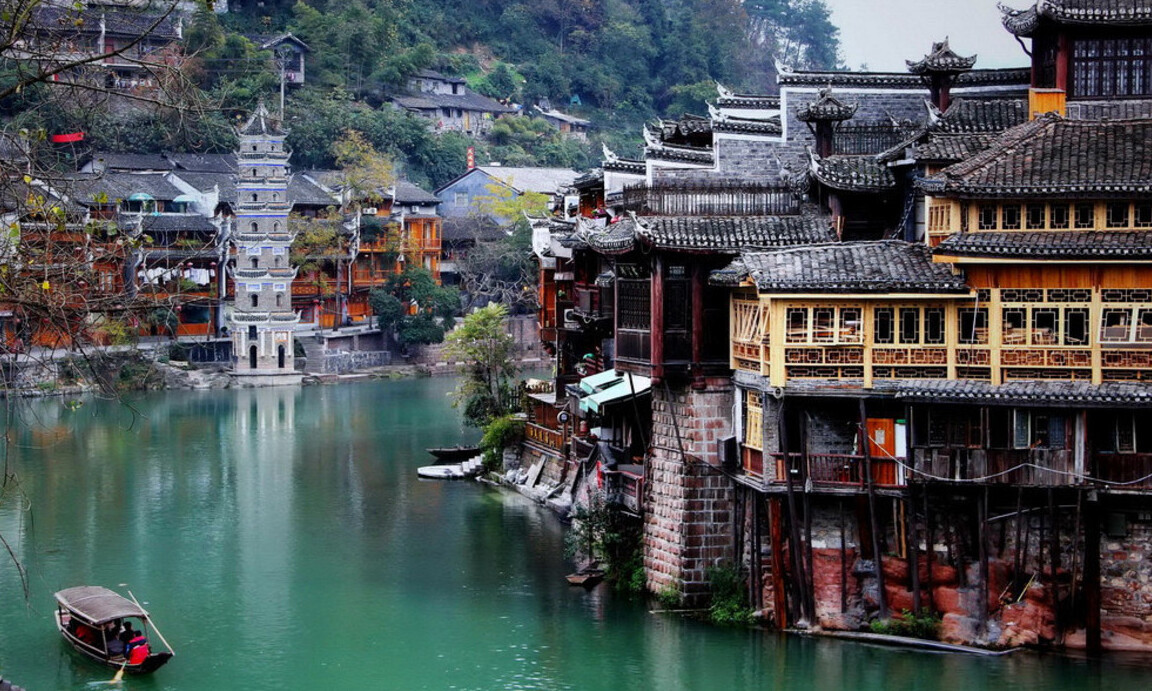
Nestled against the backdrop of verdant mountains and the flowing waters of the Tuojiang River, Fenghuang is a mesmerizing town that seems to echo tales of ancient China. Established in 1704, this charming enclave offers a window into a time before the waves of modernization swept across the nation. The town derives its name from the phoenix-shaped shadow cast by the towering mountain that looms over it, symbolizing rebirth and renewal — a theme that resonates deeply within its rich tapestry of culture and history.
History and Origins
The history of Fenghuang is interwoven with the legends of the Miao and Tujia ethnic groups, who have inhabited this region for centuries. Although the town was officially founded in the early 18th century, archaeological evidence suggests that the area has been settled since the Qin Dynasty (221-206 BCE). Fenghuang served as a strategic military outpost during the Ming and Qing Dynasties.
Throughout its history, Fenghuang has witnessed various pivotal events, including the tumultuous conflicts of the Taiping Rebellion in the mid-19th century, which led to a significant influx of Han Chinese immigrants. These migrations enriched the town's cultural landscape, blending traditions and customs that are still vibrantly alive today.
Art and Architecture
Walking through the streets of Fenghuang, one is captivated by its traditional architecture, characterized by wooden stilt houses that cling to the riverbanks, adorned with intricate carvings and vibrant red lanterns. The Qifeng Bridge, a beautiful wooden structure built in 1776, stands as a testament to the town's architectural prowess and offers stunning views of the river and surrounding mountains.
The town is also home to several temples, including the Wang Family Ancestral Hall, which showcases the artistry of the Miao and Tujia people through its detailed sculptures and murals. This striking blend of Han and indigenous architectural styles not only highlights the town's historical significance but also its artistic heritage, making it a living canvas of cultural expression.
Local Culture and Traditions
The cultural fabric of Fenghuang is rich with traditions that are deeply rooted in the local communities. Festivals play a crucial role in the social life of the residents. One of the most notable is the Miao New Year, celebrated with vibrant dances, traditional music, and colorful attire. During this festival, locals engage in the ancient custom of "Huanglian," where they celebrate the harvest with songs and communal feasts.
Moreover, Fenghuang is renowned for its craftsmanship, particularly in silver jewelry and handwoven textiles. These artisanal products not only offer a glimpse into the skills passed down through generations but also provide visitors with unique souvenirs that embody the spirit of Fenghuang.
Gastronomy
No visit to Fenghuang would be complete without indulging in its distinctive culinary offerings. The local cuisine is a delightful fusion of flavors influenced by both Miao and Tujia cooking traditions. One must-try dish is Spicy Duck, marinated with a blend of local spices and served with pickled vegetables. Another specialty is Tuojiang Rice Noodles, which are often paired with various toppings like braised meat and aromatic herbs.
For those with a sweet tooth, Fenghuang offers Cured Rice Cake, a delectable dessert made from glutinous rice and often enjoyed during festive occasions. To wash it all down, try the local sorghum wine, a traditional beverage that carries the essence of the region's agricultural heritage.
Lesser-Known Curiosities
While Fenghuang is a popular destination, several hidden gems remain overlooked by many tourists. For example, the Tuojiang River is home to the "Fenghuang Ghost Stories," a series of tales passed down through generations that narrate the supernatural experiences of locals. These stories add an eerie charm to the town, particularly during the evening when the streets are illuminated by lanterns.
Additionally, the Fenghuang Ancient Town Museum houses artifacts that date back to the Ming and Qing Dynasties, offering insights into the town's past that many visitors miss. The museum provides an intimate look at everyday life in ancient times, from tools and clothing to religious relics.
Practical Visitor Information
The best time to visit Fenghuang is during the spring (March to May) and autumn (September to November) months when the weather is mild and the natural scenery is at its most picturesque. During these seasons, the vibrant foliage and blooming flowers create a stunning backdrop for exploring the town.
When visiting, it’s advisable to wander through the narrow alleyways and along the riverbank to fully appreciate the stunning architecture and local life. Be sure to carry a camera to capture the postcard-perfect views of the ancient buildings reflected in the river.
For a truly personalized experience, consider using the Secret World app to plan your itinerary and discover the hidden treasures of Xiangxi.
