
← Back

Church of St. Anthony of Padua

P.za Antonio Lippolis Canonico, 16, 70011 Alberobello BA, Italia ★★★★☆ 103 views
Paula Loren
Alberobello
🏆 AI Trip Planner 2026

Get the free app

Discover the best of Alberobello with Secret World — the AI trip planner with 1M+ destinations. Get personalized itineraries, hidden gems and local tips. Free on iOS & Android.

🧠 AI Itineraries 🎒 Trip Toolkit 🎮 KnowWhere Game 🎧 Audio Guides 📹 Videos
Download on the App Store Get it on Google Play
Scan to download Scan to download

About Church of St. Anthony of Padua

Church of St. Anthony of Padua - Alberobello | Secret World Trip Planner

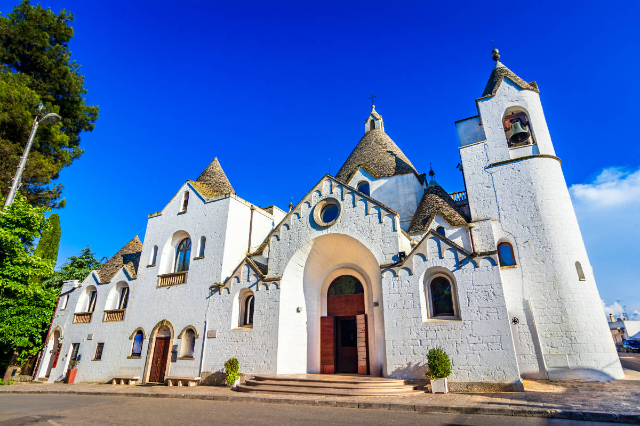
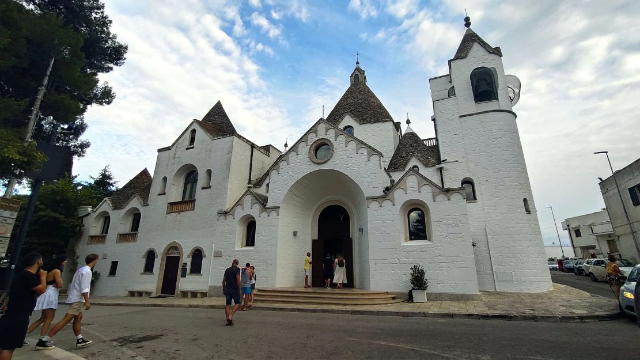
The Church of St. Anthony is a Greek-cross church located at the top of the Monti district, unique in that it is made entirely of trulli. Its construction is quite recent, in fact it was built in 1927. The contrast between the north side of Largo Martellotta, "new" and more "progressive" compared to the south side, entirely made of trulli, was still very much felt at the time. To obviate the inconvenience of the inhabitants of Rione Monti to travel to the more distant and "bourgeois" Church of Santi Medici, the local parish priest decided to have a church built for what was Alberobello's poor neighborhood. In fact, in Rione Monti since 1910, the date of its election as a national monument, it was forbidden to build dwellings of any type other than trullo and thus constituted the poor quarter of Alberobello. Throughout the years from the postwar period to the 1980s, the common conception of the trullo as an expression of poverty and backwardness persisted, a conception that led to the demolition of hundreds of trulli outside the monumental areas in favor of "modern" constructions. Neighborhoods around the Santi Medici church and northeast of the town, once built entirely of trulli, no longer exist today.
Church of St. Anthony of Padua - Alberobello | Secret World Trip Planner
🗺 AI Trip Planner

Plan your visit to Alberobello

Suggested itinerary near Church of St. Anthony of Padua

MAJ+
500.000+ travelers worldwide
  1. 🌅
    Morning
    Church of St. Anthony of Padua
    📍 Alberobello
  2. ☀️
    Afternoon
    Weekend in Alberobello with Secret World: The Perfect Guide
    📍 0.7 km · Alberobello
  3. 🌆
    Evening
    Locorotondo, one of the most beautiful villages in Italy
    📍 8.2 km · Alberobello

Buy Unique Travel Experiences

Powered by Viator

See more on Viator.com

Explore nearby · Alberobello

Frequently Asked Questions

The church was built in 1927 to serve the residents of Rione Monti, Alberobello's poor neighborhood, which was restricted to trullo constructions after being designated a national monument in 1910. The parish priest commissioned this unique Greek-cross design in trulli architecture so the local community wouldn't have to travel to the distant 'bourgeois' Church of Santi Medici.
This church is one of the few religious buildings in Alberobello constructed entirely of trulli, the distinctive cone-shaped stone dwellings characteristic of the region. Its Greek-cross design combined with trullo construction makes it a remarkable and unusual architectural achievement from the early 20th century.
The church is located at the top of the Monti district, specifically in the Rione Monti neighborhood at Largo Martellotta. This area sits on the south side of the district, which is entirely made of trulli structures and once formed the poorest quarter of Alberobello.
The Church of St. Anthony of Padua was constructed in 1927, a relatively recent date compared to many European churches. It was built during a period when there was still a strong contrast between the modern north side and the traditional trullo-filled south side of the district.
The church and its surrounding Rione Monti neighborhood offer insight into Alberobello's social history as the former poor quarter, where only trullo construction was permitted after 1910. Visiting provides perspective on how trulli architecture was once associated with poverty, a perception that led to the demolition of many trullo neighborhoods outside the monumental areas during the postwar period through the 1980s.
