



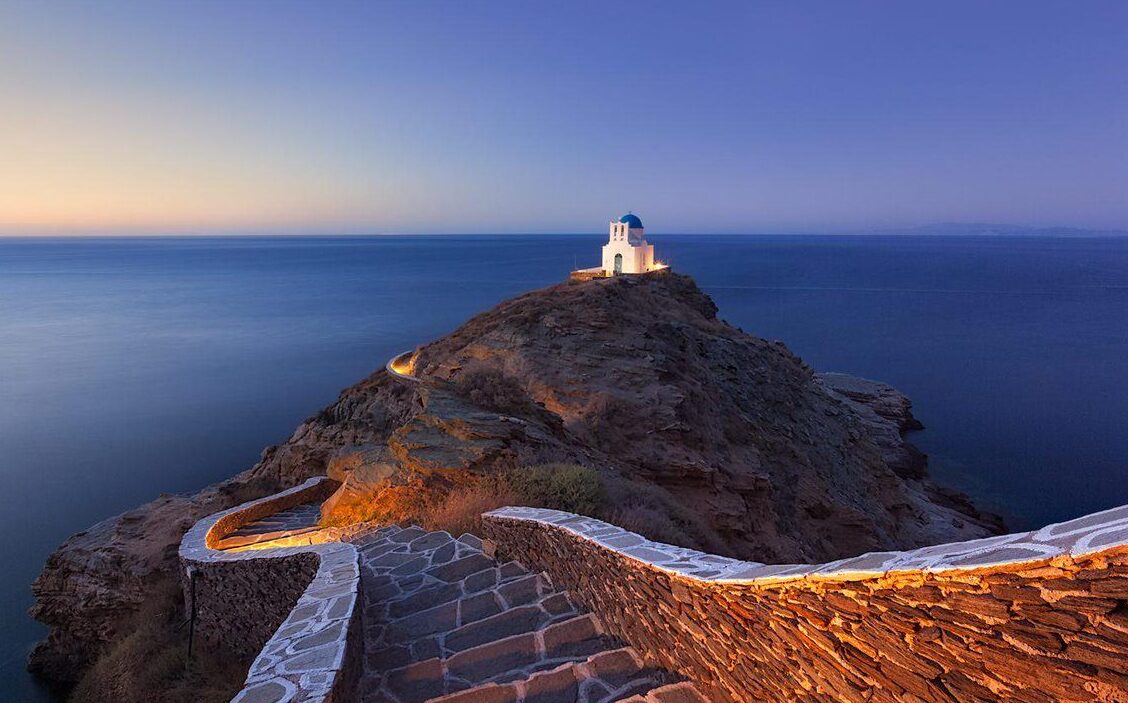
Perched dramatically on a rocky promontory overlooking the azure Aegean Sea, the Church of the Seven Martyrs in Kastro, Sifnos, is a sight to behold. This iconic structure, with its pristine whitewashed walls and blue-domed roof, is not only a testament to the island's architectural beauty but also a symbol of its rich historical tapestry.

The origins of the Church of the Seven Martyrs are intertwined with the history of Kastro itself, which served as the ancient capital of Sifnos. This settlement, with its strategic coastal location, has been inhabited since antiquity. Though the exact date of the church's founding remains elusive, it is believed to have been established during the Byzantine period, a time when the island flourished as a center of trade and culture. The church is dedicated to the Seven Martyrs, believed to be early Christian saints, whose stories of faith and sacrifice have been preserved through oral traditions and ecclesiastical records.
Architecturally, the Church of the Seven Martyrs is a quintessential example of Cycladic architecture, featuring simple geometric lines and harmonious proportions that blend seamlessly with the rugged landscape. The church's interior, though modest, houses a series of beautiful icons and religious artifacts, offering a serene space for reflection and worship. The simplicity of its design is a testament to the Cycladic aesthetic, where function and form are elegantly balanced.
Culturally, the Church of the Seven Martyrs holds a special place in the hearts of the locals. It is a focal point for religious celebrations, particularly during the feast day of the Seven Martyrs, which is observed with great reverence and community spirit. On this day, locals and visitors alike gather to attend a service, followed by traditional music and dancing, embodying the island's vibrant cultural heritage. The church's bell, ringing out across the cliffs, serves as a call to the faithful and a reminder of the deep-rooted traditions that continue to thrive in Sifnos.
A visit to Kastro is incomplete without indulging in the island's rich gastronomy, which is deeply connected to its cultural identity. Sifnos is renowned for its culinary traditions, and visitors should not miss trying local delicacies such as revithada (slow-cooked chickpeas), mastelo (lamb or goat cooked with wine and dill), and the famous Sifnian almond sweets. These dishes, often served during festivals and family gatherings, are a testament to the island's rich agricultural heritage and the locals' skill in transforming simple ingredients into culinary delights.
For those seeking lesser-known curiosities, the Church of the Seven Martyrs offers a few hidden gems. One intriguing aspect is the stunning frescoes that can be found in some of its recesses, which, though faded, reveal the depth of artistry that once flourished here. Additionally, the path leading to the church is lined with wild herbs and flowers, many of which are used in traditional Sifnian cooking and natural remedies, offering a fragrant journey that stimulates the senses.
Practical visitor information is essential for those planning a trip to this breathtaking locale. The best time to visit is during the spring and early summer months, when the weather is mild and the island is adorned with blooming flora. The church is accessible via a narrow path from Kastro village, a short but steep walk that rewards visitors with unparalleled views. It's advisable to wear comfortable shoes and bring a hat and water, as the path is exposed to the sun. Once there, take a moment to absorb the panoramic vistas of the sea and sky merging into a seamless horizon—a truly unforgettable experience.
In essence, the Church of the Seven Martyrs is more than just a religious site; it is a gateway to understanding the soul of Sifnos. From its historical roots and architectural elegance to its cultural significance and culinary delights, this church encapsulates the essence of the Cycladic spirit, inviting travelers to explore and appreciate the timeless beauty of Greece's Aegean islands.
