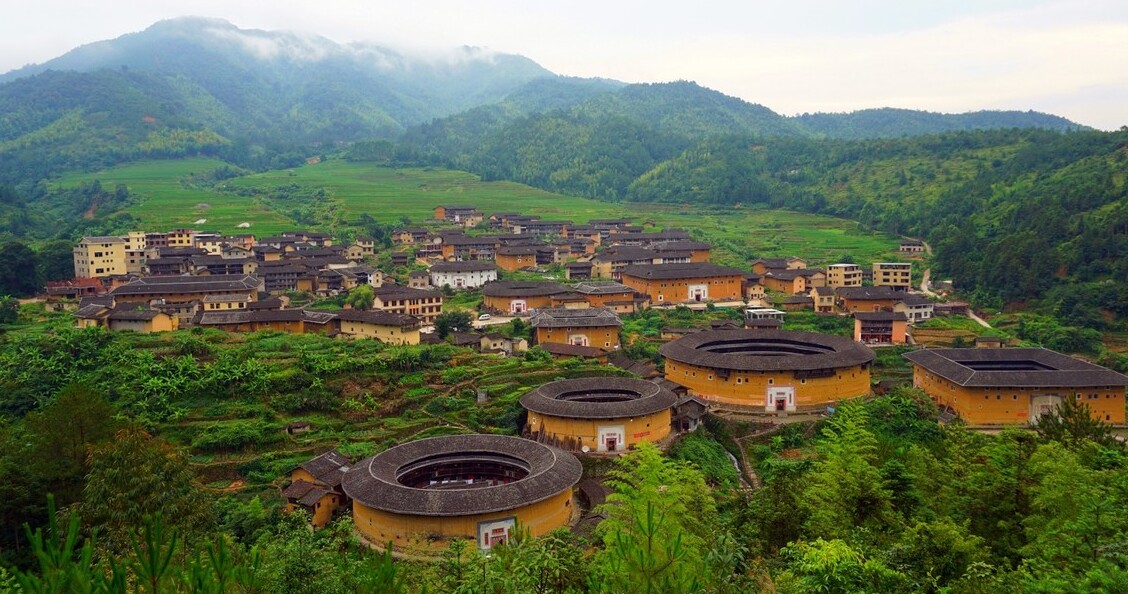

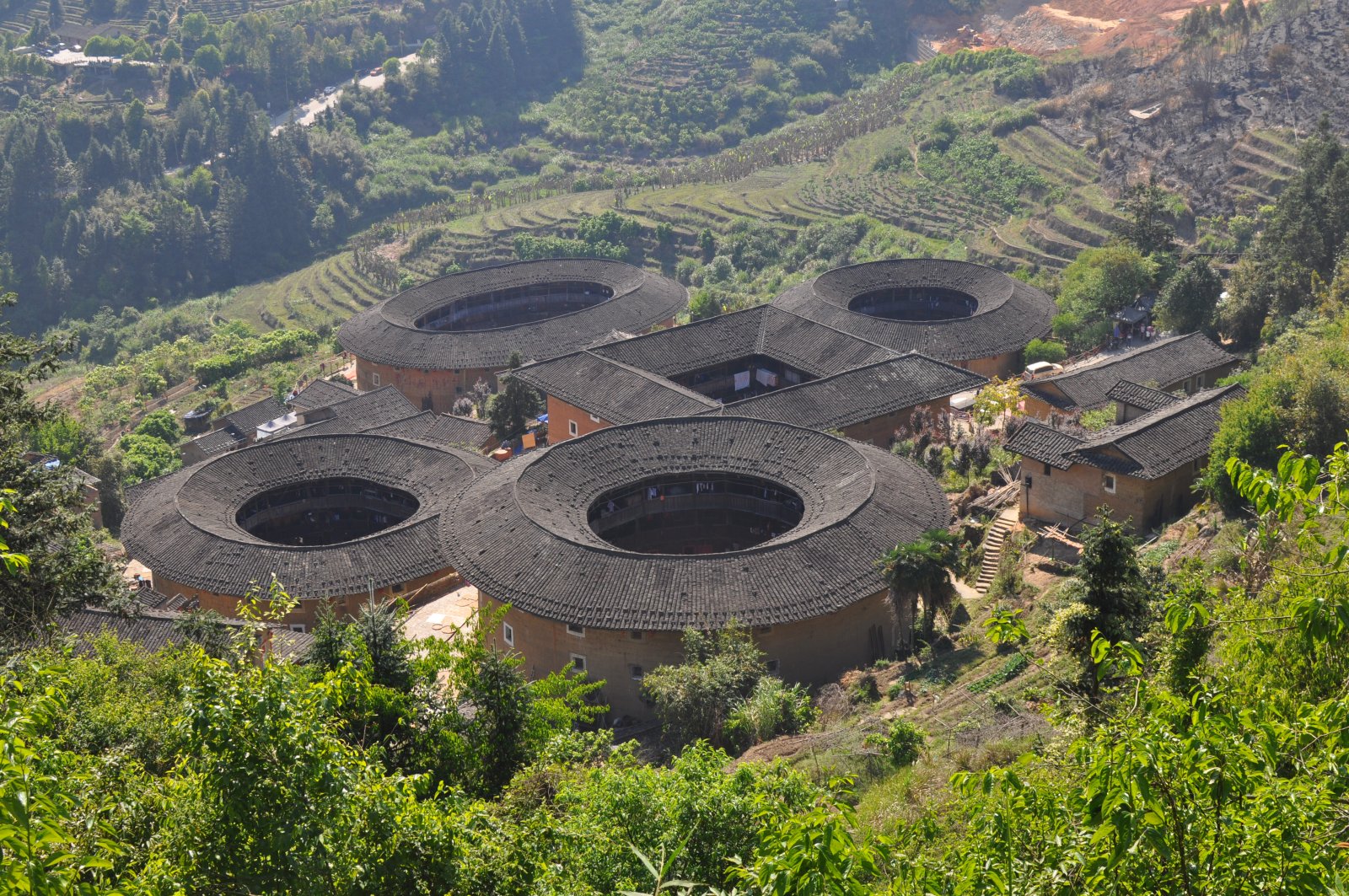
Tucked amidst the verdant hills of Fujian, the Fujian Tulou Cluster offers a glimpse into the remarkable resilience and ingenuity of the Hakka people. These earthen buildings, resembling giant donuts, are not merely dwellings but fortified micro-villages that have withstood the test of time. The Chuxi Tulou Cluster, located about 40 kilometers southeast of Yongding County and 230 kilometers southwest of Xiamen City, is a stunning example of this unique architectural style.
### History and Origins
The origins of the Tulou can be traced back to the 12th century, with the earliest structures believed to have been built during the Song Dynasty. The Hakka people, a subgroup of the Han Chinese, migrated to this mountainous region to escape conflict and instability. Over the centuries, they constructed these earth buildings as a means of protection against bandits and wild animals.
Jiqinglou, one of the most iconic Tulou in the Chuxi cluster, was built in 1419 during the reign of Emperor Yongle of the Ming Dynasty. Standing proud with its two concentric rings and 72 staircases, Jiqinglou exemplifies the communal living arrangement of the Hakka, where multiple families could reside under one roof while maintaining their privacy. The clan temple at its center further highlights the strong emphasis on community and familial ties that define Hakka culture.
### Art and Architecture
The architectural style of the Tulou is a marvel in itself. Constructed primarily from a mixture of clay, mud, and straw, these buildings feature thick walls that provide insulation and protection. The circular Tulou, like Jiqinglou, allows for a communal living space while the rectangular Tulou provides a different adaptation to the landscape.
Notable artworks are often found within these structures, including intricate wood carvings and paintings that depict local legends and the daily lives of the Hakka people. The artistry reflects not only the aesthetic values but also the cultural stories that have been passed down through generations.
### Local Culture and Traditions
Life in the Tulou is steeped in rich customs and traditions. The Hakka people celebrate numerous festivals, with the Chinese New Year being the most significant. During this time, families gather for reunions, share meals, and engage in traditional performances that showcase their unique cultural heritage.
One interesting custom is the Hakka Earth Building Festival, where locals come together to celebrate their architectural marvels. During this festival, visitors can experience traditional music, dance, and even culinary showcases that highlight Hakka cuisine.
### Gastronomy
Speaking of cuisine, the food of the Hakka people is as rich and diverse as their history. Hakka cuisine emphasizes preserved meats, pickled vegetables, and hearty stews. One must-try dish is Hakka stuffed tofu, where tofu is filled with minced meat, spices, and vegetables before being steamed or fried.
Another local specialty is the Hakka lei cha, or “pounded tea,” a unique herbal tea made from a blend of crushed tea leaves, nuts, seeds, and herbs, served with rice and vegetables. This dish not only nourishes but also reflects the communal spirit of sharing meals among families in the Tulou.
### Lesser-known Curiosities
While many tourists flock to the more famous Tulou, there are hidden gems within the Chuxi Cluster that often go unnoticed. For instance, the Ming Dynasty inscriptions found on some buildings provide insight into the lives of those who lived there centuries ago.
Additionally, the Tulou’s unique acoustics are fascinating; whispers can carry across vast distances within the thick earthen walls. Exploring the Tulou offers a chance to discover these hidden details that tell the stories of resilience and community.
### Practical Visitor Information
The best time to visit the Fujian Tulou Cluster is during the spring and autumn months, particularly from March to May and September to November. The weather is mild, making it ideal for hiking and exploring the surrounding landscapes.
When visiting, be sure to climb up to the sightseeing platform overlooking Chuxi Village for breathtaking panoramic views of the Tulou and the lush countryside. Additionally, consider staying overnight in one of the Tulou to fully immerse yourself in the Hakka lifestyle.
Pack your camera, a sense of adventure, and perhaps a curiosity for local delicacies, as you explore this unique heritage site.
A visit to the Fujian Tulou Cluster is not just a journey through history; it’s an experience that connects you to the heart of Hakka culture. For a personalized itinerary that captures the essence of Longyan Shi, consider using the Secret World app.
