
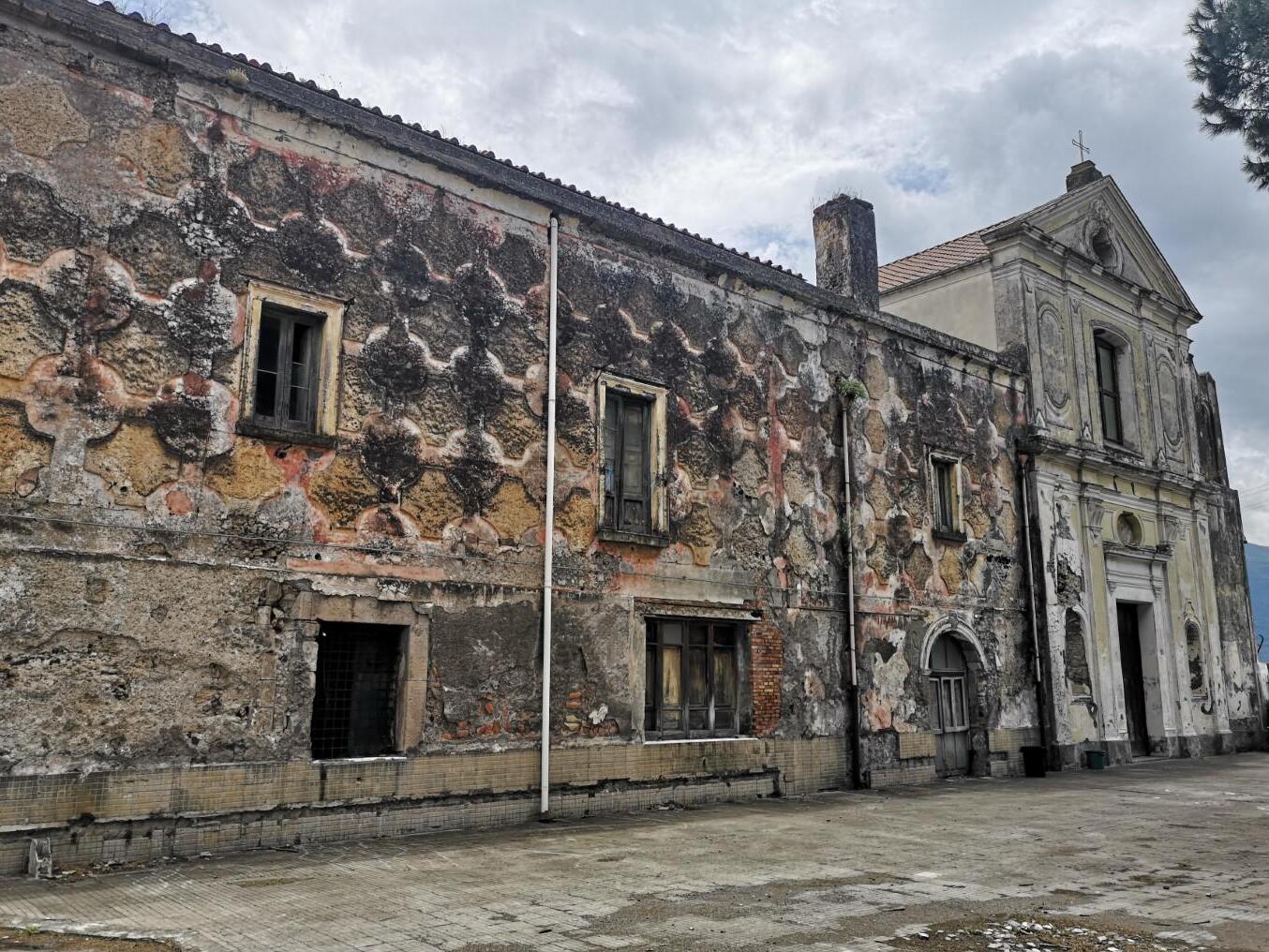

Nestled in the lush hills of Campania, the Cistercian Abbey of Santa Maria di Realvalle stands as a testament to centuries of spirituality, artistry, and resilience. Founded in 1274 by Charles of Anjou, the abbey commemorates the significant victory at the Battle of Campo San Marco in 1266. This battle marked a pivotal moment in the struggle for dominance in the Kingdom of the Two Sicilies, as Charles sought to expel the Swabian rulers led by Manfredi. With papal support, this foundation not only symbolized a religious stronghold but also a political statement, as the abbey became a sanctuary of royal endowments.
The abbey flourished under the Angevins, enjoying substantial wealth and influence. However, the tides turned when the Aragonese took control, leading to a gradual decline exacerbated by the catastrophic earthquake of 1456, which devastated much of southern Italy. The abbey's structural integrity suffered considerably during this period, but it managed to persist amid adversity until the suppression of religious orders ordered by Joachim Murat in 1808, which led to the confiscation of its assets. By the end of the 19th century, the abbey's fate took a turn when it was entrusted to the Franciscan Sisters Alcantarine, who continue to reside there, preserving its spiritual legacy.
Architecturally, the Cistercian Abbey presents an intriguing blend of styles, reflecting its long history. The initial design showcases French Gothic influences, evident in the pointed arches and ribbed vaults that characterize its main structure. As time progressed, elements of the Baroque period were introduced, adding ornate details and embellishments that contrast with the austere elegance of its Gothic roots. Among the notable features is the New Chapel of Santa Maria di Realvalle, designed by sculptor and painter Angelo Casciello, which embodies a modern interpretation of the sacred space while paying homage to its historical context. Visitors can marvel at the intricate frescoes and statuary that adorn the chapel, capturing both divine and earthly beauty.
Local culture thrives around the abbey, with traditions deeply rooted in the community's connection to the monastic life. Festivals celebrating the Feast of Santa Maria, typically held in September, draw pilgrims and visitors alike, showcasing local customs steeped in faith and reverence. The celebration often includes processions, traditional music, and the sharing of prayers, reinforcing the abbey's role as a spiritual beacon for the region. The Franciscan Sisters also play a vital role in preserving these traditions, engaging with the community through various outreach programs and cultural events.
The gastronomy of Scafati reflects the vibrant flavors of Campania, with dishes that celebrate local ingredients and culinary heritage. The area is renowned for its mozzarella di bufala, often enjoyed fresh with tomatoes and basil in a classic Caprese salad. Limoncello, a lemon liqueur native to the region, is a popular after-dinner drink that encapsulates the essence of Sorrento lemons. Food enthusiasts should not miss the opportunity to sample pastiera, a traditional Easter cake made of ricotta and wheat, which embodies the rich agricultural bounty of the area.
While many visitors admire the abbey’s grandeur, some lesser-known curiosities may pique the interest of the curious traveler. For instance, the abbey grounds are home to ancient olive trees, some over a thousand years old, which have witnessed the ebb and flow of history. Additionally, the site is said to possess a unique acoustic phenomenon; whispers can carry through its vaulted ceilings, leading to the belief that the abbey is imbued with a divine presence. These hidden gems offer a deeper connection to the spiritual essence of the place.
The best time to visit the Cistercian Abbey of Santa Maria di Realvalle is during the spring and fall months, when the weather is mild and the surrounding landscapes burst with color. Early mornings or late afternoons provide the most serene atmosphere for contemplation and exploration. Be sure to take time to wander the grounds, appreciating the harmonious blend of nature and architecture. Visitors are encouraged to engage with the Franciscan Sisters, who often offer insights into the abbey’s history and spiritual practices.
For those planning a trip to Scafati, using the Secret World app can help create a personalized itinerary that uncovers the hidden treasures of this historic site and its surroundings.


