
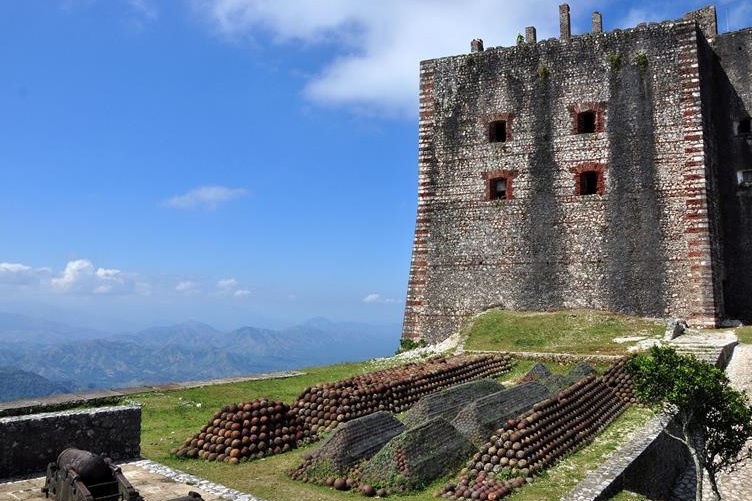

Perched majestically atop the Bonnet à l’Evêque mountain in Northern Haiti, Citadelle Laferrière stands as a formidable testament to human resilience and the indomitable spirit of a newly independent nation. This colossal fortress, a UNESCO World Heritage site since 1982, offers not only a breathtaking panorama of lush mountainside and the distant shimmer of the Atlantic Ocean, but also a profound journey through Haiti's turbulent history and vibrant culture.
The story of Citadelle Laferrière begins in the wake of the Haitian Revolution, the only successful slave revolt in history that led to the establishment of Haiti as the first independent black republic in 1804. Commissioned by Henri Christophe, a key leader of the revolution who later crowned himself King Henri I of the Kingdom of Haiti, the fortress was constructed between 1805 and 1820. It was designed as a defensive stronghold to deter potential French attempts to reclaim the colony. With walls up to 130 feet high and 10 feet thick, the Citadelle is an engineering marvel of its time, built by the hands of over 20,000 workers, many of whom were former enslaved people.
Architecturally, Citadelle Laferrière is an impressive synthesis of European military design and local ingenuity. The fortress is shaped like a ship, symbolically poised for battle, and its robust limestone structure sprawls over an area of 108,000 square feet. Within its walls lie 365 cannons of varying sizes, some still adorned with intricate European engravings. The strategic placement of the Citadelle allowed for a sweeping view over the valleys below, ensuring early warning against any advancing forces. It's not merely a relic of warfare; the Citadelle is a canvas of history, with its moss-covered walls and weather-worn façades telling stories of a tumultuous past.
The cultural tapestry of the region surrounding the Citadelle is rich and vibrant. The nearby town of Milot, a short distance down the mountain, plays host to the Feast of Our Lady of Miracles, a lively event celebrated every July 16th. This festival is a microcosm of Haitian culture, featuring traditional music, dance, and religious ceremonies, reflecting the blend of African, Taino, and European influences that shape the nation’s identity. The Citadelle itself serves as a symbol of national pride and resilience, deeply rooted in the collective memory of the Haitian people.
Gastronomic offerings in the region are as robust and flavorful as the history. Visitors can savor local dishes such as griot (fried pork), pikliz (spicy pickled vegetables), and diri ak djon djon (rice with black mushrooms). These dishes are often accompanied by a glass of rhum Barbancourt, Haiti's renowned rum, distilled from pure sugarcane juice. The cuisine is a reflection of the nation's diverse cultural influences, offering a taste of Haiti’s vibrant culinary heritage.
Beyond its historical and cultural significance, Citadelle Laferrière harbors lesser-known curiosities that intrigue the curious traveler. Legend has it that Henri Christophe's treasure remains hidden within the fortress, adding an air of mystery and intrigue to the site. Additionally, the Citadelle is home to a unique microclimate, where rare species of flora and fauna thrive, making it a point of interest for nature lovers and scientists alike.
For those planning to visit, the best time to explore Citadelle Laferrière is during the dry season, from November to March, when the weather is cooler and the skies are clear. To reach the fortress, visitors must embark on a scenic hike or horseback ride from the town of Milot, a journey that takes approximately two hours. Practical tips include wearing sturdy shoes and carrying sufficient water, as the trek can be challenging. Once at the top, take time to explore the sprawling grounds and immerse yourself in the stories etched into the stone walls.
As you stand atop this monumental fortress, overlooking the sweeping vistas and feeling the cool mountain breeze, you'll understand why Citadelle Laferrière is more than just a historical site. It is a symbol of Haiti’s indomitable spirit and enduring legacy, a place where the past and present converge in a timeless embrace.


