


An artificial mountain standing 35 meters tall, shrouded in perpetual mist and covered with over 160,000 plants from the high-altitude tropical regions of the world: this is the first image that greets visitors entering the Cloud Forest, one of the two iconic conservatories of the Gardens by the Bay in Singapore. The structure, inaugurated in 2012, was designed by the British architecture and landscape studio Wilkinson Eyre Architects, which has won numerous international awards for this project.
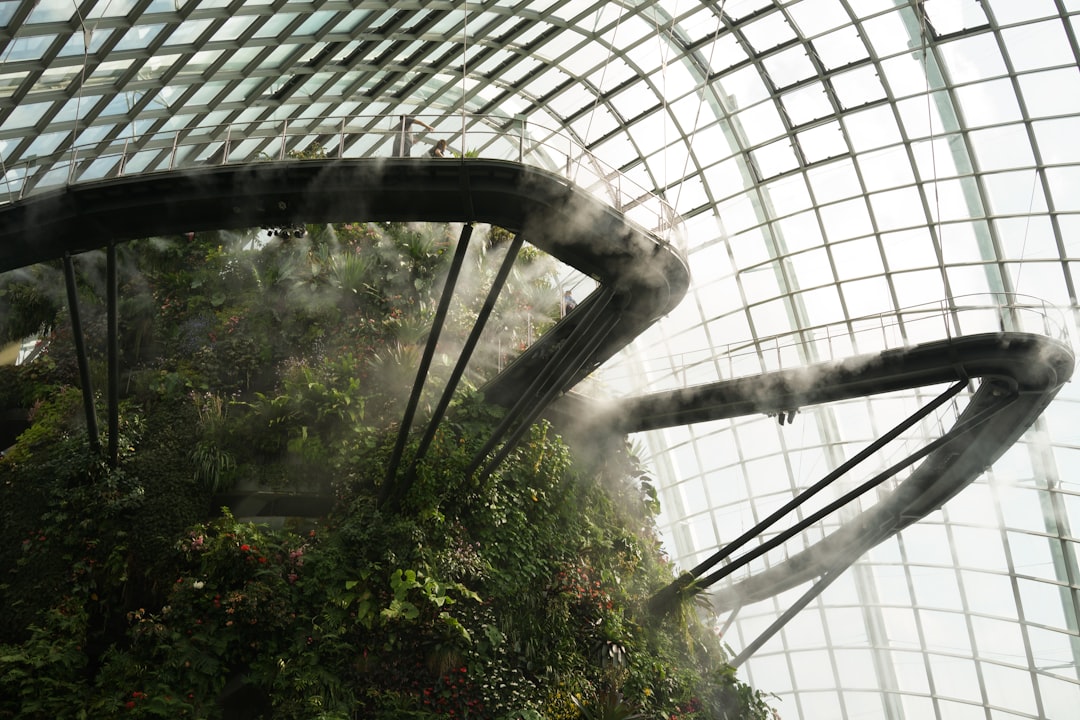
What immediately strikes is not just the scale — the glass dome spans about 6,000 square meters — but the way sculpture, botany, and architecture merge into a single environment. The fresh, humid air that envelops visitors as they pass through the entrance is real: the internal temperature is maintained between 23 and 25 degrees Celsius, replicating the climatic conditions of the tropical misty forests found between 1,000 and 3,500 meters in altitude.
The Living Mountain and Its Sculptural Installations

The heart of the Cloud Forest is the Cloud Mountain, a structure that is not simply a botanical scenery but a vertical pathway through overlapping ecosystems. From the top, an artificial waterfall descends about 30 meters, the highest of its kind in an indoor space in the world. Along the levels of the mountain, accessible via elevator and suspended walkways, there are artistic installations that interact with the surrounding greenery.
Among the most discussed works is Crystal Mountain, a luminous sculpture that occupies the inner core of the structure and plays with reflections and transparencies in contrast to the organic matter of the plants. The informational panels distributed along the path explain the threats to high-altitude biomes — a scientific content that gives the installations a meaning that goes beyond pure aesthetics. Each level offers a different viewpoint on the mountain and the glass dome, making the visit a spatial experience as well as a visual one.

The Supertree Grove: when the garden becomes public art
Just outside the dome of the Cloud Forest lies the Supertree Grove, a collection of 18 vertical structures ranging from 25 to 50 meters tall that serve as vertical gardens and functional installations: some host photovoltaic panels, while others collect rainwater. In the evening, between 7:45 PM and 8:45 PM, the Supertrees light up during the Garden Rhapsody show, a light show synchronized with music that transforms the structures into luminous sculptures visible from much of the bay.

The elevated walkway OCBC Skyway, which connects two of the larger Supertrees at about 22 meters high, offers an aerial perspective of the entire area and the Marina Bay skyline. It is one of the most popular photo spots in the complex, particularly striking in the early evening hours when natural light blends with the artificial light of the structures.
Practical tips for an effective visit

The combined ticket for Cloud Forest and Flower Dome — the other conservatory of Gardens by the Bay — costs about 28 Singapore dollars for adults (the price may vary, it is advisable to check the official website before the visit). A visit to just the Cloud Forest typically takes 60-90 minutes, but those who want to linger over the art installations and read the explanatory panels should plan for at least two hours.
The best time to visit is early in the morning, shortly after opening at 9:00 AM, when the lines are minimal and the natural light filtering through the glass dome creates particularly intense visual effects on the waterfall and vegetation. On weekends and during holiday periods, the facility fills up quickly. To reach Gardens by the Bay, simply get off at the MRT station Bayfront (Circle and Downtown lines) and follow the covered pedestrian signs: the walk takes about 5 minutes and does not require going outdoors, a significant advantage given Singapore's climate.
Why the time and price of the ticket are worth it
The Cloud Forest is not a botanical garden in the traditional sense, nor a conventional art gallery. It is an environment where the distinction between artwork and context fades: the plants are an integral part of the installation, and the installations would be meaningless without the vegetation that surrounds them. This integration of art and science applied to nature is what sets it apart from many other attractions in the city.
For those visiting Singapore with little time, the Cloud Forest represents an effective synthesis of what the city-state does best: designing public spaces that are both functional, aesthetically ambitious, and capable of conveying a message — in this case, the fragility of tropical mountain ecosystems. A message that remains, even after leaving the glass dome and its artificial microclimate.


