


The Co-Cathedral of St. John the Evangelist is the city's most important church and the building from which the legend of the origin of Sansepolcro begins. The first construction of the Cathedral of Sansepolcro dates back to the first half of the 11th century, dedicated to the Four Evangelists and the Holy Sepulcher: according to tradition, in fact, the relics of Christ's tomb were transported to this place from the Holy Land by two pilgrims, Aegidius and Arcaneus. A monastery was also founded at the same time at the behest of Emperor Henry II, later enlarged in 1100 and inhabited since the mid-12th century by Camaldolese monks.
In 1520 at the behest of Pope Leo X, the Diocese of Sansepolcro was created, hiving it off from that of Città di Castello; the abbey then became the local cathedral and was dedicated to St. John the Evangelist, patron of the city. Since 1986, the church has become Co-cathedral of the new diocese of which it is part along with the cities of Arezzo and Cortona.
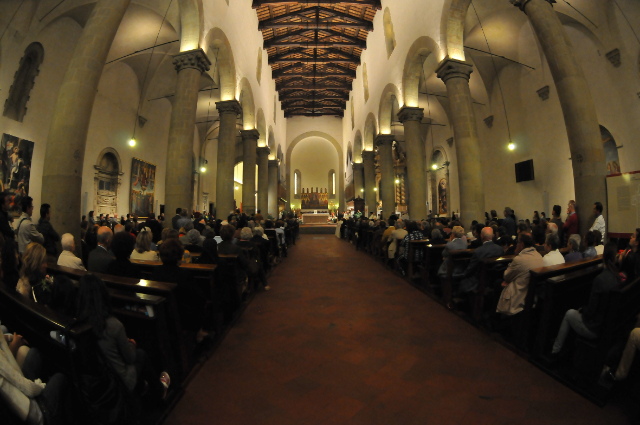
The Church has a 14th-century basilical plan with three naves; the nave is covered by a truss ceiling (the result of restoration in the years 1934-1943), while the side naves have cross vaults. In addition to the high altar there are six other altars, four of which are located in the side aisles, one inside the Chapel of the Holy Face, and the last one at the back of the right aisle.
The interior of the cathedral contains valuable works by local artists, including the Holy Face crucifix dating from the time of Charlemagne, the polyptych of the resurrection, Andrea della Robbia's terracotta tabernacle, Perugino's Ascension of Christ, etc.


