



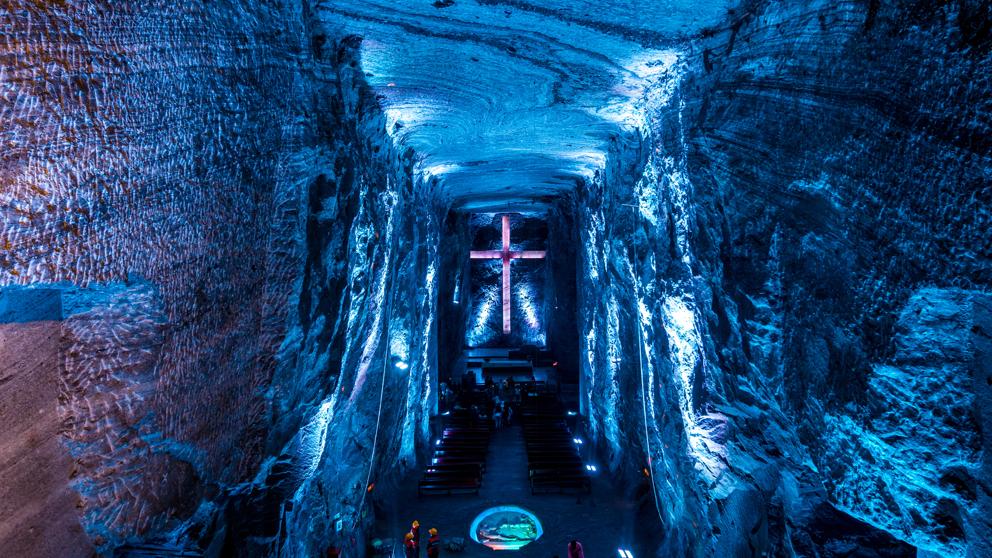
Delve into the depths of Colombia's earth to discover a marvel of human ingenuity and spiritual devotion: the Catedral de Sal. Located in Zipaquirá, this underground cathedral is not just a place of worship but a testament to the region’s rich history and cultural tapestry. Journeying 590 feet below the surface, visitors are enveloped in an otherworldly ambiance, where salt and stone converge to create a sanctuary like no other.
The origins of this subterranean wonder date back to the pre-Columbian Muisca civilization, who worshipped the sun and moon and were the original inhabitants of the area. Salt has been extracted here for centuries, as it was a precious commodity for the Muisca and later, the Spanish colonizers. The modern cathedral's story began in 1950, when miners carved a small sanctuary in honor of their patron saint, the Virgin of the Rosary, seeking divine protection for their perilous work.
The current Catedral de Sal was inaugurated in 1995, replacing the original structure due to safety concerns. Its construction involved transforming an industrial site into an architectural masterpiece, blending faith, artistry, and geology. The cathedral's design, a collaboration led by architect Roswell Garavito Pearl, is a stunning example of modern expressionism. It features 14 small chapels that represent the Stations of the Cross, leading to the central nave adorned with a massive, illuminated cross—a beacon of light in the shadowy depths.
Art and architecture converge in the cathedral's intricate carvings and sculptures, hewn directly from the salt rock. Each chapel offers a unique artistic interpretation of the Passion of Christ, with sculptures crafted by Colombian artists such as Carlos Enrique Rodríguez and Lilián Rengifo. Notable artworks include the poignant sculpture of the Creation of Man, inspired by Michelangelo, and the ethereal Angels’ Choir, which echoes through the cavernous space.
Culturally, the Catedral de Sal is a symbol of the enduring faith and resilience of the Colombian people. It hosts regular masses, drawing worshippers and tourists alike. The cathedral is also a focal point during Holy Week, when Zipaquirá comes alive with processions and traditional ceremonies. The blend of ancient and contemporary practices reflects the region's dynamic cultural heritage.
Visitors to the Catedral de Sal can savor the flavors of Zipaquirá, a town renowned for its traditional Andean cuisine. Indulge in local specialties such as ajiaco, a hearty chicken and potato soup, or empanadas de pipián, corn pastries filled with peanuts and potatoes. The nearby Plaza de los Comuneros offers quaint cafes where you can enjoy a cup of tinto, Colombian black coffee, a perfect way to warm up after exploring the cool, subterranean world.
Beyond its more visible attractions, the Catedral de Sal harbors lesser-known curiosities that captivate the inquisitive traveler. One such feature is the unique acoustics of the cathedral, which make it an exceptional venue for concerts. The underground space resonates with a hauntingly beautiful sound, offering an auditory experience unlike any other. Additionally, environmental and spiritual themes are interwoven into the site, as evidenced by the innovative lighting design that highlights the natural beauty and symbolizes the journey from darkness to light.
For those planning a visit, the Catedral de Sal is open year-round, but the best time to explore is during the dry season from December to March, when the region’s weather is most temperate. Guided tours are available and highly recommended, providing insights into the cathedral’s history, geology, and spiritual significance. Be sure to wear comfortable shoes, as the terrain can be uneven, and the temperature underground is cooler than the surface.
As you wander through this breathtaking monument, take a moment to appreciate the subtle details—the interplay of light and shadow, the texture of the salt walls, and the palpable sense of peace that pervades the space. The Catedral de Sal is more than a tourist destination; it is a journey into the heart of Colombia, offering a profound connection to its past and a glimpse into its enduring spirit.
