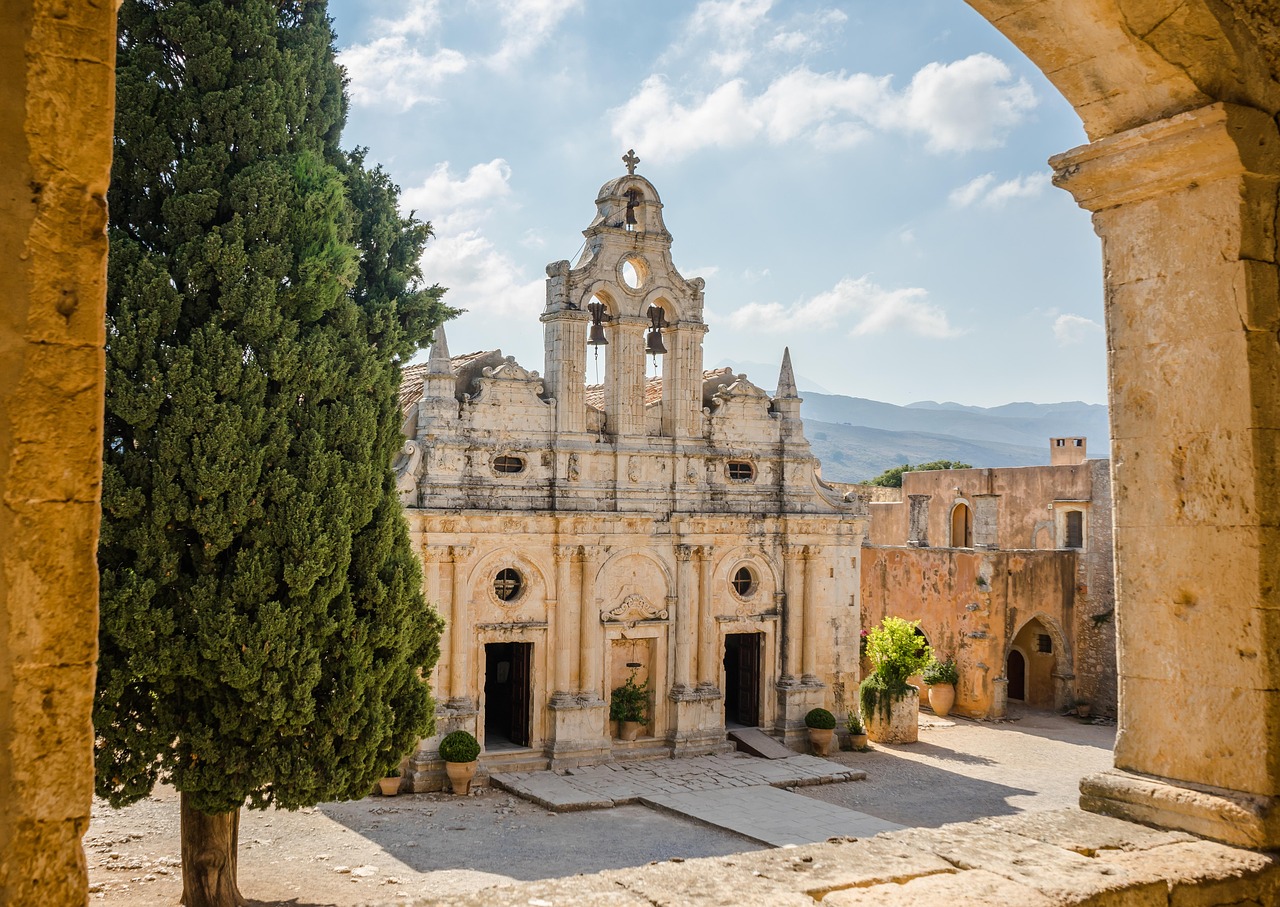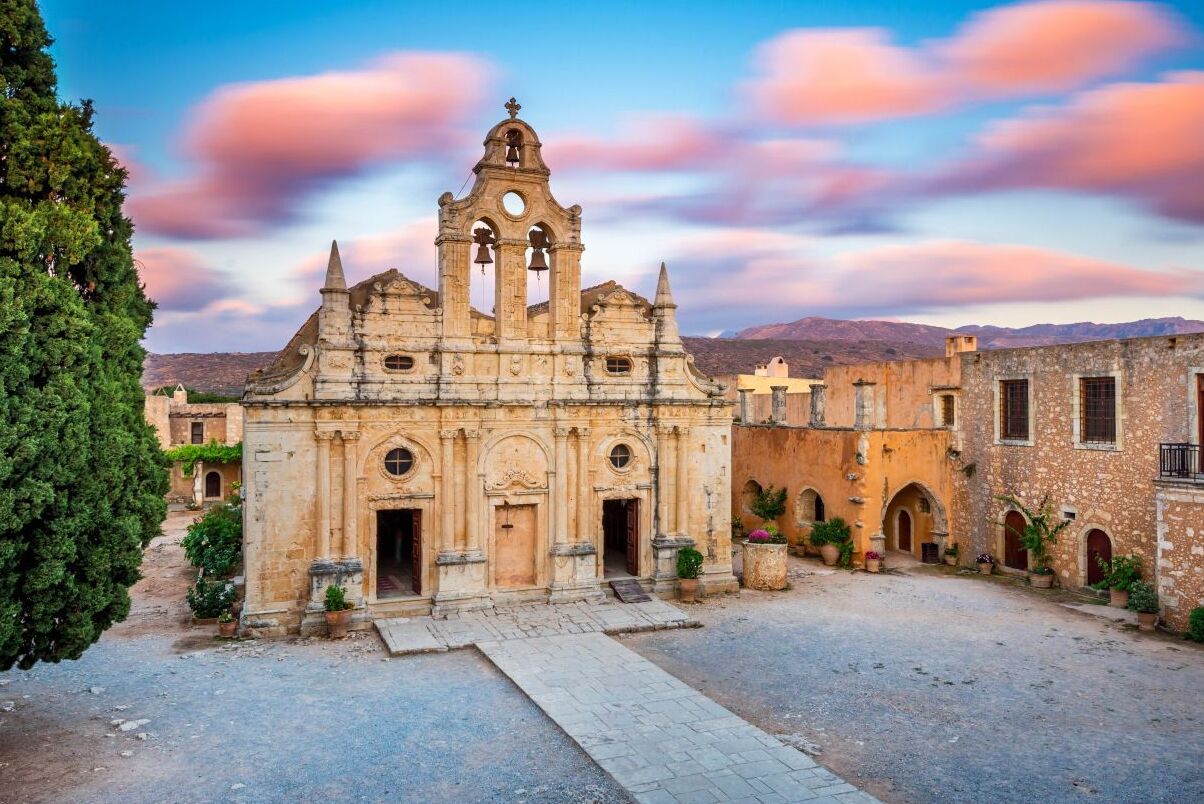

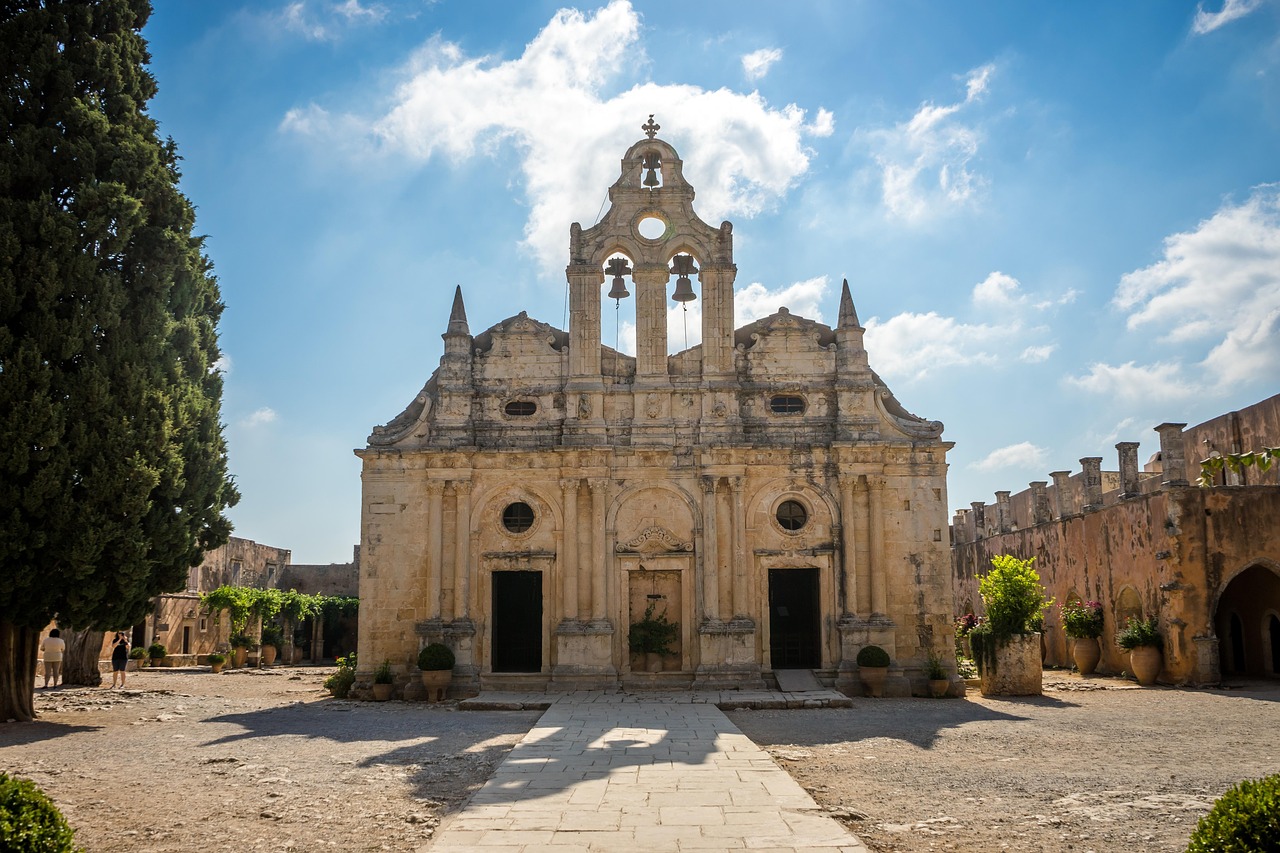
Arkadi Monastery, perched in the hills above Rethymno, is not only the most famous monastery on the island of Crete but also a poignant symbol of the island's turbulent history and cultural resilience. Surrounded by olive groves and breathtaking views, this small Eastern Orthodox monastery offers visitors a glimpse into the island's storied past and architectural beauty.
### History and Origins
Founded in the late 16th century, Arkadi Monastery has its roots in the Byzantine era, showcasing the deep spiritual heritage of the region. Its strategic location was a significant factor in its establishment, as it was intended to serve as a fortified refuge for the local population, particularly during the Ottoman occupation.
The events of 1866 mark a pivotal moment in the monastery's history, often referred to as the Cretan Holocaust. During this time, Arkadi became a sanctuary for around 70 Cretan women and children fleeing from Turkish forces. The Cretan rebels held out against overwhelming odds for three harrowing days. Ultimately, rather than face capture, they chose to die honorably. The abbot, Gabriel, detonated the gunpowder store, resulting in a tragic explosion that claimed many lives but ensured their freedom in death. This act of defiance made Arkadi a national symbol of resistance and sacrifice.
### Art and Architecture
The architectural splendor of Arkadi Monastery is characterized by its Venetian Baroque style, particularly evident in the striking façade of the church. Constructed from local stone, the honey-colored exterior is adorned with intricate carvings and decorative motifs, capturing the influence of both Byzantine and Venetian artistry.
Inside, visitors can marvel at the iconostasis, a beautifully crafted wooden screen embellished with icons depicting various saints. The monastery's chapel is also home to a collection of religious art that speaks to the spiritual significance of the site. Notably, the refectory and other chapels within the complex showcase the architectural ingenuity of the time while providing insight into monastic life.
### Local Culture and Traditions
The cultural significance of Arkadi Monastery extends beyond its walls, deeply intertwined with the local traditions of Crete. The monastery is often a focal point during various religious festivals, particularly during Easter when the community gathers to celebrate with solemnity and joy.
The surrounding villages honor their heritage with traditional Cretan music and dances, often performed in the courtyard of the monastery. These customs reflect the deep-rooted connection between the people and their history, with Arkadi serving as a reminder of resilience against adversity.
### Gastronomy
No visit to Arkadi would be complete without indulging in the local gastronomy. The region is known for its rich offerings of Cretan cuisine, which emphasizes fresh, local ingredients. Traditional dishes such as moussaka, dakos (Cretan barley rusk topped with tomatoes and feta), and kalitsounia (cheese pastries) can be enjoyed in nearby tavernas.
Pair your meal with a glass of raki, a local spirit distilled from grape pomace, or savor a glass of Cretan wine, renowned for its unique flavors shaped by the island's diverse terroir. The culinary traditions here are a testament to the island’s rich agricultural heritage and its connection to the Mediterranean.
### Lesser-known Curiosities
While many visitors flock to the main church, fewer take the time to explore the courtyard where a tree stands marked with bullet holes from the 1866 siege. This poignant reminder of the past invites reflection and adds depth to the visit.
Another hidden gem is the museum within the monastery, which houses artifacts and documents that narrate the history of Arkadi and its role in the Cretan struggle for independence. Many tourists overlook this educational resource, but it offers invaluable insights into the island’s complex heritage.
### Practical Visitor Information
The best time to visit Arkadi Monastery is during the spring or autumn months when the weather is mild, and the surrounding landscapes are lush and vibrant. The site is easily accessible from Rethymno, making it a perfect day trip that can also be combined with a visit to the nearby beaches.
Visitors should take their time to explore not only the church but also the various chapels, the refectory, and the museum. It’s recommended to arrive early in the day to avoid crowds and fully appreciate the serene atmosphere of this sacred site.
As you plan your visit, consider using the Secret World app to create a personalized itinerary that includes Arkadi and the surrounding attractions.