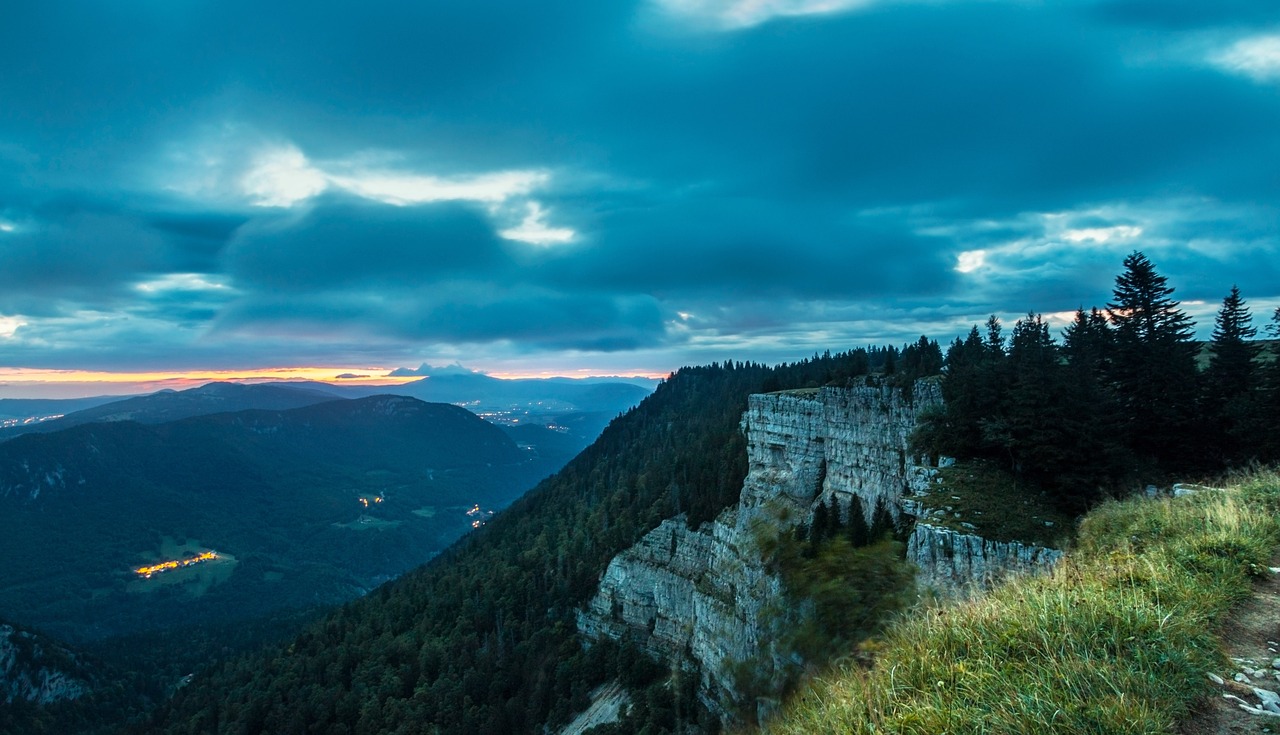
At the heart of the Neuchâtel Jura lies a stunning natural formation that captivates with its dramatic cliffs and breathtaking views: the Creux du Van. This remarkable geological wonder, resembling a colossal amphitheater, emerged through centuries of erosion, sculpting towering walls that rise impressively to heights of 160 meters. Located in Gorgier, Switzerland, the Creux du Van is not only a visual spectacle but also a site steeped in history and culture.
### History and Origins
The origins of the Creux du Van date back to the Jurassic period, approximately 150 million years ago, when the region was covered by a vast ocean. As tectonic activity pushed the land upward, the water receded, and over millennia, the elements eroded the softer limestone, leaving behind this magnificent horseshoe-shaped valley. The site has been a haven for wildlife, notably the ibex, which have become emblematic of the region.
Historically, the Creux du Van has served various purposes. It was a strategic lookout point during the Middle Ages, offering a vantage for guarding against potential invasions. The cliffs were also used by locals for farming, and remnants of ancient settlements can still be found in the surrounding areas, illustrating the enduring relationship between the people and this dramatic landscape.
### Art and Architecture
While the Creux du Van itself is a natural masterpiece, its surrounding landscapes have inspired various forms of art and architecture. The nearby village of Gorgier embraces traditional Swiss architecture, characterized by wooden chalets and stone buildings that reflect the region's agricultural roots.
Local artists often draw from the breathtaking views and rich biodiversity for their work. Photographers, painters, and writers have long been enchanted by the interplay of light and shadow across the cliffs, capturing the essence of the Jura Mountains in their creations. The artistic significance of this area extends into local galleries, where works inspired by the Creux du Van highlight the region’s natural beauty.
### Local Culture and Traditions
The culture surrounding Creux du Van is vibrant and deeply rooted in tradition. The area is known for its folklore, with stories passed down through generations about the mystical aspects of the cliffs and the creatures that inhabit them. Local customs often include celebrations that honor the seasonal changes and the agricultural calendar.
One notable event is the Fête de la Nature, a festival celebrating the natural environment, held annually in spring. This event features guided hikes, workshops, and local crafts, allowing visitors to connect with the stunning landscape and its preservation efforts. Additionally, the Jura Festival, celebrated in the autumn, showcases the region’s rich heritage through music, dance, and traditional cuisine, drawing locals and tourists alike to partake in the festivities.
### Gastronomy
The culinary scene in and around Gorgier is a delightful reflection of its rich agricultural heritage. Local specialties include Neuchâtel cheese, a creamy delight that pairs perfectly with the region's wines. The nearby vineyards produce exceptional wines, including the Chasselas, which is often enjoyed with fondue—a quintessential Swiss dish made from melted cheese served with bread.
Another local delicacy is the Tarte aux Prunes, a sweet plum tart that showcases the region's fruit harvest. Visitors can also indulge in hearty dishes like Rösti, a potato-based favorite, which is a must-try when exploring the local cuisine.
### Lesser-known Curiosities
While the dramatic cliffs of the Creux du Van are undoubtedly the star attraction, there are hidden gems that many visitors overlook. One such curiosity is the Caves of the Creux du Van, a series of small caves located within the cliffs, which were once used by local inhabitants for shelter.
Additionally, the area is home to several rare plant species, including the Edelweiss, which flourishes in the rugged terrain. This flower has become a symbol of the Swiss Alps and is often sought after by hikers and botanists alike.
Another fascinating aspect is the rich biodiversity; the Creux du Van is part of a protected nature reserve that ensures the conservation of its flora and fauna, making it a prime spot for wildlife enthusiasts. Here, you might catch a glimpse of the playful marmots or elusive golden eagles soaring above the cliffs.
### Practical Visitor Information
For those planning a visit to the Creux du Van, spring and autumn are the best times to experience the area’s vibrant flora and fauna. The changing colors of the leaves in autumn provide a stunning backdrop for hiking and photography.
Visitors can access the Creux du Van via several well-marked trails, suitable for various fitness levels. It’s advisable to wear sturdy hiking boots and bring plenty of water, as the trails can be steep and challenging in places. Don’t forget your camera—sunrise and sunset create magical lighting conditions against the cliffs.
Look out for the many viewpoints along the trails, offering panoramic vistas of the surrounding landscapes that are truly unforgettable.
As you plan your journey to experience the natural wonder and rich culture of Gorgier, consider using the Secret World app to craft a personalized itinerary that highlights the best of what this enchanting region has to offer.