
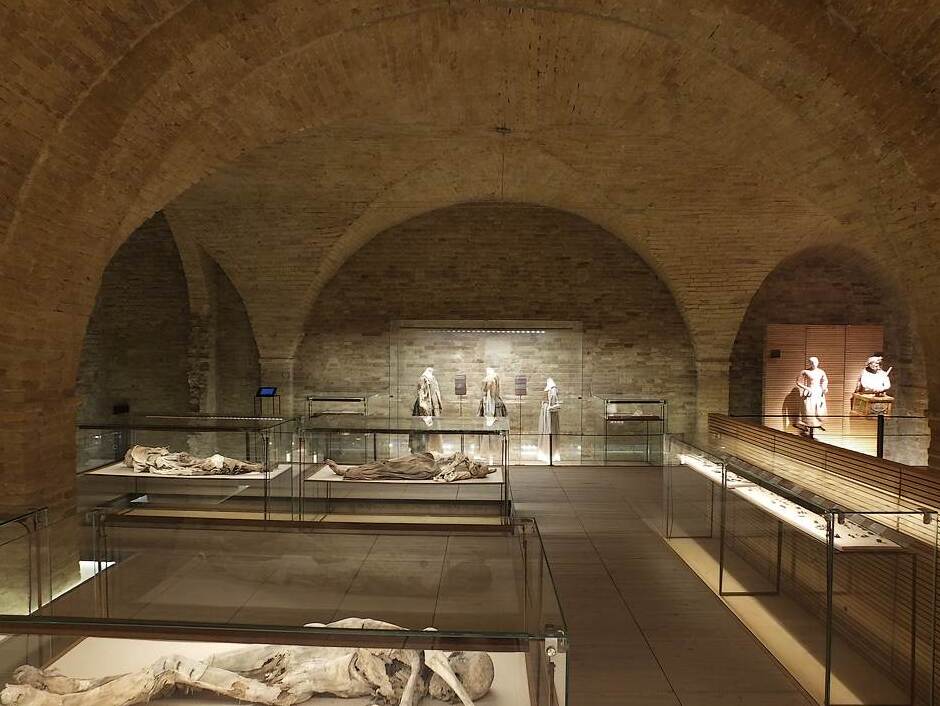

Nestled in the picturesque hills of Monsampolo del Tronto, the Crypt Museum offers a haunting yet fascinating glimpse into the past. This unique museum houses 20 mummies unearthed during restoration work on the Chapel of the Good Death within the Church of the Holy Assumption. For those intrigued by the interplay of history and the macabre, this site is an absolute must-visit.
The history of Monsampolo del Tronto is rich and layered. Founded in the Middle Ages, the town has roots that trace back to ancient Roman settlements. The Church of the Holy Assumption, with its origins likely dating back to the 12th century, has long been a pivotal site for local spirituality. The discovery of the mummies in 2009 during maintenance work is a key historical event that has brought renewed attention to the church and the surrounding area. These mummies, believed to be part of a burial tradition of the Brotherhood of the Good Death, reveal much about the local customs regarding death and the afterlife.
In terms of art and architecture, the Crypt Museum itself is a testament to the Baroque style that characterizes many churches in the region. The church's interior is adorned with intricate frescoes and wooden altars that reflect the artistic sensibilities of the time. Noteworthy artworks include religious icons and sculptures that offer insight into the devotional practices of the community. The mummified remains and accompanying artifacts are displayed thoughtfully, allowing visitors to appreciate both the artistry of the items found and the solemnity of the exhibition.
Local culture and traditions thrive in Monsampolo del Tronto, where festivals play a crucial role in community life. The Feast of San Bartolomeo, celebrated every August, is a vibrant occasion filled with processions, traditional music, and local cuisine. This festival showcases the town's deep-rooted traditions and communal spirit, drawing both locals and visitors alike. The Brotherhood of the Good Death continues to be an important aspect of local culture, reflecting an enduring reverence for the rituals associated with life and death.
Speaking of local culture, the gastronomy of Monsampolo is a delightful exploration of flavors. The area is known for its Marchigiana beef, which is often prepared in traditional recipes that highlight the simplicity and richness of local ingredients. Visitors should not miss trying olive all’ascolana, a specialty where olives are stuffed with meat, breaded, and fried to perfection. Pair these dishes with a glass of Montepulciano d'Abruzzo, a robust red wine that beautifully complements the region's hearty fare.
For those seeking lesser-known curiosities, the museum reveals some surprising details that often go unnoticed. For instance, the mummies were not merely preserved bodies; they were dressed in clothing that reflects the fashion of their time, including men's waistcoats and women's dresses. The presence of everyday items such as socks and headphones raises intriguing questions about the lives these individuals led before their deaths. Additionally, the rosaries, medals, and rings found alongside the mummies serve as poignant reminders of their personal stories and beliefs.
When planning a visit to the Crypt Museum, the best time to explore is during the spring or early autumn, when the weather is mild, and the crowds are smaller. It’s advisable to check the museum’s schedule for guided tours, which provide deeper insights into the exhibits. Visitors should take their time to observe not only the mummies but also the accompanying artifacts that tell the stories of life in Monsampolo centuries ago.
In conclusion, the Crypt Museum in Monsampolo del Tronto is more than just a collection of mummies; it is a vibrant tapestry of history, art, and cultural heritage. A visit here is a journey through time, offering a unique perspective on life, death, and the enduring traditions of this enchanting Italian town. To enhance your travel experience, consider using the Secret World app to plan a personalized itinerary for your visit to Monsampolo del Tronto.


