
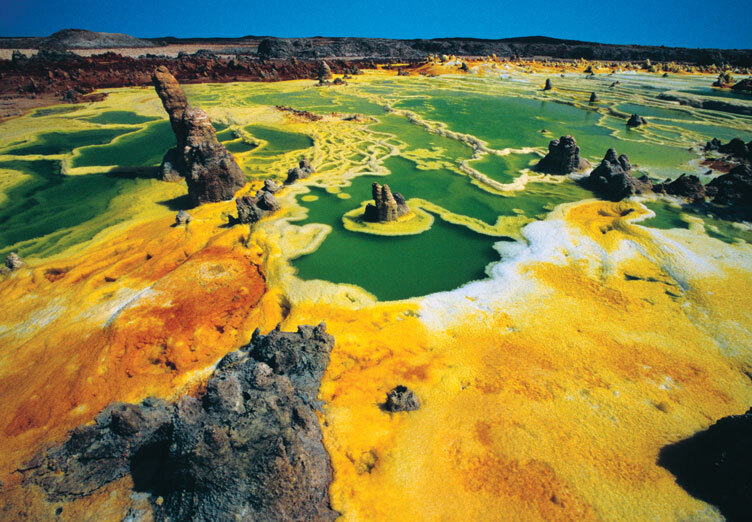

In the heart of the Danakil Depression, one of the most inhospitable yet mesmerizing landscapes on Earth, lies the vivid and otherworldly terrain of Dallol. This unique cinder cone volcano, located in northeastern Ethiopia, is not just a geological wonder but a tapestry of history, culture, and natural artistry that captivates all who venture there.
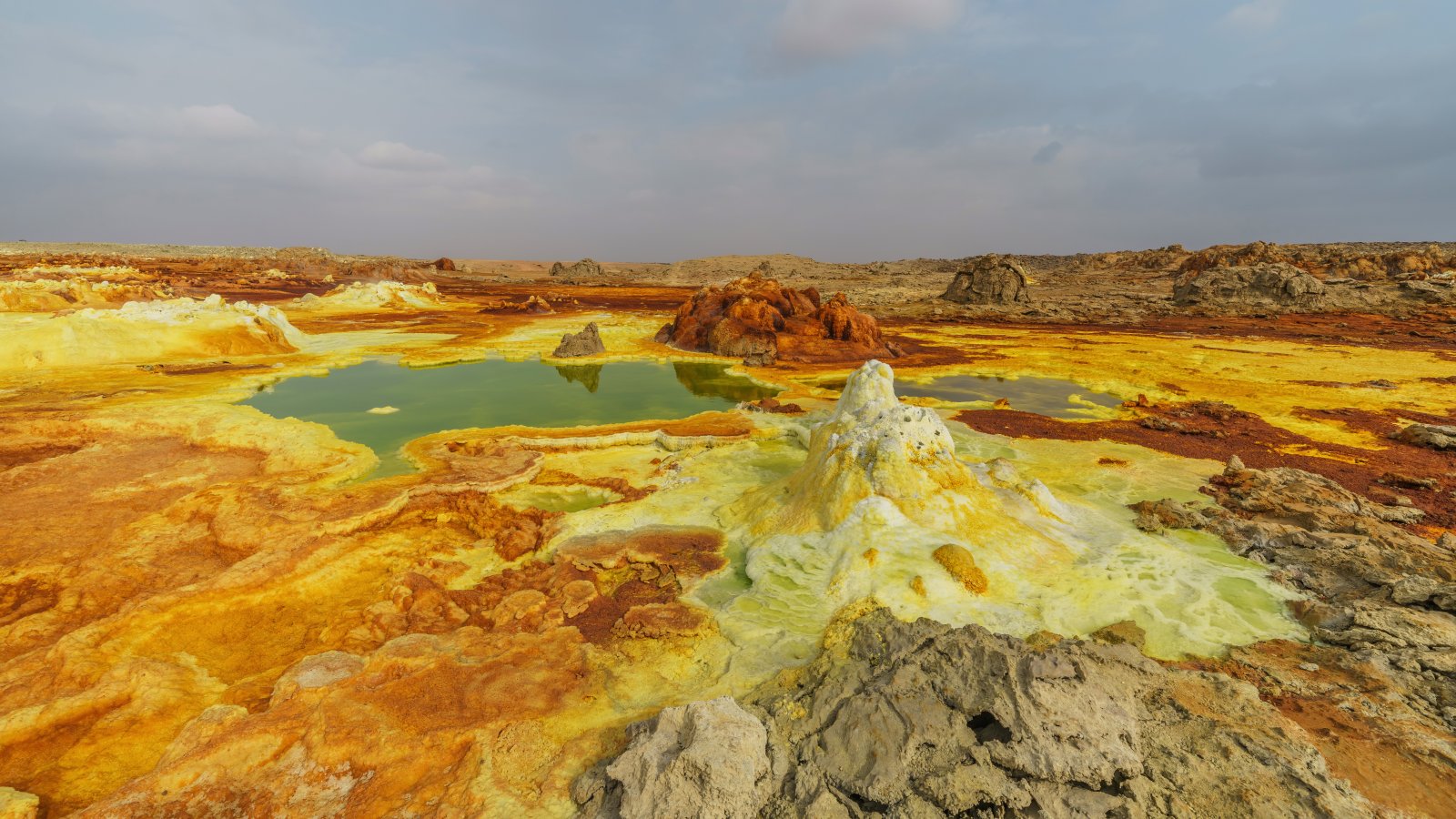
The history of Dallol is as layered as the sedimentary deposits that form its foundation. This region, part of the broader Afar Triangle, has been a cradle of human evolution, with fossils of early hominids found nearby. The volcano itself was formed through the intrusion of basaltic magma into salt deposits from the Miocene era, followed by intense hydrothermal activity. This geological dance has created a landscape of vibrant colors and unusual formations. The area was once a site of commercial interest during the early 20th century when potash extraction was attempted by both Italian and American companies. The remnants of these endeavors still linger, offering a glimpse into a bygone industrial age.
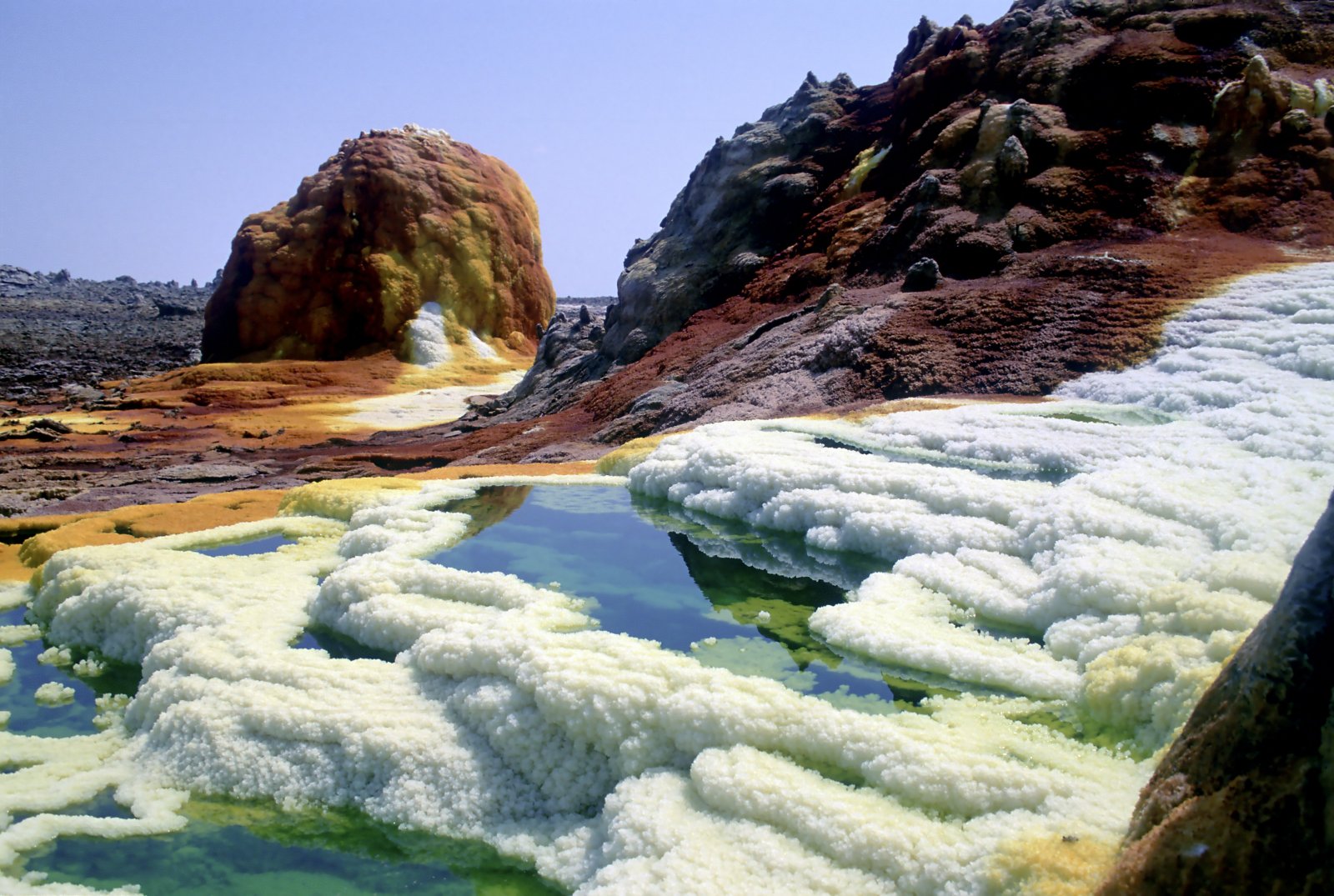
Architectural elements in Dallol are not those of human construct but of nature's own artistry. The landscape is a surreal mosaic of sulfur, salt, and mineral deposits. Formations such as the towering salt pillars and the kaleidoscopic hot springs paint a scene reminiscent of a Salvador Dalí painting. The fiery yellows, verdant greens, and rusty reds of the deposits are the result of the intense geothermal activity that continues to shape the area. This natural architecture is a testament to the planet's dynamic processes, capturing the imagination of artists and scientists alike.
The local culture and traditions of the Afar people, who inhabit the surrounding regions, add another rich layer to the Dallol experience. The Afar are traditionally pastoralists, known for their resilience and deep connection to the land. Their customs and rituals often reflect a symbiotic relationship with this harsh environment. Festivals are rare in such a challenging climate, but when they occur, they are vibrant celebrations of life and community. Understanding and respecting these traditions is crucial for any visitor wishing to fully appreciate the cultural tapestry of the region.
In terms of gastronomy, the offerings are as unique as the landscape. The Afar diet is traditionally based on livestock, with dishes often featuring goat or camel meat. Milk and dairy products are staples, with fermented camel milk, or "aho," being a particular delicacy. Due to the arid environment, the use of spices and salt is prominent, and meals are often accompanied by "injera," a sourdough flatbread that is a staple across Ethiopia. While options are limited in the immediate vicinity of Dallol, the tastes of the Afar people provide an authentic culinary experience for those willing to delve into local life.
For those seeking lesser-known curiosities, Dallol offers a treasure trove. The area holds the record for the highest average annual temperature for an inhabited location on Earth, making it a site of interest for meteorologists and climate scientists. Furthermore, the alien-like terrain has attracted comparisons to extraterrestrial landscapes, leading NASA to conduct studies here as an analog for Mars. The salt flats and acidic pools are home to extremophiles, organisms that thrive in conditions once thought uninhabitable, providing valuable insights into the possibilities of life beyond our planet.
Visiting Dallol requires careful planning due to its remote location and extreme climate. The best time to visit is during the cooler months from November to February, when temperatures are marginally more bearable. Travelers should prepare for intense heat and bring ample water and sun protection. Guided tours are recommended to navigate the challenging terrain safely and to gain insights from local experts. While at Dallol, visitors should not miss the opportunity to witness the sunrise over the salt flats, where the light transforms the landscape into a shimmering sea of colors.
In the end, Dallol is not just a destination; it is an experience that challenges the senses and expands the mind. It is a place where the Earth reveals its raw power and beauty, where history, culture, and nature intertwine in a vibrant tapestry that is as unforgettable as it is unique.


