
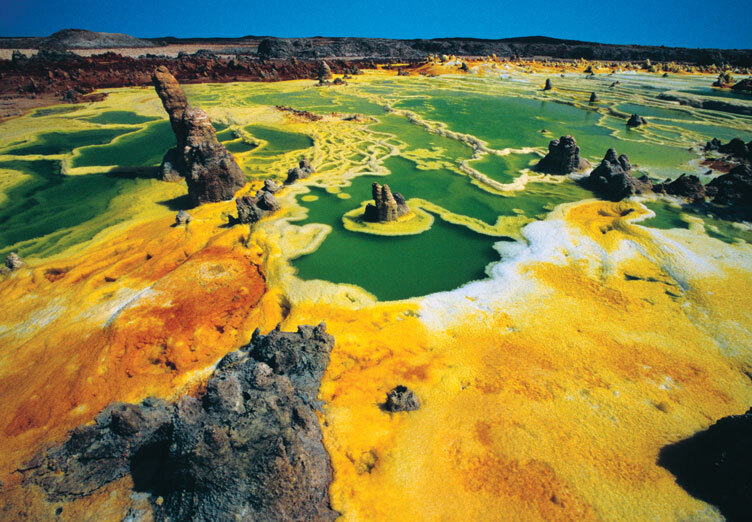

Nestled within the Danakil Depression of northeastern Ethiopia lies the surreal landscape of Dallol, a volcanic crater unlike any other. This extraordinary site, characterized by its vivid colors and otherworldly formations, tells the tale of Earth's fiery origins and the relentless forces that continue to shape our planet.
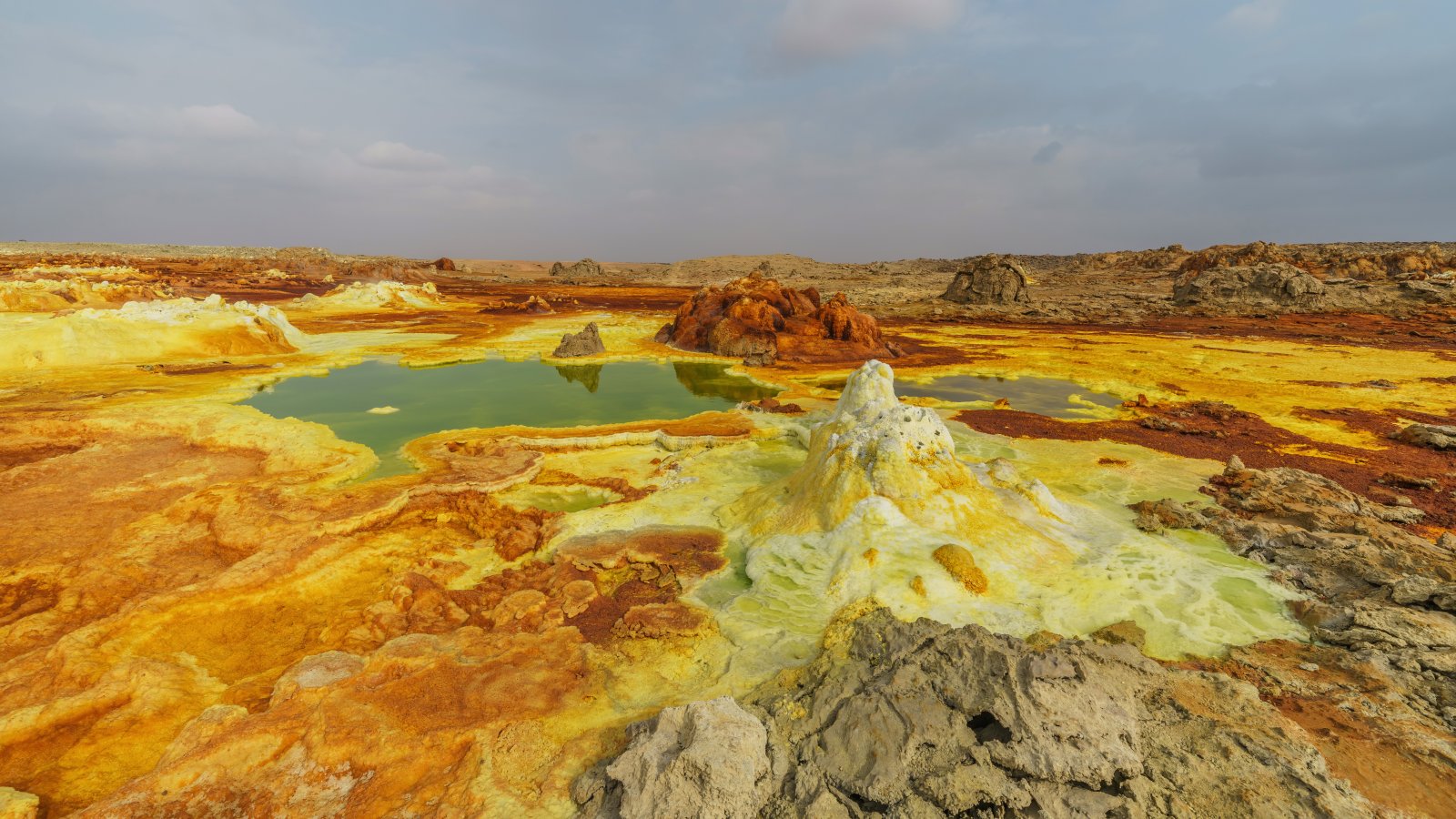
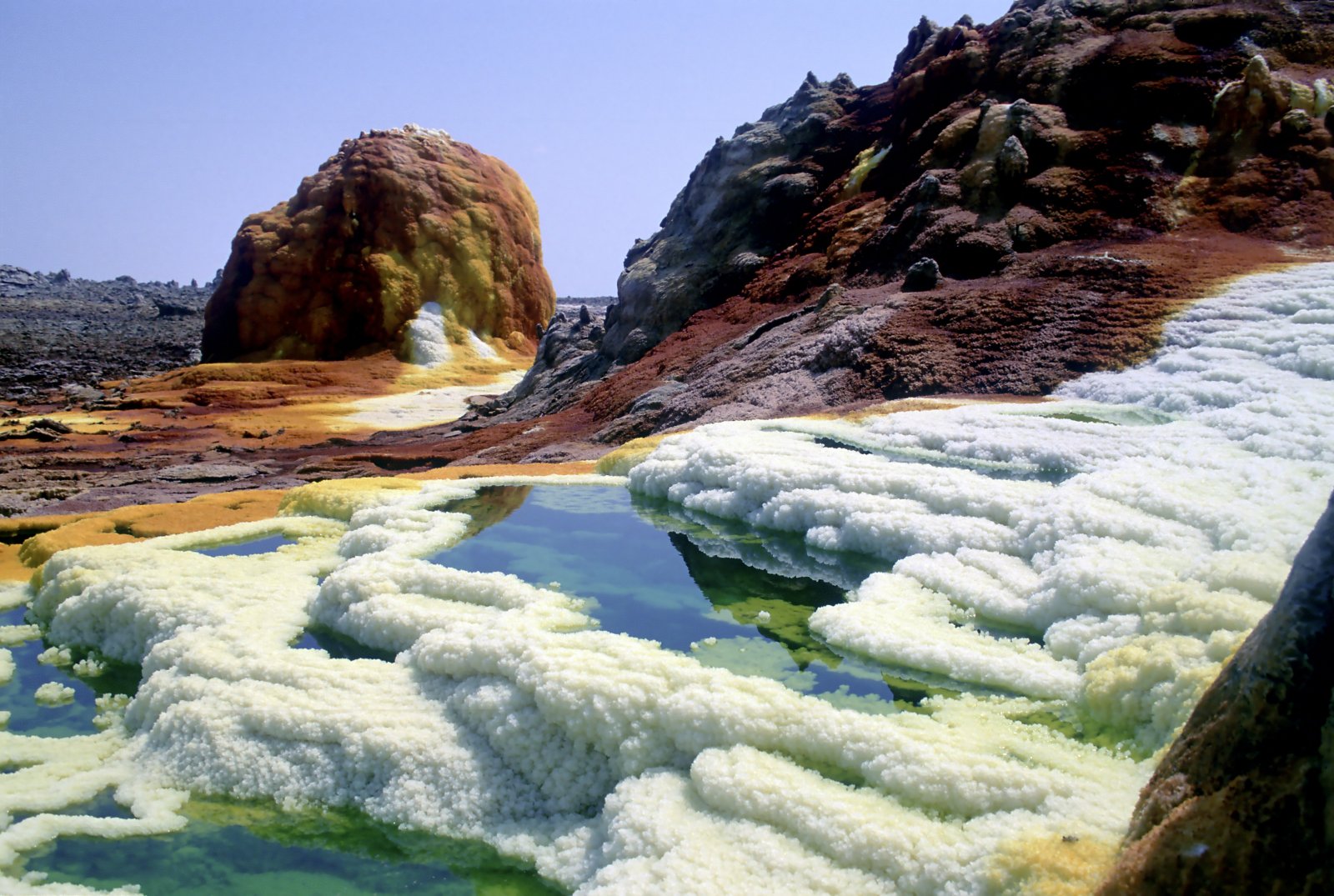
The Dallol volcano emerged as a result of the intrusion of basaltic magma into Miocene-era salt deposits, leading to intense hydrothermal activity. This geological process has bestowed Dallol with its unique landscape, marked by salt canyons, hot springs, and acid pools, all bathed in hues of yellow, green, and orange. The region's history is also interwoven with human endeavor, as evidenced by the remains of a potash mine established in the early 20th century, which once drew workers to this inhospitable land.
Artistic expression here is not found in conventional forms but rather in the natural artistry of Dallol's landscape. The vibrant mineral deposits and salt formations create natural mosaics that shift with the light, offering a living canvas that photographers and artists from around the world seek to capture. The stark beauty of Dallol's landscape challenges traditional notions of art and architecture, inviting a deeper appreciation of nature's own design.
The Afar people, indigenous to this harsh yet fascinating region, have adapted to its extremes with resilience and ingenuity. Their culture is a tapestry of traditions, from the crafting of intricate silver jewelry to the rhythmic dances performed at local gatherings. One of the most significant occasions is the Erecha festival, a celebration of renewal and gratitude that underscores the community's connection to the land and its cycles.
While Dallol's extreme environment limits agricultural pursuits, the culinary traditions of the surrounding Afar region provide a taste of the local way of life. Dishes such as fit-fit, a spicy stew made with shredded injera, and fossolia, a green bean dish, reflect the resourcefulness of a people who have thrived in one of the planet's most challenging climates. Local beverages, often derived from fermented grains, offer a refreshing respite from the heat.
Among the lesser-known curiosities of Dallol is its distinction as one of the hottest inhabited places on Earth. Average annual temperatures hover above 34°C (93°F), with summer highs reaching well over 40°C (104°F). Despite these extremes, the region's geothermal activity supports a unique ecosystem of extremophiles, microorganisms that thrive in the acidic, saline waters, providing valuable insights into the potential for life on other planets.
For those intrepid enough to visit, the best time to explore Dallol is during the cooler months from November to March. Travelers should prepare for the harsh conditions with lightweight, breathable clothing, ample water supplies, and a keen sense of adventure. A guided tour is recommended to navigate the challenging terrain safely and to gain insight into the geological and cultural significance of this remarkable site.
As you step into the alien world of Dallol, be prepared to witness the Earth's raw power and beauty in its purest form. Each corner of this volcanic crater holds a story of creation, a testament to the forces that have shaped not only Ethiopia but the very face of our planet.


