
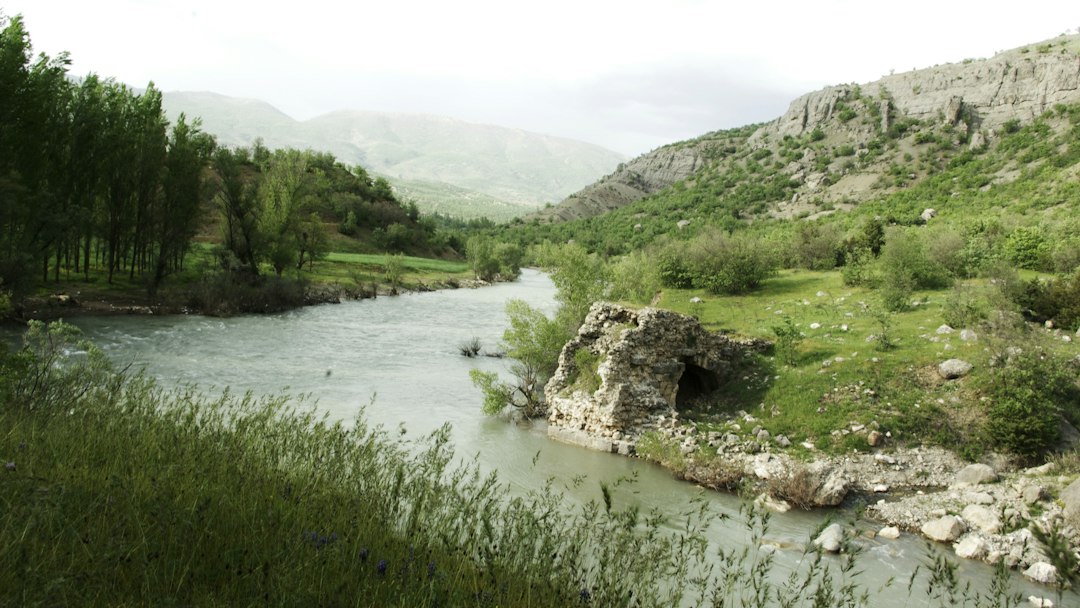

The silence of the Dasht-e Kavir is not empty. It is a physical presence, almost tangible, that is felt as soon as one moves away from the last village and the dirt track disappears into the flat horizon. The Great Salt Desert of Iran extends for about 77,000 square kilometers in the central part of the country, occupying a good part of the Iranian plateau between the provinces of Isfahan, Semnan, and Khorasan. It is not a desert of romantic dunes: it is a landscape of cracked salt crust, dry clay, and plains that reflect light like broken mirrors.

What strikes at first glance is the texture of the ground. The salt crust fractures into irregular polygons, raised at the edges like tiles peeling off the floor, white and dazzling in the midday hours. In some places, the surface gives way underfoot with a dull crackle, revealing a layer of salty mud underneath. Walking on these stretches is not recommended: the ground can be unstable and in some cases dangerously yielding.
The history of caravanserais along the Silk Road
The Dasht-e Kavir has never been an insurmountable obstacle for the civilizations that have crossed it. The caravan routes connecting the Persian cities — Isfahan, Yazd, Kashan — passed along the edges of the desert, dotted with caravanserais, resting structures built to accommodate merchants, animals, and goods. Some of these constructions date back to the Safavid era, between the 16th and 18th centuries, and are still partially visible along the roads that border the desert.
The caravanserai of Maranjab, located about 55 kilometers north of Kashan, is one of the most accessible and best-preserved in the region. Built during the reign of Shah Abbas I in the 17th century, it is a classic example of caravan architecture: square plan, central courtyard, cells for travelers arranged along the perimeter. Today it has been partially restored and hosts a small accommodation for tourists who want to spend the night in the desert. Sleeping there means waking up at dawn with absolute silence around and the sky changing color in just a few minutes.
Seasonal Wetlands: An Unexpected Contrast
Contrary to the image of total aridity, the Dasht-e Kavir hosts seasonal wetlands, called kavir, which form during the winter months when rare but intense rains fill the depressions in the ground. These areas attract migratory birds and temporarily transform the landscape into something completely different: flat water mirrors that reflect the sky, edged with white salt. The contrast with the dry season is radical.
In spring, before the summer heat evaporates any trace of moisture, some areas of the desert display ephemeral vegetation: low shrubs, halophytic plants adapted to salinity, and in rare cases wildflowers. This seasonal cycle makes the Dasht-e Kavir a more complex ecosystem than it appears at first glance. Some animal species, including the Asiatic cheetah — now critically endangered and present in Iran in extremely low numbers — frequent the peripheral areas of the desert.
The nights in the desert: natural astronomy

The nights of Dasht-e Kavir are among the darkest in Iran. The absence of significant inhabited centers within tens of kilometers, combined with the dry air and moderate altitude of the Iranian plateau — which remains between 700 and 900 meters above sea level in the central part — creates exceptional conditions for sky observation. The Milky Way is visible to the naked eye with a clarity that is now forgotten in European cities. Nighttime temperatures, even in summer, drop sharply compared to the day: a temperature variation of 20-25 degrees is not unusual.
Bringing an adequate sleeping bag is essential even in the summer months. The nighttime wind can be cold and persistent, and the distance from any structure makes personal autonomy a concrete necessity, not an option.
Practical tips for visiting the Dasht-e Kavir
The best time to visit the desert is from October to April. The summer months — June, July, and August — bring temperatures that regularly exceed 45 degrees Celsius during the peak hours, making any outdoor activity potentially dangerous. The most convenient access point is Kashan, reachable by train from Tehran in about two and a half hours. From Kashan, the Maranjab caravanserai can be reached with a four-wheel drive vehicle along dirt roads: a 4x4 with a local driver is the safest and most common solution.
It is essential to bring more water than expected — at least three liters per person for each daytime outing — and not to venture into salt crust areas without knowing the terrain. Relying on experienced local guides is not only recommended: in some areas of the desert, it is the only reasonable choice. Permits for some protected areas of the Dasht-e Kavir may be necessary and should be checked in advance through local travel agencies in Isfahan or Kashan.


