
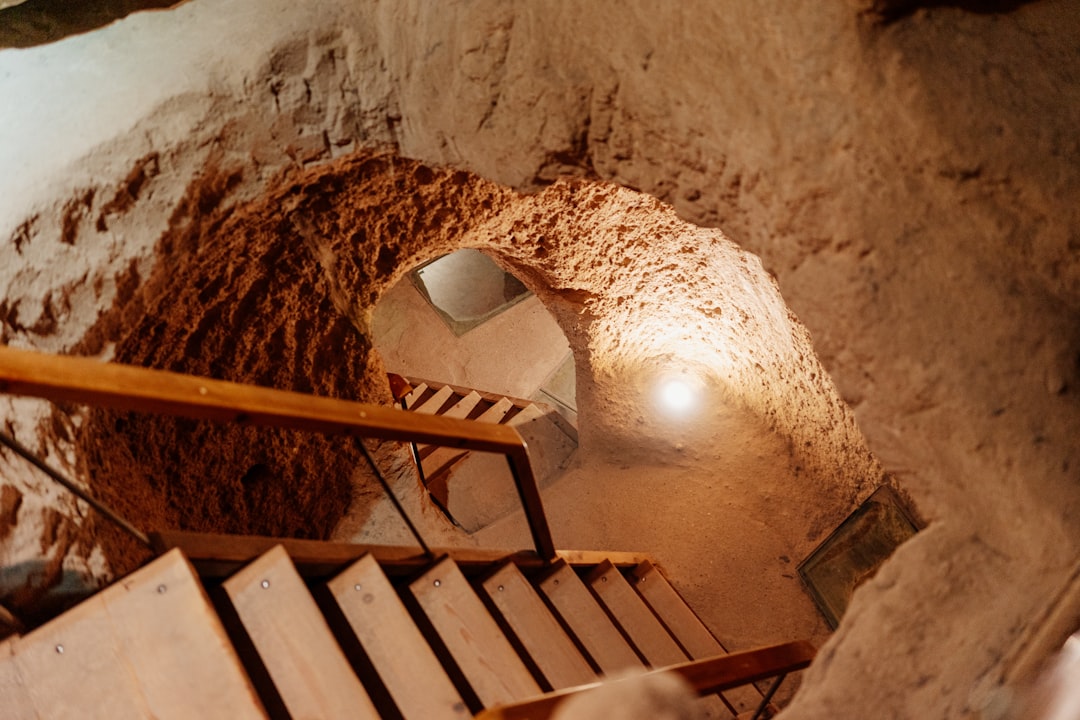

Eighty-five meters below the surface of Cappadocia, where sunlight never reaches, lived up to twenty thousand people. Not for a few hours, not for a few days: for entire weeks, with their animals, their food supplies, their wine, and their religious rituals. Derinkuyu is this — a labyrinth of galleries, wells, and rooms carved into volcanic tuff by human hands, a collective refuge that defies all modern architectural logic.
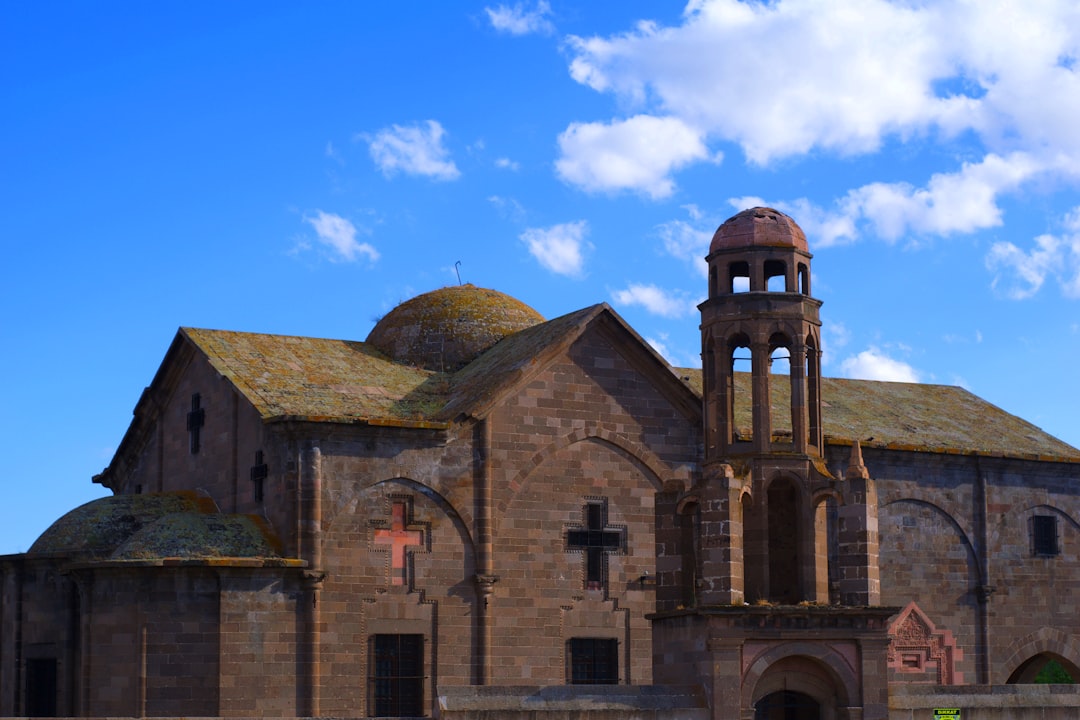
The underground city is located beneath the town of Derinkuyu, in the province of Nevşehir, in central Turkey. Discovered in its true extent only in 1963, when a local resident knocked down a wall in his basement and found an endless tunnel, the structure is now open to the public and represents one of the most extraordinary archaeological sites in the entire Anatolian region.
A city built to survive
The origins of Derinkuyu are still a subject of debate among historians. The earliest evidence of rock dwellings in the area dates back to the Hittite period, around the 2nd millennium BC, but the most significant expansion of the underground city is generally attributed to the Christians of the early Byzantine era, between the 7th and 10th centuries AD, when Arab raids made life on the surface extremely dangerous. It was during that time that the tunnels reached their current depth and complexity.
The structure extends over at least eight levels accessible to the public, although it is estimated that the total levels are eleven or more. Each floor had a specific function: the upper floors housed stables for animals, still recognizable today by the stone hooks carved into the walls. Descending, there are kitchens with ventilation holes, wine cellars, grain storage rooms, and, an element that astonishes every visitor, a church with a Greek cross plan located on the third level, with the apse and naves still perfectly readable in the rock.
The church and places of worship: faith underground
The presence of religious spaces in Derinkuyu is not a marginal detail: it is the key to understanding who lived here and why. The rock-cut church on the third floor — with its clearly Christian architectural forms — testifies that this was not just a defensive structure, but a complete community capable of maintaining its spiritual identity even in the dark. Next to the church are spaces that archaeologists interpret as schools or meeting places, where religious education and liturgical ceremonies likely took place.
Another visually striking element is the missionary hall on the fifth level, a tall and spacious area that stands out for its unusual proportions compared to the other environments. Here, according to scholars, catechumens — those preparing for baptism — were welcomed and instructed. Walking in these spaces with a flashlight or with the artificial light installed by the site's managers provides an immediate and physical sense of how deeply rooted the faith was of those who chose to build a place of prayer tens of meters underground.
The engineering details that still amaze
Derinkuyu is not just a haphazardly dug refuge: it is a sophisticated engineering system. The city was connected via tunnels to other underground cities in Cappadocia, including Kaymaklı, which is about ten kilometers away. The ventilation shafts — over fifty-two in total — ensured fresh air reached the deepest levels, and also served as water wells. The circular stone doors, some weighing almost half a ton, could be closed from the inside in a matter of seconds to block access to the tunnels: a defensive system of brutal simplicity and effectiveness.
Each door had a central hole that allowed the inhabitants to strike at potential invaders with spears even when the door was closed. These details, visible and touchable during the visit, transform Derinkuyu from a historical curiosity into a living document of a collective survival strategy.
Practical information for the visit
Derinkuyu can be easily reached from Göreme or Nevşehir, the main tourist bases of Cappadocia, by local buses or shared taxis. The site is open all year round, generally from 8:00 AM to 7:00 PM in summer and with reduced hours in winter. The entrance ticket costs around 15-20 euros, subject to seasonal variations. The most useful advice for visitors is to bring a layer of warm clothing: the internal temperature remains constant around 8-10 degrees Celsius all year round, regardless of the outside heat. In summer, going from the 38 degrees of the surface to this temperature is a thermal shock that many visitors do not expect.
It is advisable to visit the site in the early hours of the morning, before organized groups arrive in mass. The corridors are narrow — at some points you have to walk bent over — and with too many people, the claustrophobic feeling can become overwhelming. Allow at least ninety minutes for a complete visit of the eight levels open to the public.


