
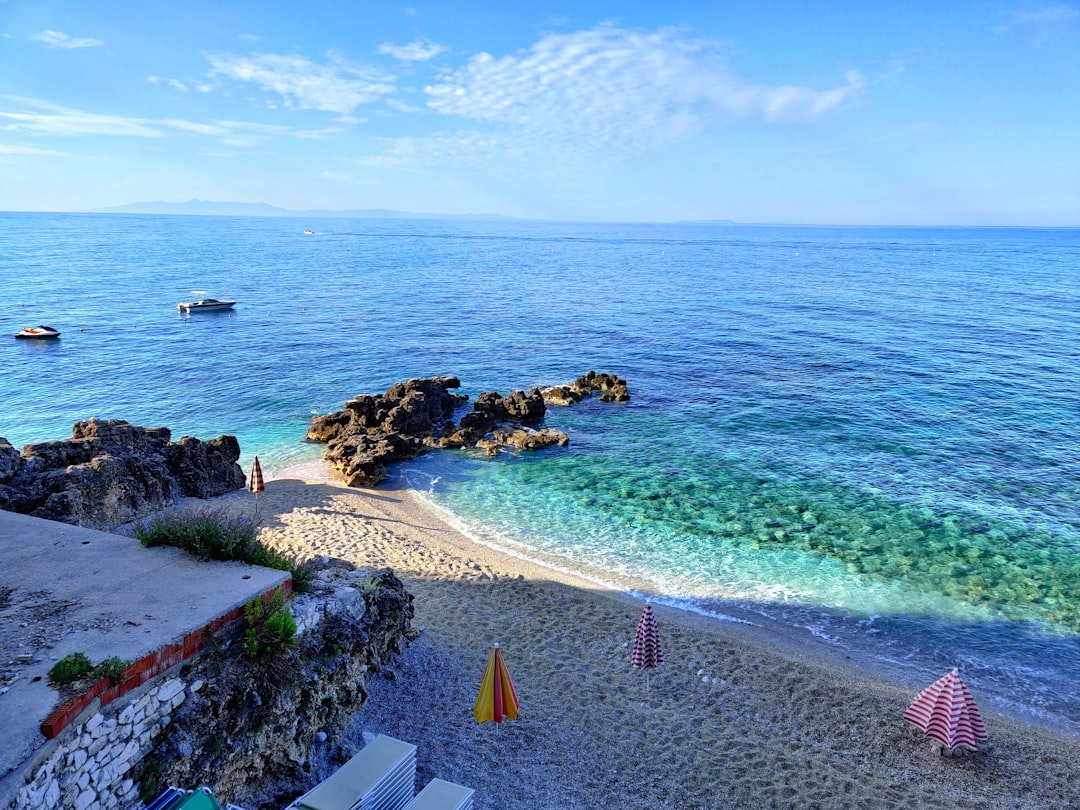

The white pebbles crunch underfoot as the sea changes color in just a few meters: from emerald green near the shore to cobalt blue in the depths, passing through shades of turquoise that recall the Greek waters of the Ionian Sea, with which this coast shares the same basin. Dhermi beach, in southern Albania, is a wide crescent that opens between the Ceraunian Mountains and the sea, with a crescent shape that protects it from the strongest winds and gives it an atmosphere of relative calm even in the summer months.
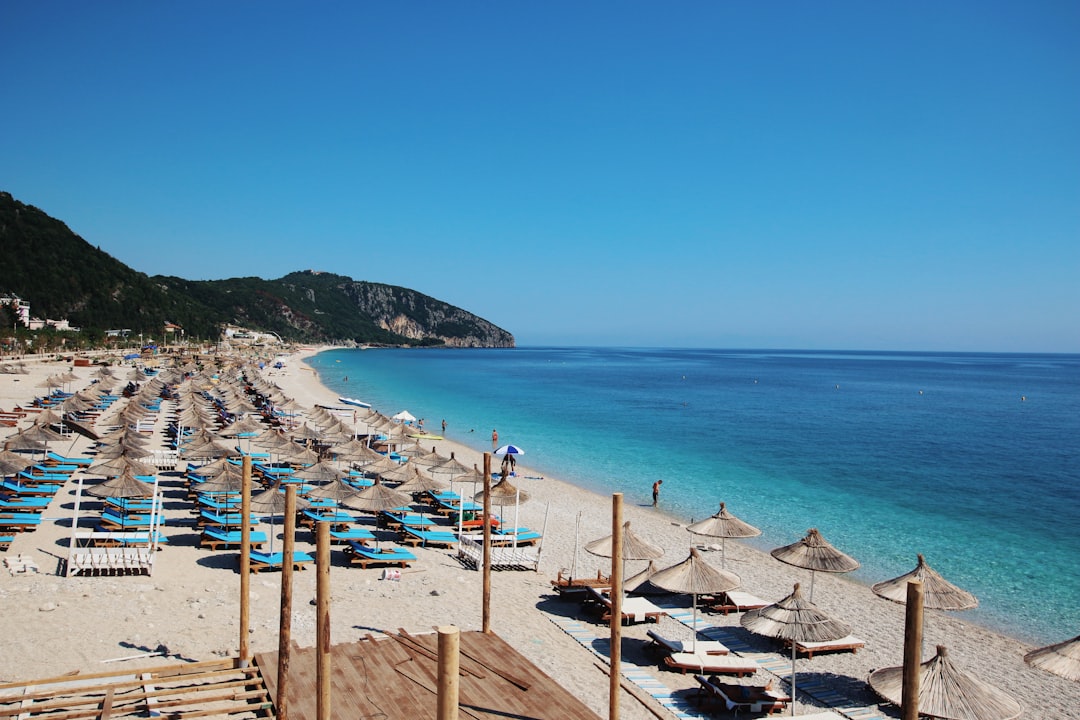
What distinguishes Dhermi from many beaches in the eastern Mediterranean is not only the quality of the water but the visual contrast between the mountainous landscape behind and the marine expanse in front. The Ceraunian Mountains, which in ancient Greek evoked lightning, steeply descend towards the coast and create a dramatic backdrop of gray limestone and Mediterranean vegetation. The result is a natural setting that few beaches in the region can match, still free from the tourist saturation that characterizes equivalent destinations in Greece or Croatia.
The water and the shore: colors and textures to observe up close

The transparency of the water in Dhermi is one of the most immediately perceivable elements. Just a few meters from the shore, the light-colored pebble bottom is clearly visible, and the color of the water shifts from aquamarine on the surface to saturated turquoise in depth. This clarity is partly due to the nature of the seabed, composed of fine gravel and white pebbles rather than sand, which does not easily stir up with the wave motion and does not cloud the water.
The beach itself is predominantly made up of small white and gray pebbles, smoothed by the action of the sea over millennia. Walking barefoot takes a bit of getting used to, but the absence of sand has a concrete advantage: you don't end up with grains everywhere, in your eyes, in your clothes, in your food. Some stretches of the beach also feature small sandy areas where seasonal streams flow down from the mountains, but gravel remains the dominant material along the entire length of the shore.

The Monastery of Shën Vasil: History Above the Sea
Clinging to the rocky walls overlooking the beach, the Monastery of Shën Vasil is a Byzantine-era structure that represents one of the few historical elements directly connected to the coast of Dhermi. Its location, carved and built into the limestone wall of the mountain, makes it visible from the beach as a light spot among the gray rock and vegetation. Reaching the monastery requires a short hike from the shore, following a path that ascends among olive trees and Mediterranean scrub.

The walking path generally takes between twenty and thirty minutes of uphill walking, with a moderate elevation gain but on uneven terrain. It is advisable to wear closed shoes rather than beach sandals. Once you arrive, the view from above of Dhermi Bay and the turquoise water below greatly rewards the effort. The monastery is an active place of worship, so it is appropriate to visit it in respectful clothing and at times that do not coincide with religious services.
Atmosphere and context: what to expect today
Dhermi has experienced significant tourist growth in the last decade, with the construction of several bars and accommodation facilities along the shore and in the hillside village above. However, compared to destinations like Mykonos or Hvar, the level of crowding remains contained, and during the weeks of June or September, it is possible to find stretches of beach with few visitors. July and August represent the seasonal peak, when the beach is mainly filled with Albanian and Kosovar tourists as well as a growing number of Western Europeans.
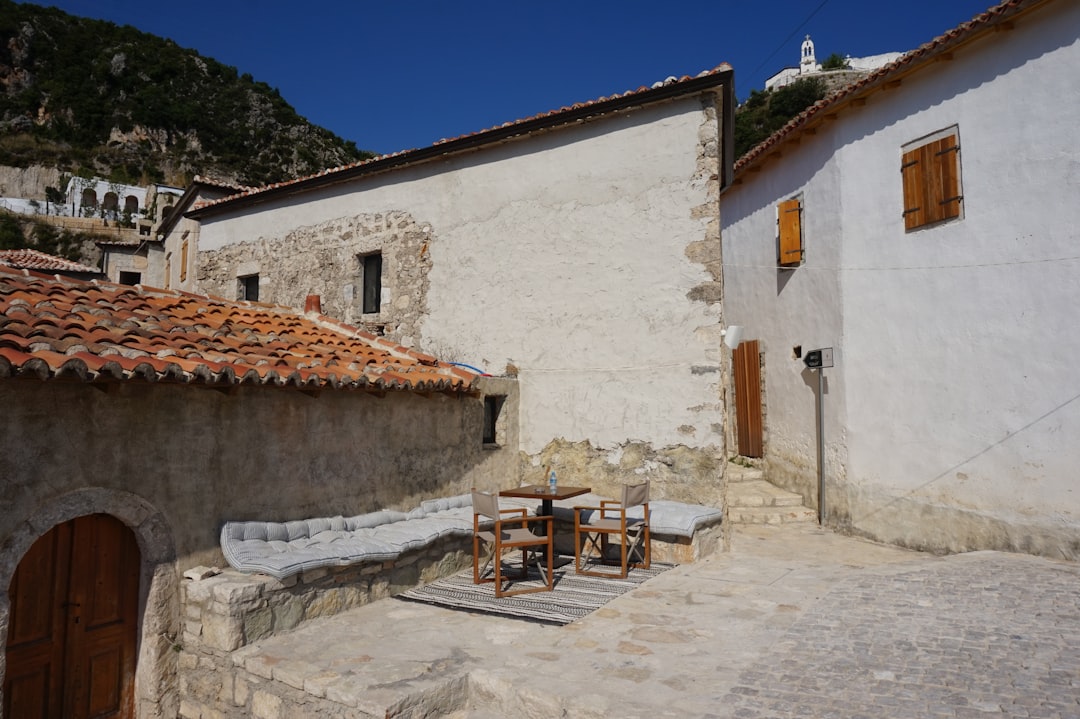
The village of Dhermi is actually about 300 meters above sea level compared to the coast, clinging to the mountainside. Descending to the sea requires navigating a winding road by car or tackling a footpath. This geographical separation between the inhabited area and the beach has historically slowed the commercial development of the coast, helping to preserve its relatively natural appearance.
Practical tips for the visit
The best time to visit Dhermi is June or the first half of September, when temperatures are high but crowds are still manageable and accommodation prices are lower compared to the summer peak. To reach the beach from Albania, the main road is the SH8, the so-called Riviera Road that connects Vlorë to Sarandë along the coast: the stretch is scenic but has narrow curves, so it is advisable to drive carefully and not at night. From Saranda, the distance is about 60 kilometers. Bringing water and something to eat is still a good idea, even though the kiosks along the shore offer drinks and simple meals during the summer season.
Those planning to visit the Shën Vasil monastery should allow at least an additional hour compared to the time spent on the beach, considering the ascent, the visit, and the descent. The central hours of the day, between eleven and three, are the hottest and least suitable for hiking: it is better to choose early morning or late afternoon, when the light slanting on the mountains and the water also offers the best conditions for photography.


