
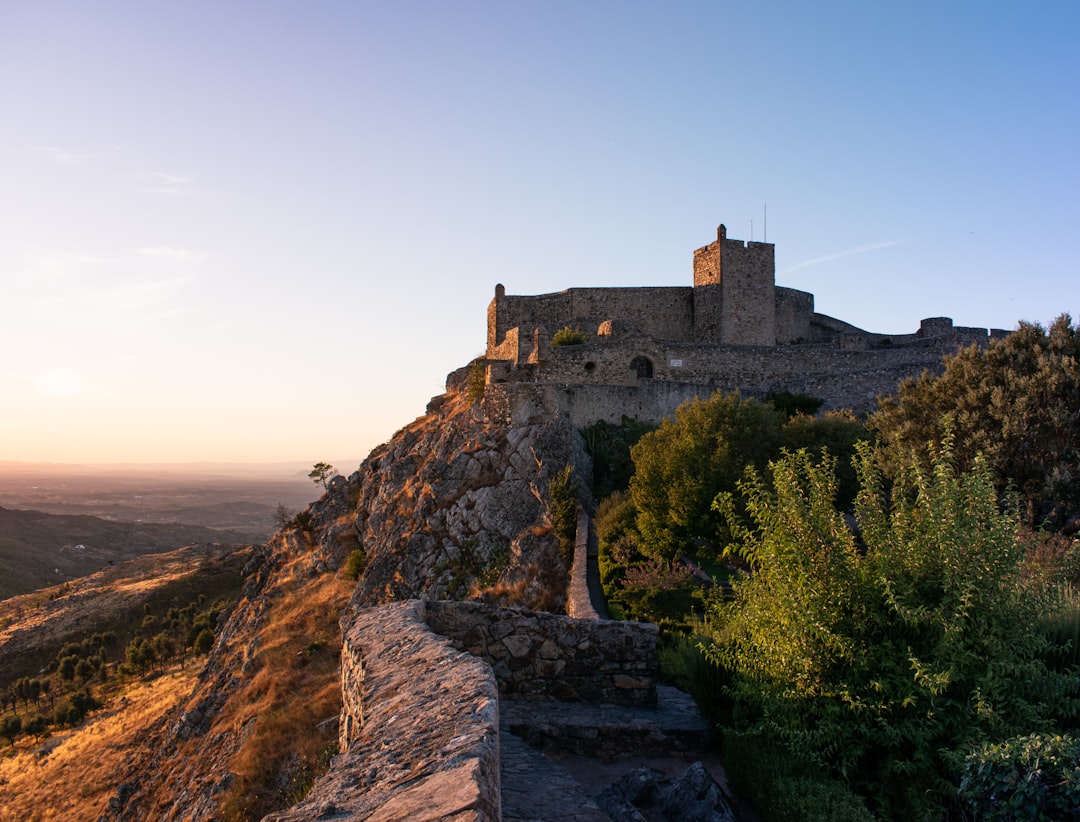

Marvão Castle, located in the enchanting Alentejo region of Portugal, is an impressive testament to the country's medieval history. This fortress, built on a quartzite ridge of the Serra de São Mamede, offers not only breathtaking views of the surroundings but also a journey through time that tells centuries of domination and culture. With a population of around 3,000 inhabitants, Marvão is a small gem that has attracted the attention of tourists and historians, as well as writers like Nobel Prize winner José Saramago.
The name Marvão derives from Ibn Marwan, a rebel from the 8th century, who built the castle as a power base during the Emirate of Cordoba. The structure has undergone numerous expansions and fortifications over the centuries, especially under the reigns of Sancho II and Denis of Portugal, making it one of the most extraordinary architectural works in the region.
History and Origins
Marvão Castle has deep and fascinating roots dating back to the 8th century when it was first erected as a strategic outpost. Its elevated position not only provided a panoramic view of the surrounding valley but also allowed for effective control of communication routes. The architecture of the castle reflects the various cultural influences that have occurred over the centuries, making it an example of architectural syncretism. During the medieval period, the castle became a symbol of resistance and independence for the Portuguese people.
In the 13th century, the castle underwent significant modifications to adapt to new defensive needs, becoming a crucial point in the fight against foreign incursions. Its historical importance is such that it has recently been included in the list of must-visit places for those who love history and culture, testifying to its value not only locally but also internationally.
Elements to Observe
A visit to Marvão Castle cannot overlook admiring its imposing walls, which rise majestically and tell stories of battles and conquests. Among the main architectural elements, the Castle Tower stands out, from which one can enjoy a panoramic view that embraces the entire valley and, on clear days, the borders of Spain can be seen. Additionally, the medieval village surrounding the castle is a labyrinth of cobblestone streets, white houses, and picturesque corners that invite exploration at a leisurely pace.
Don't forget to visit the Church of Santa Maria, another example of historical architecture, located in the heart of the village. Its Gothic features and captivating interior offer a striking contrast to the ruins of the castle, creating an atmosphere of deep spirituality and reflection.
Why It Is Interesting Today
Today, Marvão Castle presents itself not only as a place of historical interest but also as a cultural center that attracts visitors from all over the world. Its inclusion in the book "1000 Places to See Before You Die" has further increased its appeal, making it an unmissable destination for lovers of history and landscape. The tranquility of the village, combined with the natural beauty of the surroundings, offers a unique travel experience, away from the chaos of more crowded tourist destinations.
Moreover, Marvão is an ideal starting point for exploring the Serra de São Mamede Natural Park, an area rich in biodiversity and scenic trails. This combination of history and nature makes the castle a place of great interest for those wishing to immerse themselves in Portuguese culture and the beauty of its landscapes.
Practical Information for Visitors
To visit Marvão Castle, it is advisable to plan your visit in the spring or autumn months when the weather is milder and the crowds are fewer. Access to the castle is straightforward and well signposted, and once there, you can easily move around the village on foot. Parking can be found nearby, but it is always best to arrive a little early to secure a spot.
Don't forget to bring a camera to capture the breathtaking views and glimpses of the village. Finally, for those who wish to further enhance their visit, the Secret World app offers detailed information and tips on how to best explore this fascinating corner of Portugal.


