
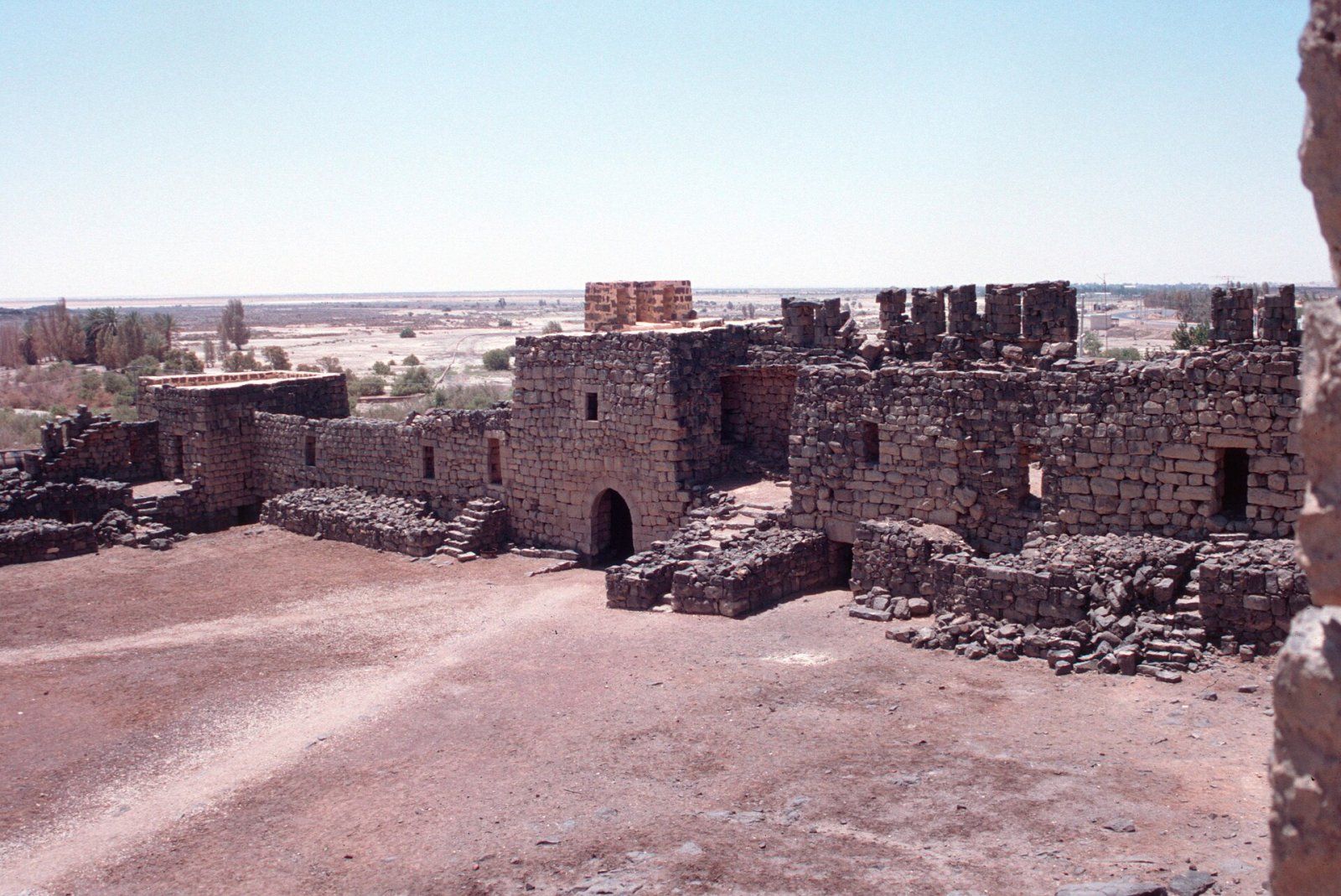

Set in the heart of the Jordanian desert, Qasr Al-Azraq, also known as the Blue Fortress, stands majestically a few kilometers from the city of Azraq. This imposing structure, made of local black basalt, is not only an extraordinary example of medieval architecture but also a silent witness to centuries of history. Its strategic location near the Azraq oasis, the only water source in a vast desert region, has given this castle crucial importance over the centuries.

The origins of Qasr Al-Azraq date back to the Roman era when the site was used for military purposes. However, the fortress took on its current appearance thanks to significant renovations carried out by the Ayyubids in the 13th century. This intervention not only expanded the structure but also gave the castle its characteristic dark color, which distinguishes it from other buildings in the region.
History and Origins
Qasr Al-Azraq has a rich and complex history, starting with the Romans, who were the first to recognize the strategic potential of the site. Over the centuries, the castle became an important military outpost, used by the Ottomans during their domination of the region. During World War I, the castle transformed into an operations center for T. E. Lawrence, known as Lawrence of Arabia, who planned his strategies here. His experiences at Qasr Al-Azraq were immortalized in his book "Seven Pillars of Wisdom," making the castle a landmark for history and literature enthusiasts.
Today, visiting Qasr Al-Azraq means immersing oneself in a fascinating past, where every stone tells stories of battles and conquests. The fortress has maintained its historical significance, serving as a symbol of Jordanian resilience and culture, and continues to attract tourists from all over the world.


