
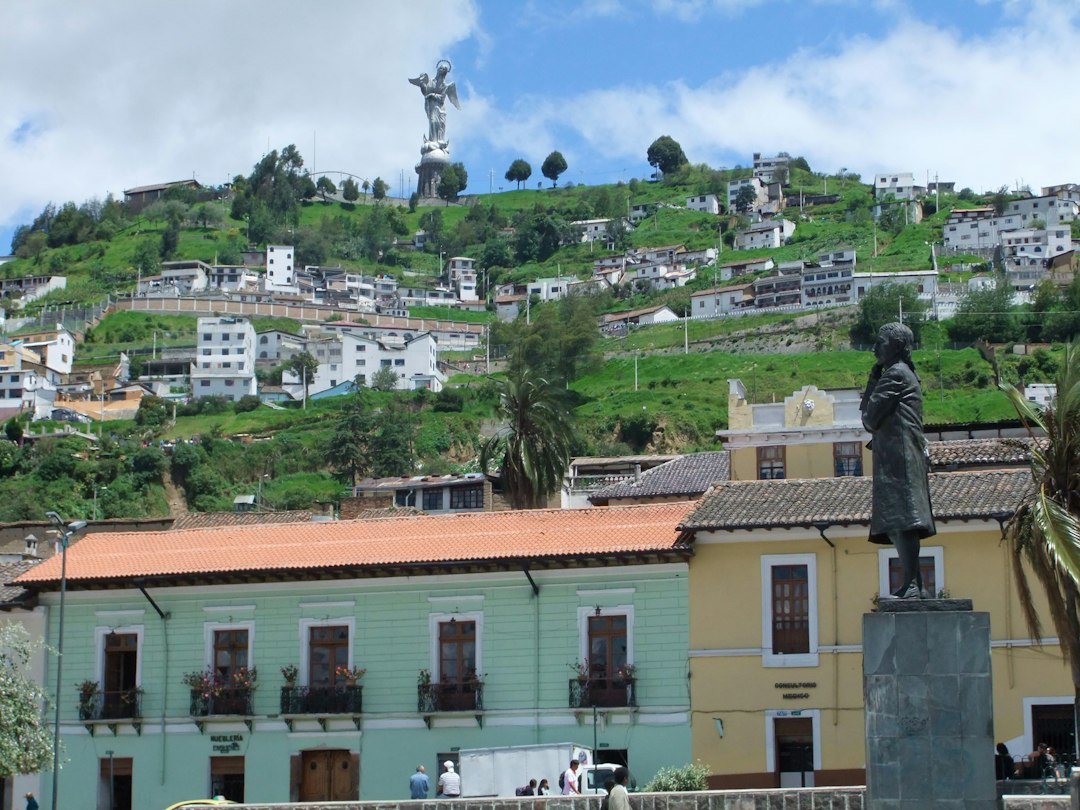

José Joaquín de Olmedo, a prominent figure in Ecuadorian history, is a name that resonates with pride among the pages of the country's history. Born on March 20, 1780, Olmedo is not only remembered as the president of Ecuador but also as a patriot and poet, a symbol of the struggle for independence. His life is closely linked to the city of Guayaquil, where he declared independence from Spain on October 9, 1820, an act that marked a crucial turning point in the country's history.
Olmedo's political career was characterized by a strong commitment to freedom and self-determination. After the annexation of Guayaquil to Gran Colombia, Olmedo found himself forced into exile in Peru, where he continued to fight for his ideas, actively participating in local politics and representing his country in Europe. His legacy is still alive, making Guayaquil a place of great historical interest.
History and Origins
José Joaquín de Olmedo y Maruri, son of a Spanish captain and a Guayaquilean, grew up in an environment that fostered his patriotic spirit. His declaration of independence in 1820 was not just a political act but a call for unity and freedom for the Ecuadorian people. Olmedo became president of the Free Province of Guayaquil and, although he was opposed to the union with Gran Colombia, he had to face the challenges of a turbulent era. His existence was marked by a continuous commitment to freedom, which led him to travel to Europe and take on diplomatic roles.
His poetry, influenced by the events of his life, reflected patriotic themes and the struggle for independence. Among his most famous works is "The Victory of Junin," which celebrates the fighters for freedom in Latin America. Olmedo was not limited to politics but also distinguished himself as an intellectual who used writing to inspire and mobilize the people.
Elements to Observe
When visiting Guayaquil, it is impossible not to notice the city's strong connection to Olmedo. Several squares and commemorative monuments are dedicated to his memory, including the monument located in the heart of the city, which celebrates his contribution to independence. The Olmedo House, a historic building, offers a glimpse into the life of this great man and his era, allowing visitors to immerse themselves in the history and culture of the 19th century.
Moreover, the city of Guayaquil is a vibrant center of culture and art, with museums and galleries that tell the story of Ecuador and the lives of historical figures like Olmedo. Walking through the streets, one can discover murals and artworks that pay homage to his ideals and legacy, making the visit an educational and inspiring experience.
Why It Is Interesting Today
Today, the figure of José Joaquín de Olmedo continues to inspire younger generations in Ecuador. His life and works are a beacon of hope and determination, representing the struggle for freedom and national identity. His legacy is particularly relevant in an era when the values of freedom and justice are more necessary than ever. His poetic works are studied in schools, and his ideals are discussed in contemporary debates, ensuring that his name remains alive in the hearts of Ecuadorians.
Furthermore, the city of Guayaquil is experiencing renewed tourist interest, with visitors drawn to its rich and vibrant history. Discovering Olmedo's life also means understanding the challenges and achievements of a country that continues to evolve. For those wishing to explore the history and culture of Ecuador, the Secret World app offers further insights and useful information for planning an unforgettable trip.


