
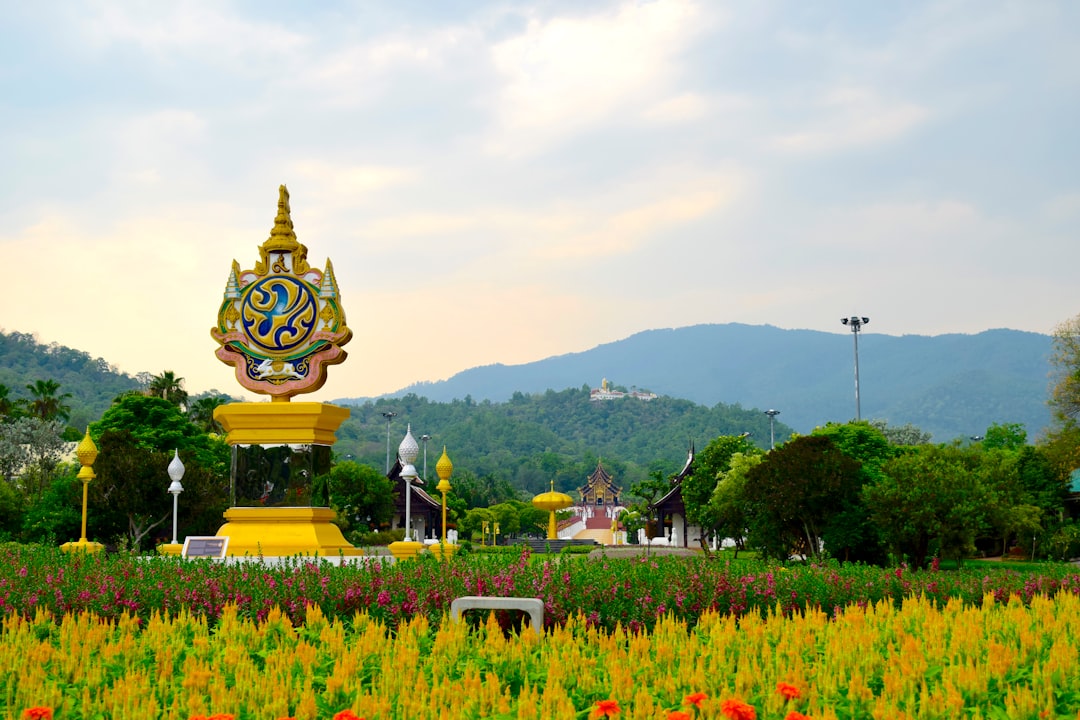

Nestled in the greenery of Lamphun province, Wat Phra Phutthabat Tak Pha is a Buddhist temple that embodies the spirituality and history of Thailand. Located in the village of Makok, this sacred place is not only a pilgrimage destination but also a tourist attraction that offers breathtaking views and an immersive experience in local culture.

The name of the temple, which means "the temple of the Buddha's footprint that dried his clothes," is linked to a legend that tells of a footprint of the Buddha within its perimeter. The history of this place dates back to 1973, when it received official recognition, and in 1978 it became a third-class royal temple. This historical context gives Wat Phra Phutthabat Tak Pha a special significance in the Thai cultural landscape.
Historical and Cultural Context
Wat Phra Phutthabat Tak Pha is an emblematic example of the Buddhist tradition in Thailand. Its construction took place during a time when spirituality played a central role in the daily lives of the inhabitants. The presence of a Buddha footprint represents not only a symbol of veneration but also a call to inner exploration and meditation, fundamental practices in Buddhism.
The temple, which stands on a hill, is surrounded by lush nature that contributes to creating an atmosphere of serenity. Its architecture, with the characteristic Thai style, reflects the cultural and artistic richness of the country. The temple's strategic location offers a panoramic view of the surrounding valley, making the visit an experience that is not only spiritual but also visual.
What Stands Out About the Place
The most fascinating feature of Wat Phra Phutthabat Tak Pha is undoubtedly the Nāga staircase, consisting of 469 steps leading to the chedi located at the top of the hill. This staircase is not just a physical path but also a symbol of the journey towards enlightenment. Each step represents a closer approach to the sacredness of the place, inviting visitors to reflect on the meaning of their presence in this spiritual space.
In addition to its architectural and natural beauty, the temple was also chosen as a location for some scenes of the film Rambo III in 1988, an aspect that adds a touch of modernity to its millennia-old history. This blend of sacred and profane makes Wat Phra Phutthabat Tak Pha a fascinating place to explore, where the past and present meet in a harmonious embrace.
Visiting Experience
Visiting Wat Phra Phutthabat Tak Pha is an experience that engages all the senses. Upon arriving at the temple, visitors are welcomed by an atmosphere of peace and tranquility, far from the hustle and bustle of the cities. The fresh air and the singing of birds create an ideal environment for meditation and reflection, allowing everyone to find their inner space.
The climb along the Nāga staircase, although challenging, is rewarded with a spectacular view at the end of the path. Once at the top, the panorama is breathtaking, offering a unique view of the valley below. Here, visitors can also observe Buddhist monks in prayer, an experience that further enriches the visit and invites contemplation.
Practical Information for Visitors
Wat Phra Phutthabat Tak Pha is easily accessible from Lamphun and offers various transportation options. It is advisable to wear appropriate clothing to respect local traditions and prepare for a visit that requires a certain physical commitment, especially for those who decide to tackle the 469 steps of the staircase. The visit is free, but a small contribution to support the temple's maintenance is always appreciated.
For those who wish to further enhance their experience, it is advisable to consult the Secret World app, which offers detailed information and useful tips for exploring Thailand's cultural heritage. Wat Phra Phutthabat Tak Pha is a place that invites discovery and reflection, a true gem of Thailand's Buddhist heritage.


