
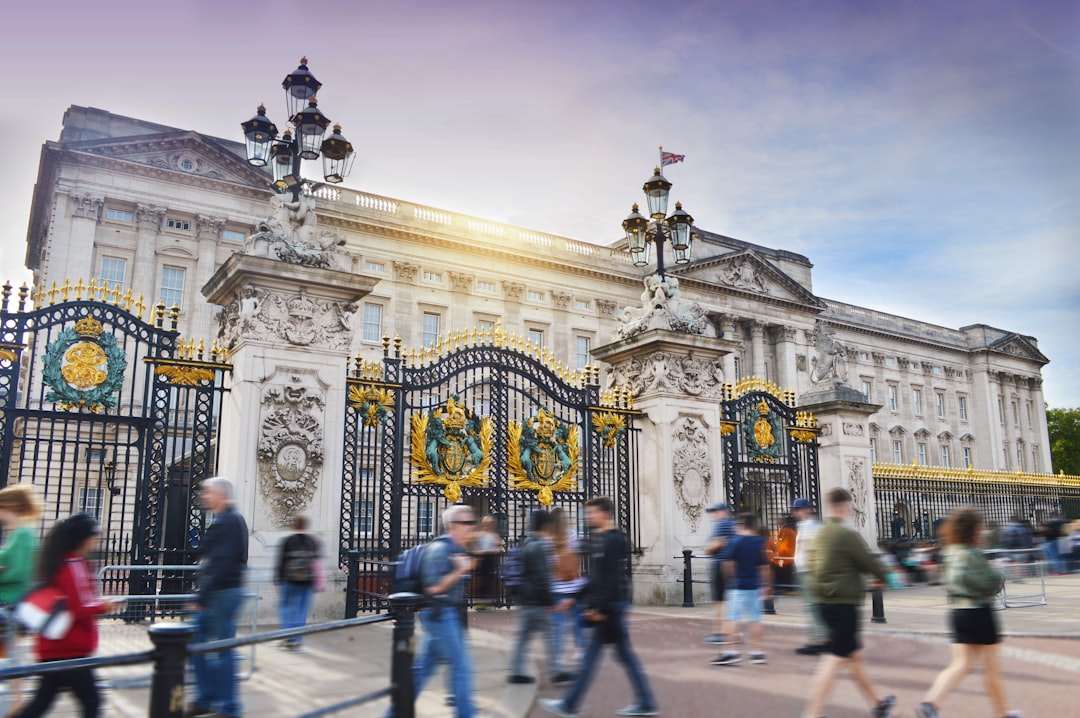

In the beating heart of London, Buckingham Palace stands as a timeless symbol of the British monarchy. Every year, millions of visitors flock to the capital to admire this imposing building, the official residence of the queen. Famous for the Changing of the Guard ceremony, the palace is not only a place of ceremonial events but also a treasure of art and architecture that tells centuries of history.

Built in 1703, Buckingham Palace has undergone numerous expansions and renovations over the years. Today, the palace is a fascinating mix of architectural styles that reflect the different eras in which it has been modified. Every corner of this magnificent building is an invitation to discover not only the history of the monarchy but also the artistic details that make it unique.
Imposing Architecture

The facade of Buckingham Palace is a triumph of neoclassicism, characterized by imposing columns and decorative details that capture attention. The centrality of the architecture is marked by the famous balcony, an emblematic place for the appearances of the royal family. Observing the structure, it is interesting to note how the palace was designed by John Nash, an architect who was able to blend aesthetics and functionality. The windows, adorned with elegant frames, reflect the sunlight, creating a play of shadows and light that changes with the passing hours.
Every detail of the facade tells a story. The statues that adorn the roof and the decorative reliefs are works of art that refer to the grandeur of the monarchy. The strategic position of the palace in the center of London, surrounded by beautiful gardens, further contributes to making it a place of extraordinary beauty and historical importance.

An Artistic Treasure
Entering the palace, one is welcomed by a collection of art of inestimable value. Buckingham Palace houses over 7,000 works, ranging from paintings to sculptures, including tapestries and antique furniture. The State Rooms, open to the public during the summer months, are a true museum of British history. Among the most famous works, one can admire paintings by masters such as Rembrandt and Van Dyck, which adorn the walls of the rooms.

But the true gem is the Throne Room, a magnificent space where the queen receives dignitaries and state guests. The walls are covered in red damask, while the frescoed ceiling captures the imagination with its refined decorations. Here, every detail is designed to express the power and authority of the monarchy, making the atmosphere almost palpable.
The Changing of the Guard: Iconic Ceremony

One of the most anticipated events by visitors is undoubtedly the Changing of the Guard, a ceremony that takes place in front of the palace and attracts thousands of spectators. This tradition dates back to 1660 and represents not only a moment of great charm for tourists but also a symbol of British history and culture. The guards, dressed in their iconic red uniforms and black fur hats, move in perfect synchronization, offering a display of discipline and pride.
The ceremony, which takes place in front of the palace, is accompanied by military music and, on special days, extraordinary events can be witnessed, such as parades in honor of official anniversaries. It is a moment that embodies the spirit of the monarchy and the connection between the past and the present.
The Gardens of Buckingham
One cannot speak of Buckingham Palace without mentioning its splendid gardens, which extend over 39 acres and represent an oasis of tranquility in the chaos of London. Designed by the royal gardener William Kent, they are a perfect example of an English landscape garden, with ponds, winding paths, and a variety of plants and flowers that reflect the seasons. During the summer, the gardens are open to the public and offer an unforgettable experience, where one can stroll and enjoy the natural beauty in an environment steeped in history.
The view of the palace from the garden is truly spectacular, and represents a perfect example of the harmony between architecture and nature. Every year, the gardens also host official events, including the famous garden parties, where the royal family receives prominent guests in a setting of rare beauty.
Conclusion: A Symbol of Tradition and Modernity
Visit Buckingham Palace and you will discover not just a building but a symbol of British tradition that continues to live in the present. The magnificence of its architecture, the richness of its artistic treasures, and the vibrancy of its ceremonies make this palace a must-visit place for anyone wishing to understand the true essence of the British monarchy.
Every visit to Buckingham Palace is a journey through time, an opportunity to connect with a history that has shaped not only the United Kingdom but the entire world. Full of meaning and beauty, Buckingham Palace remains a beacon of culture and history, a place where the past and present intertwine in a sublime way.


