
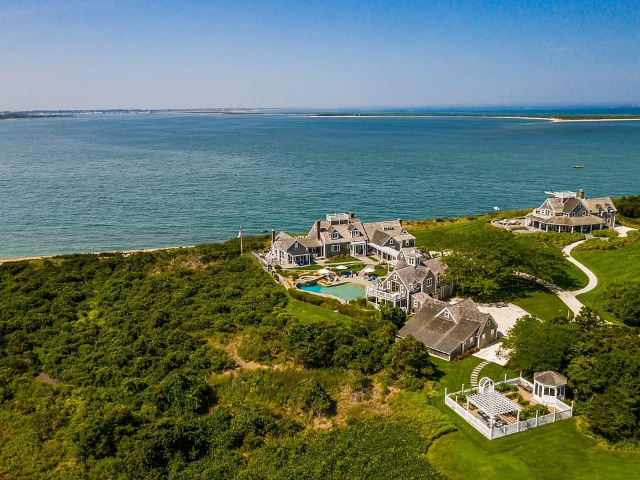

Nantucket, an island located about 30 miles off the coast of Massachusetts, è today a symbolic place of luxury and exclusivity, reserved for a select few. An island with a seemingly simple charm and a picturesque landscape, but which hides behind its golden beaches and its dreamy villas a far more complex and layered reality. Its history, once linked to whaling, has given way to a radical transformation, making it one of the most desirable destinations for the rich and famous, a kind of “Billionaire's Island” competing with the more famous Hamptons of New York.

The name of Nantucket immediately conjures up images of gleaming yachts and luxury homes overlooking the ocean, and indeed, property prices on the island are among the highest in the world. Here, living è a privilege reserved for those who can afford to spend millions of dollars on a summer villa or thousands of dollars a night to stay in one of the boutique hotels. And while celebrities such as the Obama or the Biden spend their summers in this gilded retreat, the day-to-day reality of those who live and work on the island is often ignored by the most distracted visitors.
Nantucket è a place where luxury and elitism mingle with a form of apparent sobriety. Unlike its more conspicuous counterparts, you will find no ostentatious excess here: no sports cars roaring along the narrow, cobbled streets, no luxurious restaurants with neon signs. This, però does not mean that the wealth is not palpable. The regulars, often families of old wealth from the Northeastern United States, move about with a sense of belonging and security, as if the island were their own personal preserve. Newcomers, those trying to make an impression with their newly acquired wealth, come up against a culture that prizes apparent modesty but actually hides a fierce social hierarchy.

But for those, like me, who visit the island with different eyes, the perfect image of Nantucket begins to show cracks. The island’s natural beauty is undeniable: the polluted beaches, historic lighthouses and colonial-style homes are the epitome of the American dream. However, behind the façade of serenity and prosperity lies a community divided, not only between the rich and poor, but also between those who “belong” to the island and those who are considered outsiders, even among the seasonal workers from all corners of the world, who keep the tourist economy of Nantucket going.
Walking the streets of downtown, è it is easy to see the difference between those who enjoy their vacations and those who work to make this luxury possible. The tourists are greeted with smiles, while the workers — often immigrants from the Caribbean or South America — go about their task in silence, aware that they are not part of the “Nantucket” romance that visitors celebrate. The gap è evident: while the wealthy enjoy their villas and relax on private beaches, seasonal workers face expensive and overcrowded housing, and are rarely integrated into the island’s social life.

This dissonance è perhaps the most interesting aspect of Nantucket. An island that, while selling itself as a paradise for a select few, represents a microcosm of real-world inequalities. Here, natural beauty è exploited to attract a certain élite, while historical and cultural roots — such as those of the Wampanoag peoples who inhabited the island before the arrival of British settlers — are romanticized or, worse, ignored.
At the end of my visit, I found myself reflecting on what it really means “to belong” to a place like Nantucket. È a’lovely island, certainly, but also a reminder of how luxury can often veil reality. As the ferry left the harbor and the island faded into the horizon, I wondered how many of its visitors, dazzled by its superficial splendor, can really see beyond its glossy image.


