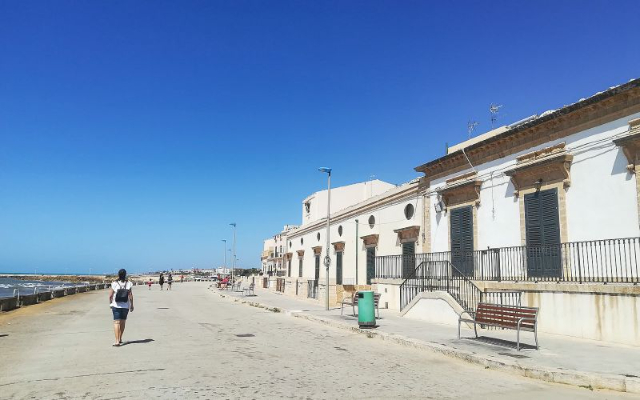


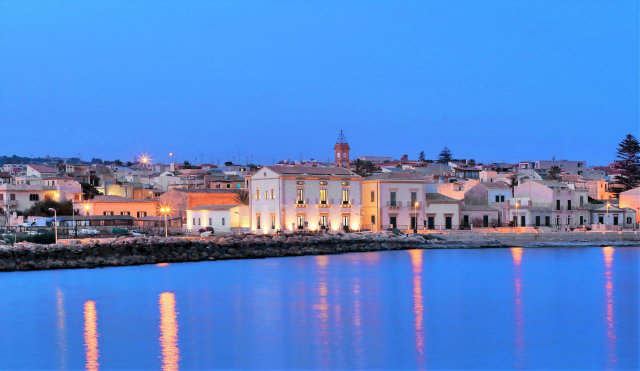
Toward the east, past the low rocky expanse of "Timpe Rosse," lies Donnalucata, the quintessential summer village of Scicli's inhabitants.With very ancient origins, its name suggests the idea of a "Fountain of Hours"-from the Arabic etymology "Ainlu Kat"-that actually existed on the beach called "Micenci." Donnalucata boasts two beaches. The first, called "Ponente," has chalets and kiosks for bathers, a fresh fish market (near the pier) and a promenade adorned with palm trees and lantanas. The other beach is "Micenci," a long stretch of shoreline leading all the way to Cava d'Aliga-Bruca. It is five kilometers of uninterrupted beach, caressed by an almost always calm sea, with colors ranging from deep blue to bottle green and pink at sunset. At the loneliest parts of the beach, silence often blends with dunes adorned with evergreen shrubs. At the "Spinasanta," a freshwater stream meets the sea, and it is not uncommon to see herons pause waiting to migrate to Africa. This stretch of coastline gives an evocative atmosphere, where wild nature and the beauty of the sea come together to create an unforgettable spectacle.The waterfront of Donnalucata becomes, in the famous television series "Il Commissario Montalbano," the waterfront of Marinella. Marinella is the place where Salvo Montalbano, the protagonist of the series based on the novels by Andrea Camilleri, resides. We often see Montalbano strolling along this waterfront, usually in the company of charming women. The houses along the waterfront often become sets for scenes in the series: for example, in the episode "The Age of Doubt," one of the houses is transformed into the restaurant "Il Cafaro di Montereale," where the Commissioner goes to dinner with Lieutenant Laura Belladonna. The Donnalucata pier appears in several episodes, such as "Cat and Goldfinch" and "The Age of Doubt," while in the episode "The Shape of Water" we can admire the "Mormino Penna" palace in Donnalucata. These places become icons for fans of the series and add a touch of authenticity to the narrative context, making the experience of the characters and viewers even more engaging.