
← Back

Doomsday Clock

1307 E 60th St, Chicago, IL 60637, USA ★★★★☆ 122 views
Sienna Malone
Chicago
🏆 AI Trip Planner 2026

Get the free app

Discover the best of Chicago with Secret World — the AI trip planner with 1M+ destinations. Get personalized itineraries, hidden gems and local tips. Free on iOS & Android.

🧠 AI Itineraries 🎒 Trip Toolkit 🎮 KnowWhere Game 🎧 Audio Guides 📹 Videos
Scan to download iOS / Android
Scan for AppGallery Huawei users

About Doomsday Clock

Doomsday Clock - Chicago | Secret World Trip Planner

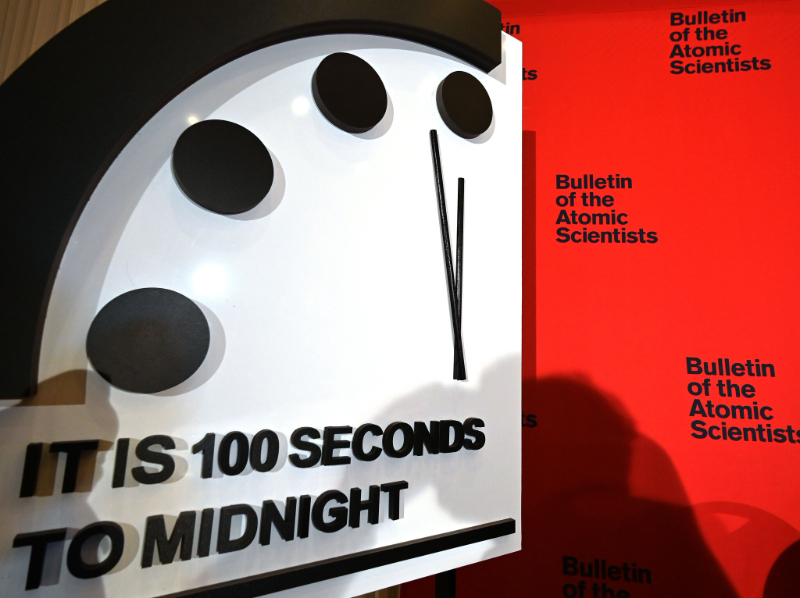
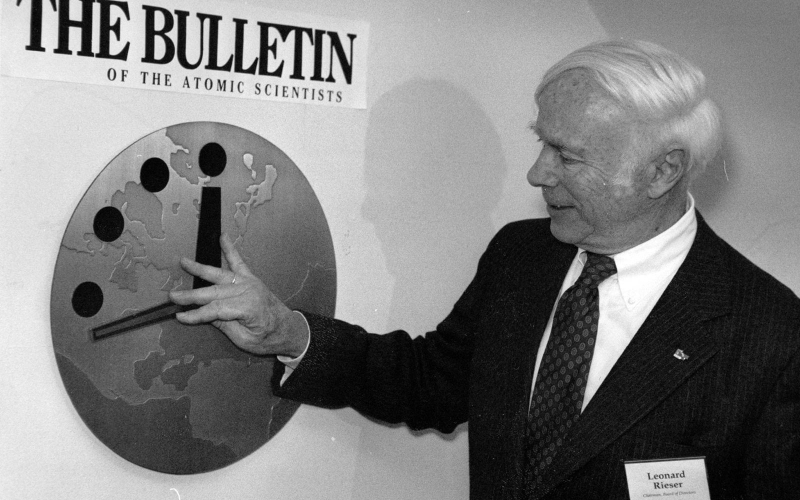
The Doomsday Clock is a metaphor that represents how close humanity is to self-destruction, due to nuclear weapons and climate change.The clock hands are set by the Bulletin of the Atomic Scientists, a group formed by Manhattan Project scientists at the University of Chicago who helped build the atomic bomb but protested using it against people. It warns how many metaphorical “minutes to midnight” humanity has left. Set every year by the Bulletin of the Atomic Scientists, it is intended to warn the public and inspire action.
Doomsday Clock - Chicago | Secret World Trip Planner

When it was created in 1947, the placement of the Doomsday Clock was based on the threat posed by nuclear weapons, which Bulletin scientists considered to be the greatest danger to humanity. In 2007, the Bulletin began including catastrophic disruptions from climate change in its hand-setting deliberations.

The furthest the clock has been set was 17 minutes to midnight, in 1991, after the collapse of the Soviet Union and the signing of the Strategic Arms Reduction Treaty. Until recently, the closest it had ever been set was at two minutes to midnight—first in 1953, when the U.S. and Soviet Union both tested thermonuclear weapons, and then in 2018, citing “a breakdown in the international order” of nuclear actors, as well as the continuing lack of action on climate change.

Then, in 2020, the clock moved the closest it has ever been: 100 seconds to midnight. The Doomsday Clock is located at the Bulletin offices at 1307 E. 60th St., in in the lobby of the Keller Center, home to the University of Chicago Harris School of Public Policy.

🗺 AI Trip Planner 2026

Plan your visit to Chicago

Suggested itinerary near Doomsday Clock

MAJ+
500.000+ travelers worldwide
  1. 🌅
    Morning
    Doomsday Clock
    📍 Chicago
  2. ☀️
    Afternoon
    Museum of Science and Industry :the largest one in the West
    📍 1 km · Chicago
  3. 🌆
    Evening
    Chicago - Adler Planetarium and the Lake Michigan
    📍 9 km · Chicago

Buy Unique Travel Experiences

Powered by Viator

See more on Viator.com

Explore nearby · Chicago

Frequently Asked Questions

The Doomsday Clock is displayed in the lobby of the Keller Center at 1307 E. 60th St., home to the University of Chicago Harris School of Public Policy. You can visit the clock during regular business hours at the University of Chicago campus on the South Side of Chicago.
The Doomsday Clock was created in 1947 by the Bulletin of the Atomic Scientists, a group of Manhattan Project scientists from the University of Chicago who helped build the atomic bomb but opposed its use against people. Originally focused solely on nuclear weapons threats, the Bulletin expanded its assessment criteria in 2007 to include climate change as a major factor in setting the clock's hands.
The closest the Doomsday Clock has ever been set to midnight is 100 seconds, which occurred in 2020, reflecting unprecedented global threats from nuclear weapons and climate change. Before that, the record was two minutes to midnight in both 1953 and 2018, marking periods of extreme international tension and lack of climate action.
The Doomsday Clock was furthest from midnight at 17 minutes in 1991, following the collapse of the Soviet Union and the signing of the Strategic Arms Reduction Treaty, which significantly reduced nuclear tensions. This represents the only time in modern history when global threat levels were considered relatively low by the Bulletin of Atomic Scientists.
Yes, the Doomsday Clock is reset annually by the Bulletin of the Atomic Scientists to reflect current global threats. The clock's placement is determined by assessing nuclear weapons proliferation, international political breakdown, and climate change impacts, making it a dynamic indicator of humanity's proximity to self-destruction.
