


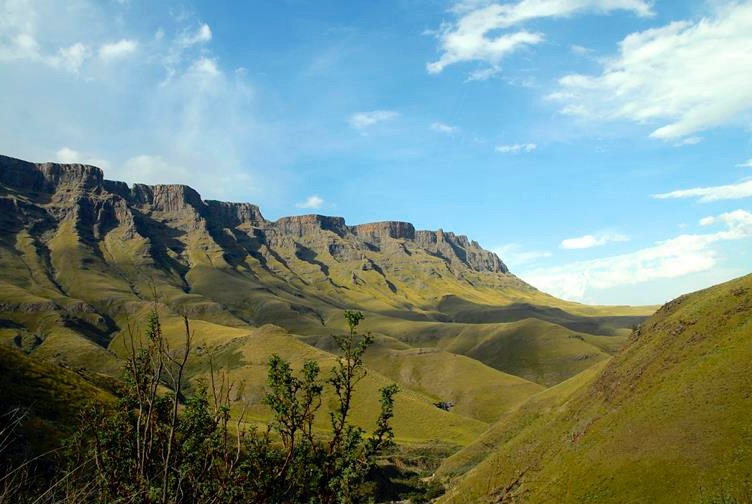
The Drakensberg Mountains rise majestically in Southern Africa, their peaks piercing the sky in a breathtaking display of natural grandeur. Known locally as uKhahlamba, meaning "Barrier of Spears," these mountains form a monumental escarpment that stretches over 1,000 kilometers across the eastern part of South Africa. This ancient landscape tells stories as old as time, with its rugged cliffs and verdant valleys that have witnessed the passage of millennia.
The origins of the Drakensberg are rooted in geological epochs that date back over 200 million years. Formed primarily through volcanic activity, the range is a majestic relic of the break-up of the supercontinent Gondwana. Throughout history, the mountains have been a silent witness to the passage of various cultures. The San people, who have inhabited the area for thousands of years, have left their mark through a remarkable collection of rock art. These ancient artworks, found in over 500 sites, offer intriguing insights into the lives of the hunter-gatherers who once roamed these lands.
The art of the San is not only an invaluable historical record but also a masterpiece in its own right. The paintings, often depicting animals, hunters, and spiritual figures, are believed to be between 2,000 and 4,000 years old. Created using natural pigments, these artworks are a testament to the San's deep connection with nature and their spiritual world. The Giants Castle and Cathedral Peak areas are particularly renowned for their rock art galleries, where visitors can step back in time and ponder the mysteries of these ancient expressions.
Today, the Drakensberg Mountains are not only a natural wonder but also a vibrant tapestry of local culture and traditions. The region is home to the Zulu people, whose rich cultural heritage is reflected in their customs and festivals. The Royal Reed Dance, a traditional Zulu festival, is a colorful spectacle that attracts visitors from all over the world. During this event, young women from across the Zulu kingdom gather to celebrate their culture through dance and song, clad in vibrant traditional attire.
Gastronomy in the Drakensberg area is a delightful journey into South African flavors. The local cuisine is heavily influenced by the Zulu culture, featuring dishes like umnqusho, a savory corn and bean dish, and chakalaka, a spicy vegetable relish. Visitors can also enjoy traditional braai, a South African-style barbecue, where meats are grilled over open flames. To accompany these meals, the locally brewed umqombothi, a traditional beer made from maize, is a must-try for those seeking an authentic taste of Zulu hospitality.
While the Drakensberg is renowned for its dramatic landscapes and cultural heritage, it also harbors lesser-known curiosities that intrigue the inquisitive traveler. One such gem is the Tugela Falls, the world's second-highest waterfall, cascading down the amphitheater of the northern Drakensberg in five distinct tiers. Another fascinating aspect is the rare alpine flora that dots the higher elevations, including the Drakensberg Bell, a unique plant species found only in this region.
For those planning a visit, the Drakensberg offers a myriad of experiences across its diverse landscapes. The best time to explore these mountains is during the dry months of May to September, when the weather is cool and ideal for hiking. Trails such as the Sentinel Peak and Rainbow Gorge provide breathtaking views and a chance to spot endemic wildlife such as the Drakensberg siskin and the bearded vulture.
When visiting, it’s essential to respect the natural and cultural heritage of the area. Hiring a local guide can enrich your experience, offering insights into both the history and the ecology of the mountains. Additionally, many local communities offer cultural tours that provide a deeper understanding of Zulu traditions and lifestyles.
In the Drakensberg Mountains, every stone, every painting, and every gust of wind tells a story. This enchanting range invites travelers not just to see, but to feel the pulse of an ancient land, where nature and culture intertwine in a timeless dance.
