
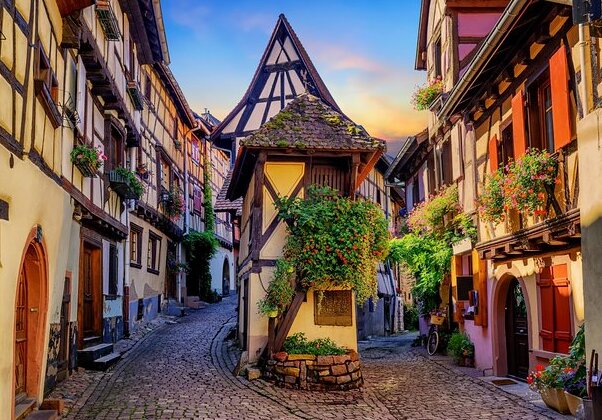

In the heart of the Alsace region, Eguisheim unfolds like a scene from a fairy tale, with its concentric cobblestone streets and half-timbered houses draped in vibrant flowers. Renowned as the birthplace of wine growing in Alsace, this village offers a rich tapestry of history, culture, and gastronomy that beckons travelers to explore its charming lanes and storied past.
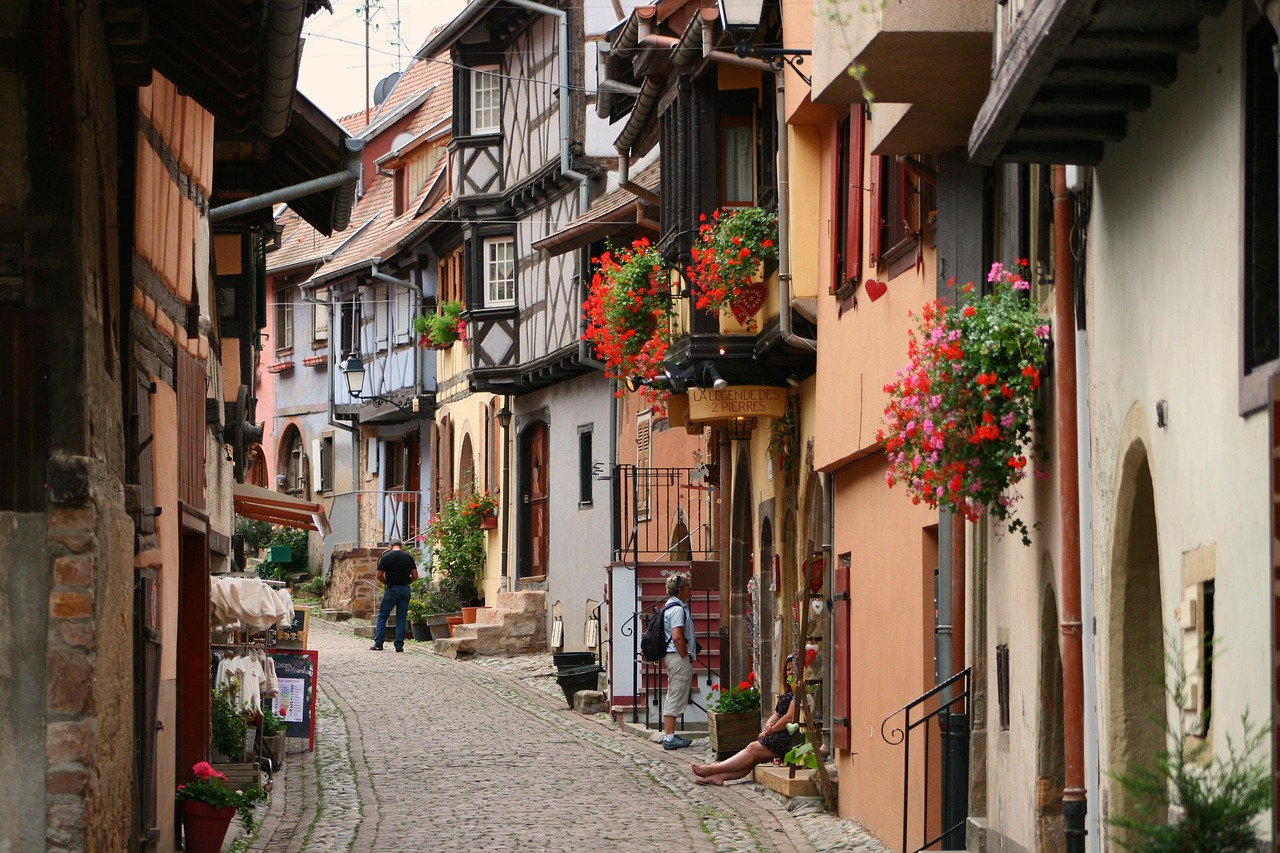
The origins of Eguisheim reach back to the 4th century, when it was first settled by the Romans. Its strategic location nestled in a valley surrounded by the Vosges Mountains made it an ideal spot for cultivation. By the early Middle Ages, the town had become an important center for viticulture, a legacy that continues to define its identity. In the 8th century, the Counts of Eguisheim constructed a castle at the village's center, a testament to its growing importance. This castle saw the birth of Pope Leo IX in 1002, who would later be canonized as a saint, adding a layer of spiritual significance to the village's history.
Art and architecture in Eguisheim reflect the medieval past interwoven with Renaissance influences. As you wander through the town, the Saints-Pierre-et-Paul Church stands out with its Romanesque façade and Gothic touches. The church houses a remarkable wooden altarpiece dating back to the 18th century, a fine example of local craftsmanship. The village’s architectural charm is epitomized by its pastel-colored homes, adorned with wooden balconies and intricate carvings. Each house tells a story, with dates and inscriptions often found above doorways, revealing the centuries of history they have witnessed.
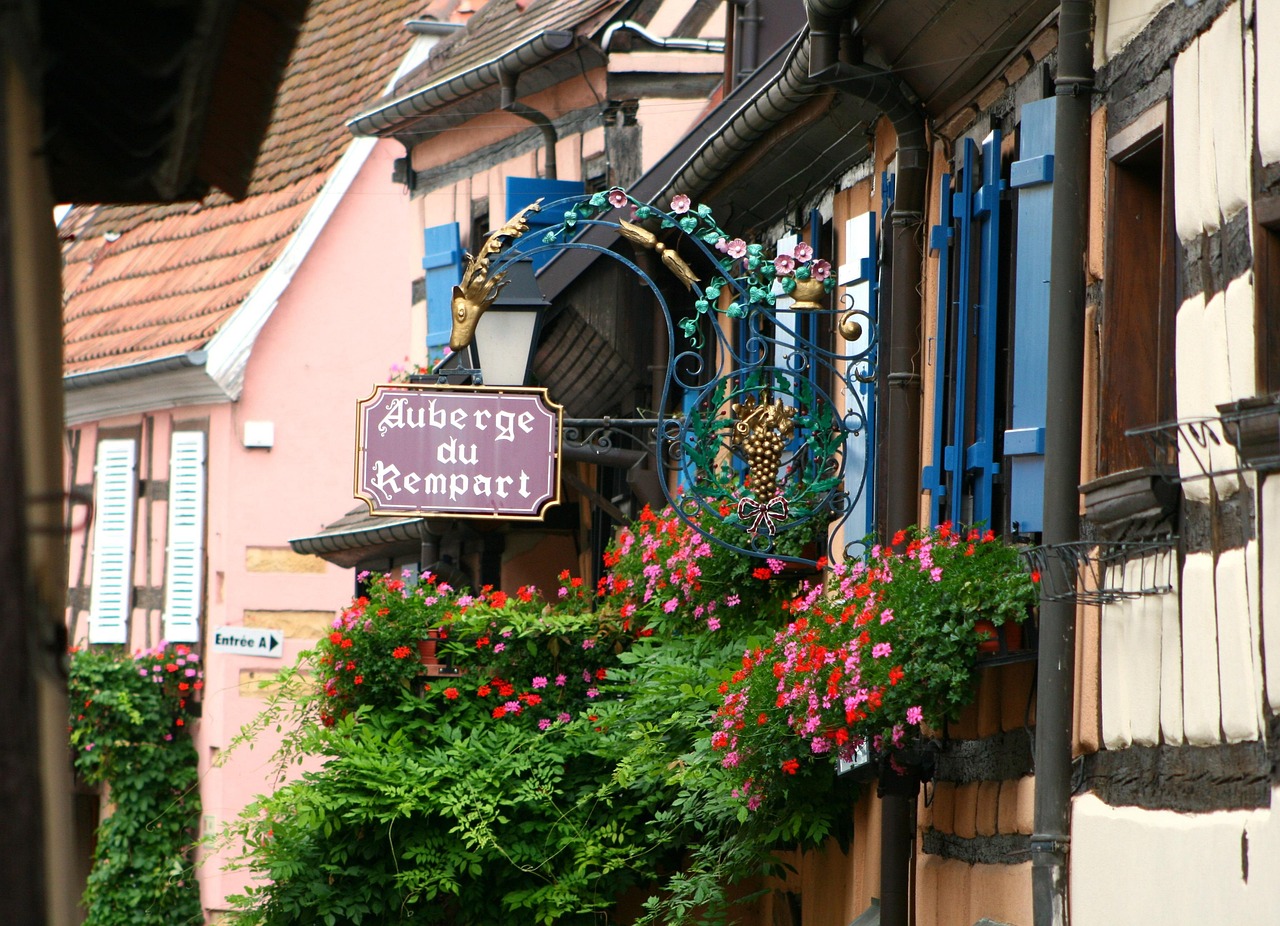
Cultural life in Eguisheim is vibrant and deeply connected to its vinicultural roots. The Fête des Vignerons d'Eguisheim, or the Winemakers' Festival, is a highlight, drawing visitors every August to celebrate the grape harvest with parades, traditional music, and, of course, wine tastings. Another key event is the Christmas Market, where the village transforms into a winter wonderland, offering artisanal crafts and regional delicacies.
Speaking of gastronomy, Eguisheim's culinary offerings are a delightful reflection of Alsatian traditions. You must indulge in Flammekueche, a thin-crust tart topped with cream, onions, and lardons, often paired with a glass of the local Riesling or Gewürztraminer. Choucroute garnie, a hearty dish of sauerkraut with sausages and meats, is another staple, embodying the hearty and flavorful essence of Alsatian cuisine.
Beyond its well-trodden paths, Eguisheim holds lesser-known curiosities that intrigue the intrepid traveler. The Château Saint-Léon, though now mostly ruins, offers a glimpse into its fortified past and boasts panoramic views of the surrounding vineyards. Hidden in the village's quiet lanes is a fountain dating back to the 1557, a serene spot often overlooked by visitors. This fountain, with its clear waters and decorative sculpture, is a charming reminder of the village's medieval roots.
For travelers planning a visit, the best time to explore Eguisheim is either in the spring, when blossoms burst forth in a riot of colors, or during the autumn harvest, when the vineyards are a sea of golden hues. To fully appreciate the village's quiet charm, a weekday visit is recommended to avoid the weekend crowds. Be sure to look for the Les Trois Châteaux on the nearby hills, a trio of castles that offer a scenic hike and a deeper dive into the area's history.
Eguisheim is not just a destination; it is an experience. From its ancient streets echoing the footsteps of history to its vineyards that produce some of the finest wines in the region, this village offers a timeless journey into the soul of Alsace, where every corner has a story and every glass of wine, a legacy.


