


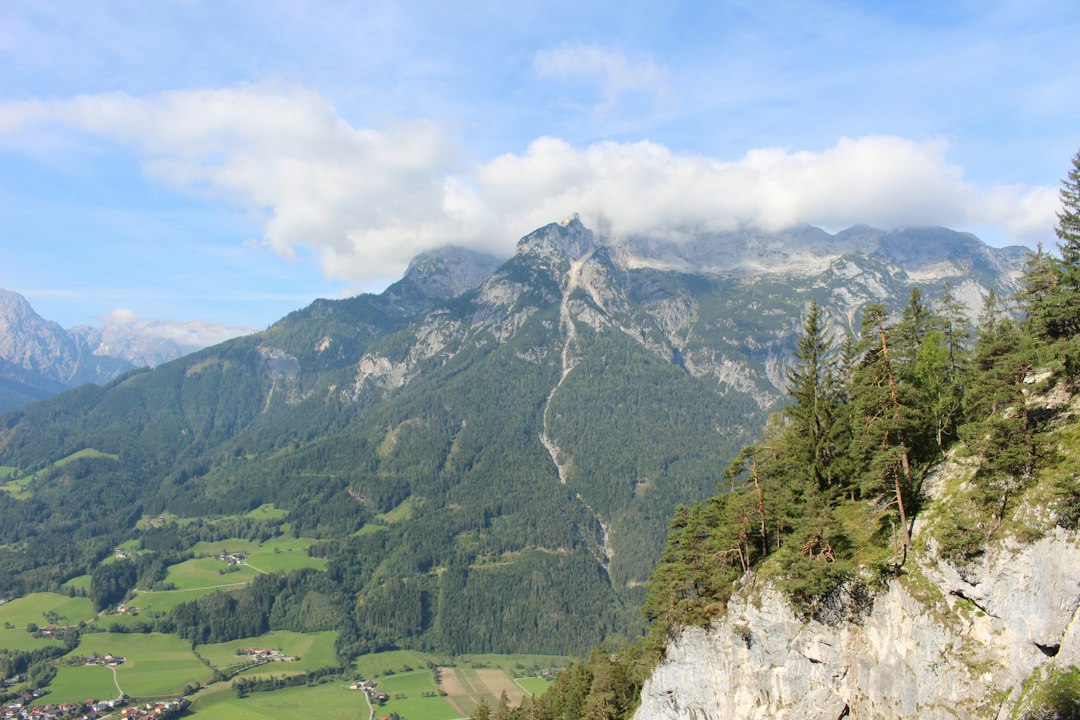
At over a thousand meters in altitude, in the depths of the Tennengebirge mountain, the air suddenly becomes sharp and the darkness transforms into a crystal landscape. The Eisriesenwelt — literally "the world of ice giants" — is a system of caves that extends for about 42 kilometers of tunnels in the heart of the Austrian Alps, near the small village of Werfen, in the Salzburg region. Only the first few kilometers are accessible to the public, yet they are enough to leave anyone who steps foot there breathless.

The permanent ice formations that inhabit these caves are not the result of particularly harsh external temperatures, but of a sophisticated system of internal air currents that keeps the ice intact even in summer. It is this natural paradox — eternal ice inside a mountain — that has fascinated explorers and scientists for centuries. The naturalist Anton von Posselt-Czorich was the first to systematically explore and document the cave in 1879, paving the way for subsequent scientific expeditions.
A story of exploration and wonder

After the first exploration by Posselt-Czorich, it was the speleologist Alexander von Mörk who dedicated much of his life to the study of the Eisriesenwelt, between the end of the nineteenth century and the beginning of the twentieth century. His ashes, by his own wish, rest today inside the cave, in an urn placed in a natural niche: a detail that the most attentive visitors can notice during the guided tour. The cave was opened to the public in 1920, and since then has welcomed millions of visitors from all over the world.
The official tourist route covers about one kilometer of galleries, with a guided tour that lasts on average 75-80 minutes. The guides carry carbide lamps, the same technology used by the first explorers, which cast dancing shadows on the ice walls and amplify the scenic effect of the formations. Artificial lighting is deliberately reduced to preserve the original atmosphere and slow down the melting of the ice.
The ice formations: what to see
The first large hall encountered inside is called Posselt Hall, in honor of its discoverer. Here, the ice forms structures that resemble frozen waterfalls, columns, and translucent veils dozens of meters high. Further on is the so-called Palace of Imeraldo, where the walls seem to be covered in frosted glass, and the light from the lamps creates reflections that change color depending on the angle.

The temperatures inside the galleries are constantly around 0°C, regardless of the outside season. In summer, when the outside temperature exceeds 25°C, the thermal contrast at the entrance of the cave is immediate and almost violent. This means that even summer visitors must be equipped: heavy jacket, gloves, and shoes with non-slip soles are not optional, but concrete necessities.
How to get there and when to visit

The Eisriesenwelt can be reached starting from Werfen, a town easily accessible by train from Salzburg in about 45 minutes. From the Werfen station, a shuttle bus service takes you to the valley station of the cable car, which ascends to an altitude of 1084 meters. From there, a walk of about 20 minutes along a mountain path leads to the entrance of the cave. The entire transfer from the station takes approximately one hour.
The cave is open to the public from May to October, with winter closure. The months of July and August are the busiest, with queues that can significantly lengthen during the central hours of the day. The most useful advice is to arrive at the first available visit in the morning, usually around 9:00 AM, to avoid waiting and enjoy the cave with fewer people. The ticket includes the cable car and a guided tour, with an indicative cost of around 30-35 euros per adult, but it is always advisable to check the updated rates on the official website before departing.
Practical tips for a successful visit
Those who suffer from claustrophobia should know that some sections of the path are narrow and require walking in single file, with the ceiling occasionally lowering. These are not dangerous passages, but the atmosphere is that of a real cave, not a theme park. Photographs without flash are generally allowed, but the poor lighting makes it difficult to get sharp shots without dedicated equipment.
Bringing a small flashlight is always a good idea, as well as a lightweight backpack with an extra thermal layer. The experience is well worth the organization it requires: few places in the world offer the feeling of walking inside a millennia-old natural ice sculpture, in silence, with the distant sound of the wind traveling through the mountain's invisible tunnels.


