



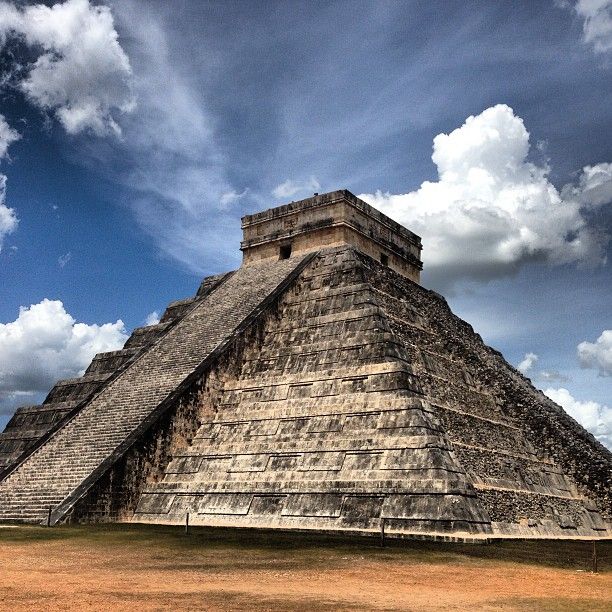
Rising majestically from the heart of the Yucatán Peninsula, El Castillo stands as a testament to the architectural brilliance and astronomical prowess of the ancient Maya civilization. Situated in the sprawling archaeological site of Chichen Itza, this iconic pyramid is not just an impressive feat of engineering but also a profound symbol of Mayan cosmology and culture.

Dating back to the period between the 8th and 12th centuries AD, El Castillo—also known as the Temple of Kukulcán—was constructed during the height of Chichen Itza's influence. This era saw the city become a significant political, economic, and religious center in the Maya world. The temple is dedicated to Kukulcán, the feathered serpent deity revered by the Maya, akin to Quetzalcoatl in Aztec mythology. With its construction rooted in astronomical precision, the temple served not only as a place of worship but also as a calendar and a tool for celestial observation.
The architectural style of El Castillo is a stunning example of Mesoamerican step pyramid design, characterized by its symmetrical terraces, staircases, and intricate stone carvings. The pyramid stands at nearly 30 meters tall, with a base measuring approximately 55.3 meters on each side. Each of its four sides features a grand staircase with 91 steps, which, when combined with the temple platform at the top, totals 365 steps—mirroring the number of days in the solar year. This design reflects the Maya’s sophisticated understanding of astronomy and their meticulous calendar systems.

One of the most captivating artistic elements of El Castillo is the serpent shadow phenomenon. During the equinoxes, the sun casts shadows on the north staircase, creating the illusion of a serpent slithering down the pyramid. This phenomenon is a breathtaking display of the Maya's architectural ingenuity and their deep connection to celestial events.
The culture surrounding Chichen Itza is vibrant and deeply rooted in the traditions of the Maya people. The nearby town of Valladolid is a hub of local customs and festivals. One of the most significant events is the Spring Equinox Festival, where visitors gather to witness the serpent shadow on El Castillo and partake in traditional dances, music, and ceremonies that celebrate the Maya heritage and honor their gods.
Gastronomically, the Yucatán region offers a rich tapestry of flavors that reflect its indigenous roots. Visitors can savor traditional dishes such as cochinita pibil, a slow-roasted pork marinated in citrus and annatto, wrapped in banana leaves. Another local favorite is panuchos, which are tortillas stuffed with black beans and topped with turkey, pickled onions, and avocado. To refresh the palate, try a glass of agua de chaya, a nutrient-rich drink made from the native chaya plant, often mixed with lime juice.
For those seeking to uncover lesser-known curiosities, delve into the acoustic marvels of El Castillo. Clap your hands at the base of the staircase, and you'll hear a bird-like echo, reminiscent of the call of the quetzal. This intentional design feature is believed to invoke the spirit of the sacred bird, further illustrating the Maya's complex understanding of sound and architecture.
When planning a visit to El Castillo, timing is crucial to experience its full splendor. The best months to visit are from November to March, when the weather is cooler and more pleasant. Arriving early in the morning can help you avoid the midday crowds and offer a serene experience as you explore the site. Don’t miss the opportunity to hire a local guide, who can provide invaluable insights into the history and significance of the temple and its surroundings.
As you wander through the ancient ruins of Chichen Itza, let the whispers of history guide you, and marvel at the enduring legacy of the Maya civilization. Every stone tells a story, every carving a myth—a reminder of a world where the sacred and the scientific were seamlessly intertwined.
