

It emerges from nowhere, from the ochre flatness of the Tunisian plain, like a stone mirage that refuses to disappear. The Roman amphitheater of El Jem does not announce itself gradually: it appears suddenly, three stories of sand-colored arches rising nearly 36 meters above the low houses of the village, visible from kilometers away on every side. No hill hides it, no modern city swallows it. It is simply there, intact and absurd in its grandeur.
Built around 238 AD, during the reign of Emperor Gordian I, this amphitheater is among the best preserved in the Roman world — third in size after the Colosseum in Rome and the amphitheater of Capua. The city that hosted it was called Thysdrus, and it was a prosperous center thanks to the production and trade of olive oil, a wealth that allowed for the financing of a monumental work capable of accommodating up to 35,000 spectators. Today El Jem is a town of a few thousand inhabitants, and that disproportion — between the human scale of the village and the mass of the amphitheater — is the first thing that strikes the visitor.
The architecture that withstands the centuries
Approaching the structure on foot, walking through the streets of the center of El Jem, is already a physical experience. The arches multiply as you get closer, and the local limestone shows its shades: pale yellow in the full sun, almost orange in the golden hours of late afternoon. The outer ellipse measures about 148 meters by 122 meters, and the three superimposed orders of arches — Doric, Ionic, and Corinthian — follow the same compositional logic as the Colosseum, built more than a century earlier.
Inside, the cavea — the tiered seating area where the spectators sat — is largely still legible. You can walk through the underground corridors, the tunnels where gladiators and animals were kept before being pushed into the arena. Walking in those narrow tunnels, with the low ceiling and light filtering in from the entrances, is one of the most evocative moments of the entire visit: it is hard not to think about what it meant to wait there, in the shadows, before ascending towards the blinding light of the arena.
Thysdrus and the Forgotten History
The history of the amphitheater is intertwined with that of Gordian I, the governor of the province of Africa who in 238 AD was proclaimed emperor right in Thysdrus, in revolt against Emperor Maximinus the Thracian. His reign lasted only a few weeks before he himself committed suicide after the death of his son in battle. The city, however, was already at its peak: the extraordinary mosaics that are now found in the National Museum of Bardo in Tunis and in the local museum of El Jem come from the patrician villas of Thysdrus, and testify to a level of artistic refinement surprising for a provincial city.
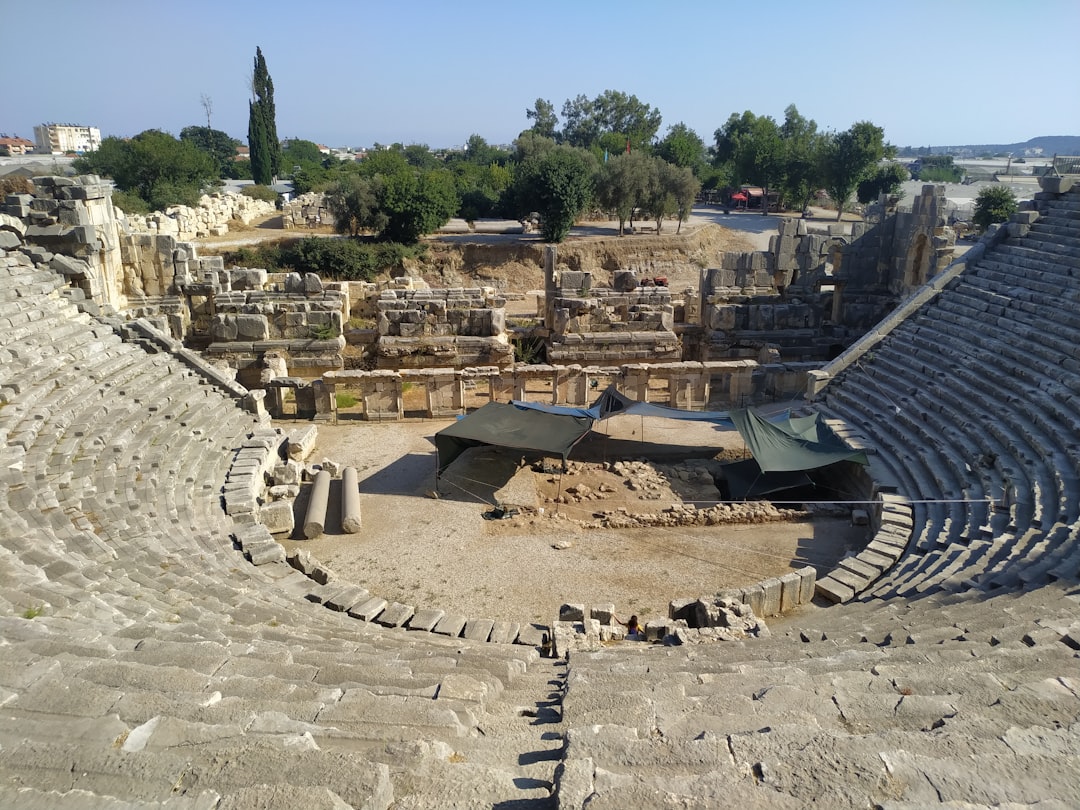
Over the centuries, the amphitheater has suffered significant damage, but not at the hands of time: in the 17th century, part of the southern facade was deliberately demolished to prevent the Berber rebels from using it as a fortress. That breach is still visible today, and paradoxically allows for a better view of the cross-section of the structure, with its concentric corridors and the engineering complexity that supports it.
How to visit El Jem
El Jem is easily reachable by train from Tunis or Sfax: the railway line connecting the two cities passes through El Jem, and the station is just a few minutes' walk from the amphitheater. The journey from Tunis takes about two and a half hours. Alternatively, many organized tours from Sousse or Hammamet include El Jem as a day stop.
The best time to visit is in the early morning, right when the site opens, or in the late afternoon. At midday, especially in summer, the sun reflecting off the limestone and the lack of shade in the arena make the visit tiring. Plan for at least two hours to visit the amphitheater at a leisurely pace and the small adjacent archaeological museum, which houses mosaics and artifacts from the excavations of the ancient city. The entrance ticket is affordable — on the order of a few Tunisian dinars — and includes access to both facilities. Bring water, comfortable shoes, and, if possible, a flashlight for the underground corridors.
An experience that remains
What makes El Jem different from other Roman sites is precisely the absence of mediations. There is no large city around to distract, there are no endless queues, there is no traffic noise that covers everything. There is the stone, the Tunisian sky, and the relative silence of a village that has learned to coexist with a colossus that looms over it. Sitting on the steps and looking at the ellipse of the arena below, knowing that this geometric shape held tens of thousands of people almost two thousand years ago, is one of those experiences that require no additional explanations.
Every July, the amphitheater hosts the El Jem International Symphony Music Festival, with concerts held directly in the arena. The natural acoustics of the structure, designed to amplify sounds towards the cavea, still works today exactly as the Roman builders had intended.


