
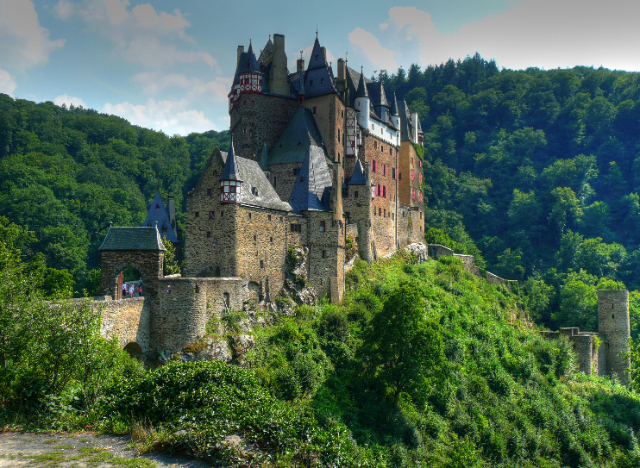

Perched majestically on a 70-meter-high rock spur, Eltz Castle (Burg Eltz) is a storybook vision brought to life. Set amidst the enchanting hills above the Moselle River, it stands as a testament to medieval grandeur and the rich tapestry of German history. This castle, ensconced in the heart of the Eifel region, is a rare gem that has remained unscathed by the ravages of time and war, preserving centuries of history within its stone walls.
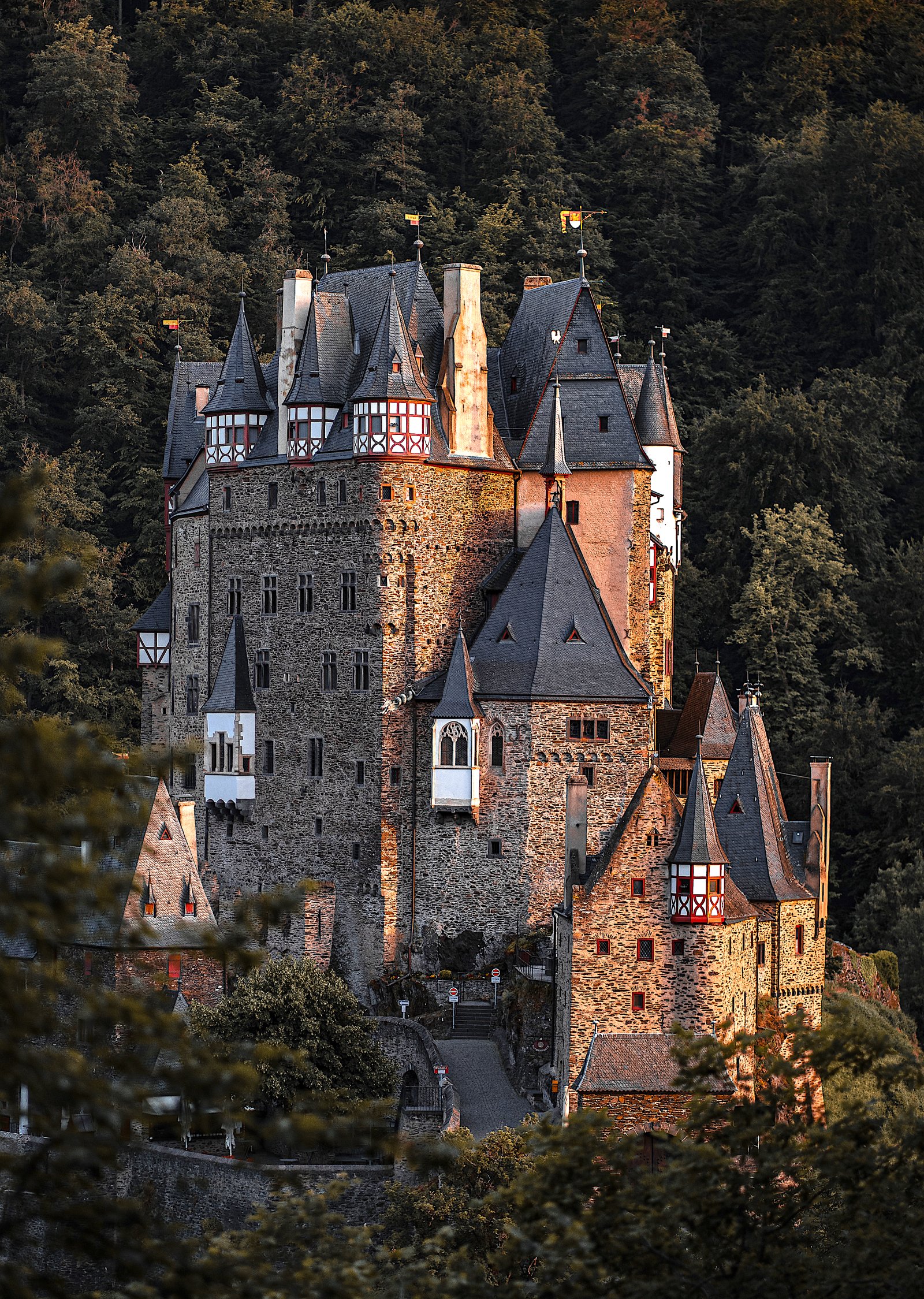
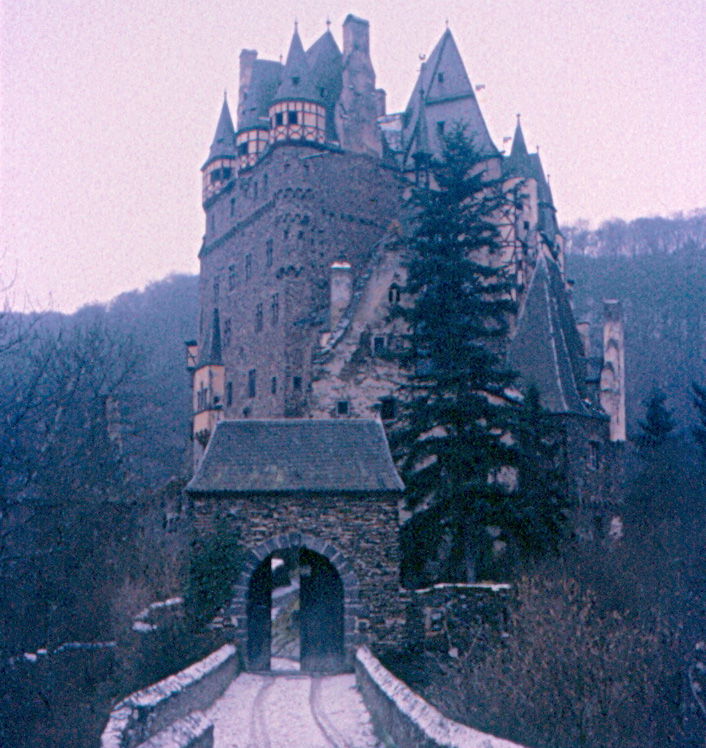
The origins of Eltz Castle date back to the 12th century. It was strategically placed on a Roman trade route, which linked fertile farmlands to bustling markets. The castle has been owned by the same family for over 850 years, with the first documented mention in 1157, when Emperor Frederick Barbarossa granted it to the Eltz family. Throughout the Middle Ages, it was a symbol of power and prosperity, a fortress that withstood sieges and conflicts, including the 1331-1336 Eltz Feud. Remarkably, the castle never faced direct destruction, allowing it to preserve its original structure.
Architecturally, Eltz Castle is a mesmerizing blend of styles, reflecting the evolution of European design through the ages. The castle's most striking feature is its fairy-tale appearance, with turrets and intricate woodwork that rise above the surrounding forest. The Romanesque, Gothic, and Baroque influences are evident in its construction, each wing constructed by different branches of the Eltz family. Inside, visitors are greeted by opulent rooms adorned with exquisite artwork, including a rare collection of gold and silver artifacts, armor, and weaponry. The Knight's Hall showcases medieval frescoes, while the Rodendorf Kitchen offers a glimpse into 15th-century culinary practices.
Beyond its architectural allure, Eltz Castle is deeply embedded in local customs and traditions. The region celebrates its history with fervor, hosting festivals like the Eltzer Burgfest, where medieval life is reenacted through jousting tournaments and artisan markets. This festival brings the past to life, allowing visitors to immerse themselves in the sights and sounds of a bygone era.
Gastronomy in this region is equally captivating. The Moselle area is renowned for its Riesling wines, which perfectly complement the hearty local cuisine. Visitors can savor traditional dishes such as "Sauerbraten," a pot roast typically marinated in vinegar and spices, and "Flammkuchen," a thin-crust bread topped with crème fraîche, onions, and bacon. Enjoying these culinary delights in nearby villages adds to the authentic experience of exploring Burg Eltz.
Among the lesser-known curiosities of Eltz Castle is its unique status as a Ganerbenburg, a castle owned jointly by several families. This arrangement led to an unusual architecture, with multiple family wings built around a central courtyard, each with its own distinctive style and function. Another fascinating detail is the castle's hidden escape route, a concealed door leading to the Elzbach River, which was cleverly designed to provide an escape during sieges.
For those planning to visit, the best time to explore Eltz Castle is from late spring to early autumn, when the surrounding forest is lush and vibrant. The castle is open to visitors from April to November, and guided tours offer rich insights into its storied past. It's advisable to arrive early in the day to avoid crowds and to wear comfortable shoes, as the walk from the parking area through the scenic woods to the castle is part of the enchanting experience. Don't miss the Treasure Chamber, where nearly 500 exhibits of craftsmanship and historical significance are on display.
Eltz Castle is more than just a destination; it's a portal to another time. Each stone and story at Burg Eltz invites visitors to step into history, offering an unforgettable journey through the heart of medieval Germany.


