


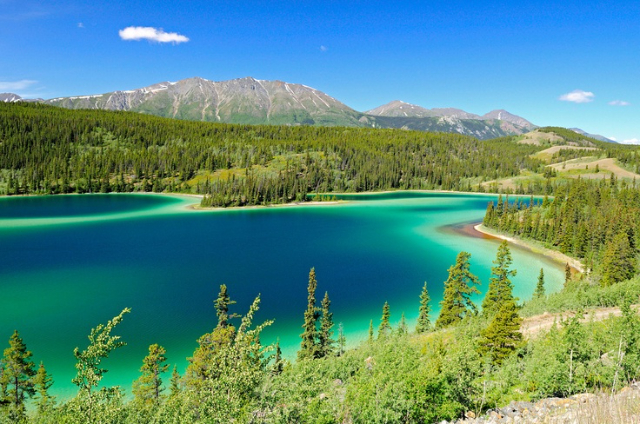
Nestled in the heart of the Yukon Territory, Emerald Lake is a breathtaking natural wonder renowned for its vibrant, jewel-toned waters. Located about 72 kilometers north of Skagway, Alaska, this picturesque lake is a mesmerizing sight that captivates visitors with its unique color palette and serene surroundings. The lake's stunning hues are due to the light reflecting off a white layer of marl—calcium carbonate clay—deposited at the bottom.
The area around Emerald Lake holds a rich tapestry of history. It lies along the historic Klondike Highway, a route forged during the Klondike Gold Rush of the late 19th century. This event marked a significant period when thousands of prospectors surged through this region of the Yukon in search of fortune. The nearby town of Carcross, originally named Caribou Crossing, was a pivotal stop for these gold seekers. Today, remnants of this era can be glimpsed in the preserved buildings and artifacts that tell tales of adventure and ambition.
While Emerald Lake itself is untouched by human construction, the nearby town of Carcross boasts distinctive art and architecture. The town features the Carcross Commons, adorned with vibrant murals and carvings by the Tagish and Tlingit peoples. These artworks embody the spirit and traditions of the local Indigenous cultures, showcasing intricate designs that reflect their deep connection to the land and its stories.
The local culture and traditions of the Yukon are deeply influenced by Indigenous heritage. The Tagish and Tlingit communities hold various cultural festivals throughout the year, such as the Adäka Cultural Festival in Whitehorse, which celebrates Indigenous arts and culture through performances, workshops, and exhibitions. These events offer a vibrant glimpse into the rich tapestry of traditions, where storytelling, music, and dance play significant roles.
Visitors to the region should not miss the opportunity to indulge in the gastronomy of the Yukon. While the remote location may not boast a vast array of dining options, the local fare is steeped in tradition and flavor. Wild game, such as caribou and moose, often features prominently on menus. For those with a sweet tooth, the locally sourced birch syrup—a Yukon specialty—adds a unique twist to desserts and can be found in local shops.
Among the lesser-known curiosities of Emerald Lake is its unique natural phenomenon. The vibrant green and blue hues of the lake are most vivid in the summer months, when the sun is high, and the light interacts with the minerals in the water. The marl deposits, formed from the remains of ancient marine life that once inhabited the area, create an otherworldly spectacle that can be seen from the highway above, offering a perfect photo opportunity that many might overlook.
For those planning a visit, the best time to explore Emerald Lake is during the late spring to early autumn months, when the weather is mild, and the roads are accessible. Summer offers long daylight hours, perfect for capturing the lake's colors at their peak. Travelers should consider bringing a camera with a polarizing lens to capture the full spectrum of hues without the glare of the sun.
When visiting, keep an eye out for wildlife that frequently graces the area. The surrounding forests are home to a variety of animals, including bears, moose, and eagles. Visitors are advised to maintain a safe distance from wildlife and to follow guidelines for responsible viewing.
In essence, Emerald Lake is more than just a pretty face. It is a vibrant testament to the natural beauty and cultural richness of the Yukon Territory. The lake's striking colors, coupled with its historical significance and cultural depth, provide a multi-faceted experience that enchants all who visit. Whether you're a history buff, nature enthusiast, or cultural explorer, Emerald Lake offers a unique slice of the Yukon that promises to leave a lasting impression.
