



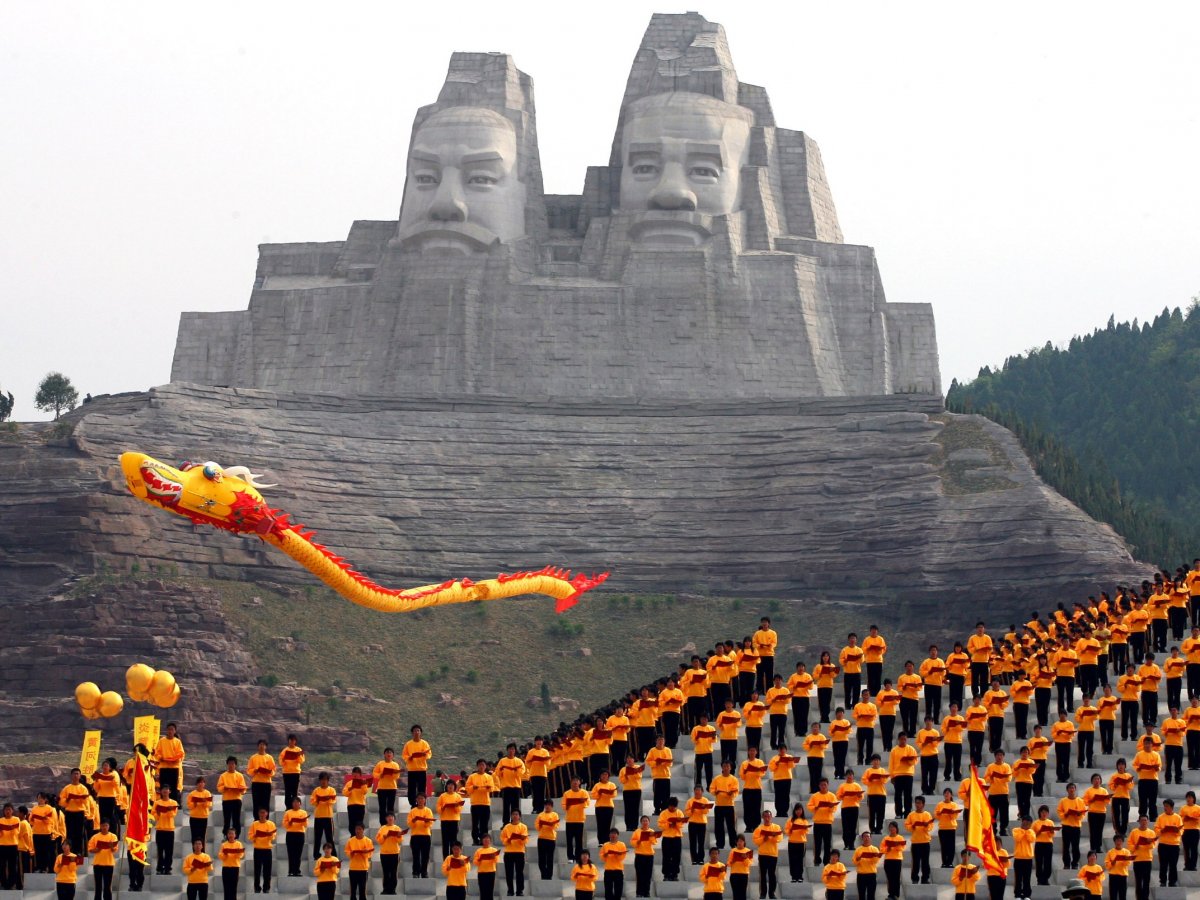
In the heart of Henan province, Zhengzhou is home to an awe-inspiring tribute to two pivotal figures in Chinese history: the Emperors Yan and Huang. These monumental sculptures, standing a staggering 106 meters tall, were constructed over two decades, from 1987 to 2007, at a cost of approximately $22.5 million. This remarkable feat of art and engineering commemorates the legendary emperors who are often credited as the founding fathers of Chinese civilization.

### History and Origins Emperors Yan and Huang, also known as Yandi and Huangdi, are revered figures in Chinese mythology and history. Yan is often associated with agriculture and the cultivation of rice, while Huang is celebrated as a pioneer of Chinese medicine and governance. The legends surrounding these emperors date back thousands of years, with their stories intricately woven into the fabric of Chinese culture.
The construction of these statues was initiated in the late 20th century to honor their contributions and to promote national pride. The site, located in Zhengzhou, was chosen not just for its historical significance but also for its accessibility, allowing visitors from across the nation to pay homage to these iconic figures.
### Art and Architecture The Yan and Huang Statues are not merely sculptures; they are masterpieces of modern architecture. Each statue features intricate details that reflect traditional Chinese artistry. The eyes of these statues measure an impressive 3 meters wide, while their noses stretch 6 meters, symbolizing the larger-than-life personas of the emperors.
Constructed from reinforced concrete and bronze, the statues embody a blend of ancient artistic styles and contemporary engineering techniques. The surrounding park area enhances the experience, offering lush landscapes and serene walking paths that invite reflection on the rich history embodied by these figures.
### Local Culture and Traditions Zhengzhou is a city where ancient traditions meet modern life. The presence of the Yan and Huang statues plays a significant role in local culture, serving as a focal point during various cultural festivals. One notable event is the Chinese New Year, where locals gather to offer prayers and celebrate with traditional performances, showcasing dance, music, and martial arts that hark back to ancient times.
Additionally, the area is steeped in local customs, such as the practice of ancestor worship, which underlines the importance of history and heritage in Chinese society. Visitors may observe offerings left at the feet of the statues, a testament to the respect and reverence the locals hold for their ancestors and cultural heritage.
### Gastronomy A trip to Zhengzhou would be incomplete without indulging in the region's gastronomy. The city is famous for its Henan cuisine, characterized by rich flavors and hearty dishes. One must-try dish is Huang Men Ji, a fragrant chicken stew that reflects the culinary traditions of the region. Another local favorite is steamed buns filled with various ingredients, a beloved snack among residents.
For those with a sweet tooth, don’t miss out on Chinese pancakes filled with sweet red bean paste or the delightful Sesame Seed Cake. Pair these dishes with a cup of Huangshan tea, known for its rich aroma and taste, to experience the local flavors fully.
### Lesser-Known Curiosities While the grandeur of the Yan and Huang statues is well-known, there are lesser-known aspects that often escape the attention of tourists. For instance, the site includes several smaller sculptures that depict scenes from the emperors' legendary stories, offering deeper insights into their lives and the values they represented.
Another intriguing detail is the park's design, which is meant to resemble a dragon, a symbol of power and strength in Chinese culture. This design choice adds an additional layer of cultural significance to the site, making it not just a place of remembrance but also a space that embodies the essence of Chinese mythology.
### Practical Visitor Information The best time to visit the Emperors Yan and Huang statues is during spring (April to June) and autumn (September to November) when the weather is mild and the park's scenery is at its most beautiful. To make the most of your visit, consider arriving early in the day to avoid crowds and to enjoy the peaceful atmosphere.
When exploring the site, take your time to walk around the statues and admire the intricate details. Don’t forget your camera; the statues are particularly stunning during the golden hour, when the sunlight casts a warm glow over their impressive forms.
In conclusion, Zhengzhou's Emperors Yan and Huang statues offer a powerful glimpse into China's rich history and cultural heritage. To plan a personalized itinerary that captures the essence of this remarkable place, consider using the Secret World app for an unforgettable experience.
