
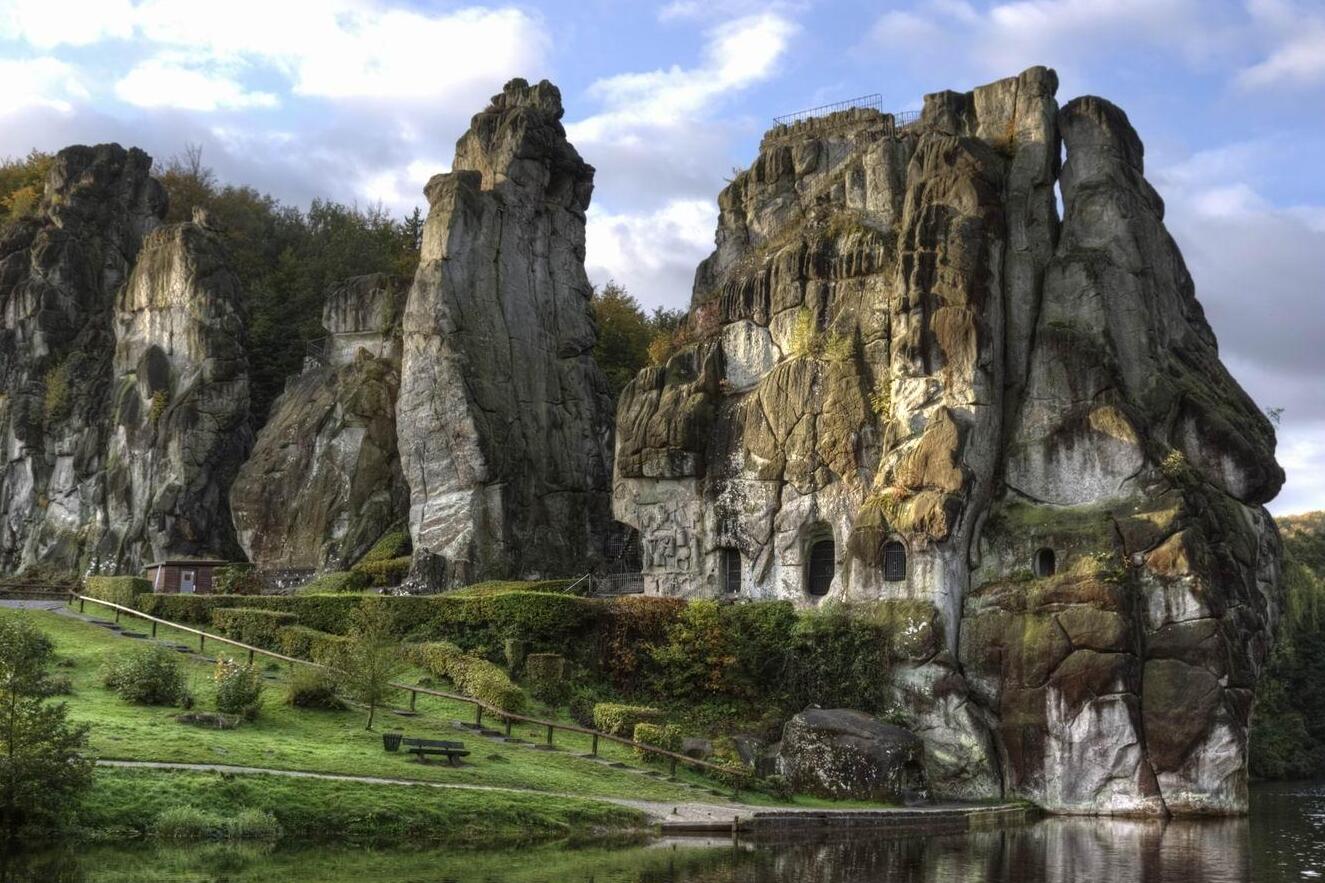

Externsteine ഒരു ദുരൂഹ rock formation സമീപം Ostwestfalen-Lippe-ൽ വടക്കുപടിഞ്ഞാറൻ Germany. In an area that is largely void of massive stone structures, the uniqueness of ഈ soaring columnar rocks is what makes them especially interesting. പല സിദ്ധാന്തങ്ങൾ പെരുകുന്നു ഈ കുറിച്ച് വളരെ രസകരമായ സൈറ്റ് located on the വടക്കുകിഴക്കൻ slope of the Teutoburger Wald, the place that the Romans were defeated by ജര്മ്മന്കാര് 9 CE.
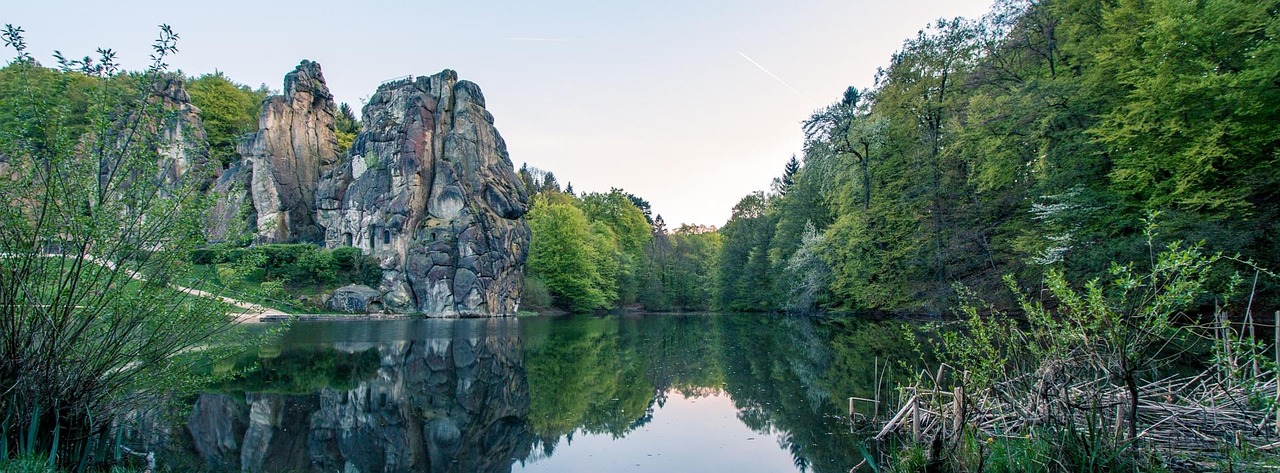
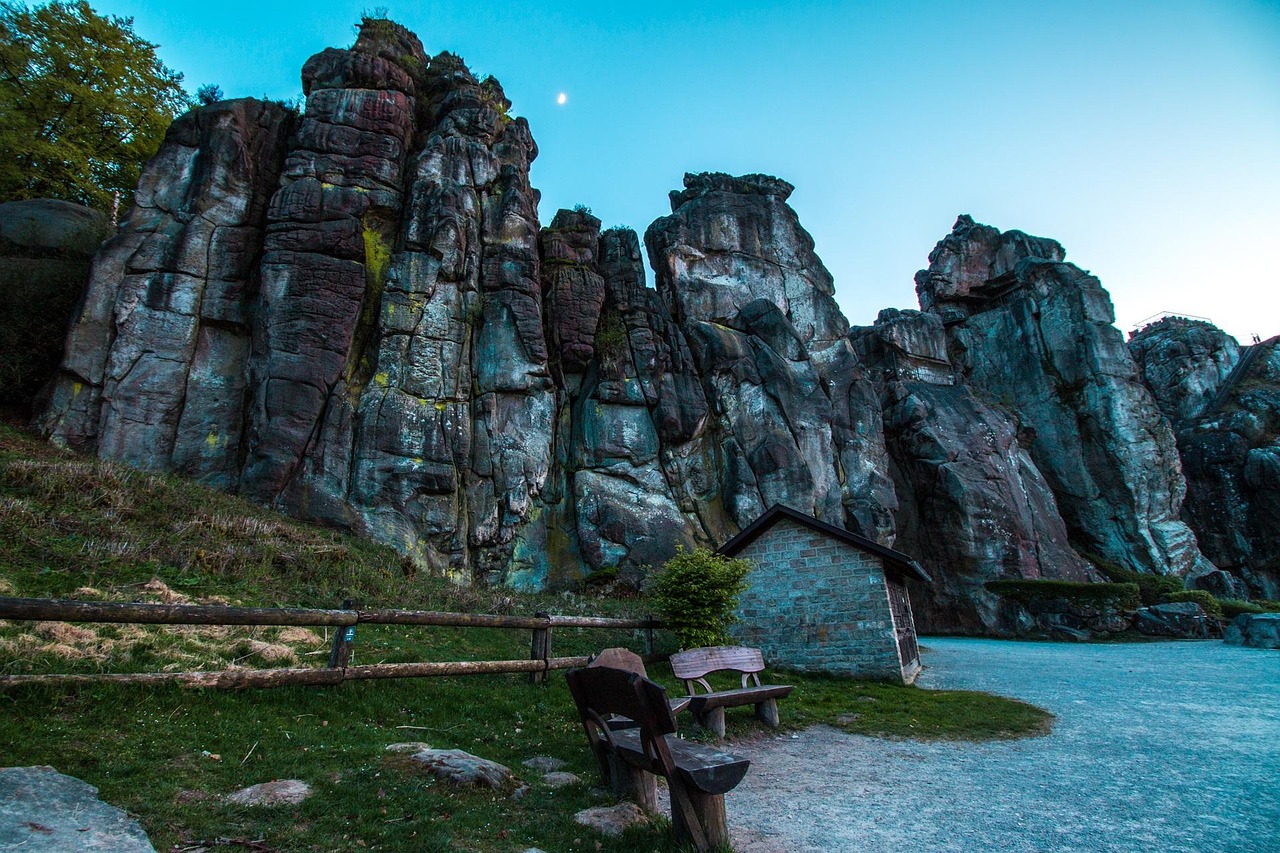
രൂപീകരണം ഒന്നിലധികം free-standing കല്ല് ഈമാന് stretches for several hundred meters. In total, there are 13 stone structures. The സ്ഥാപിത പേര് പ്രാദേശികം ബാഹ്യ - അവ്യക്തമാണ് (-steine അർത്ഥം "കല്ലുകള്" അല്ലെങ്കിൽ "റോക്ക്സ്"). The Latinized spelling with x first recorded in the 16th century, but became സാധാരണ only in the late 19th century.
ചെന്ന രേഖപ്പെടുത്തിയിട്ടുണ്ട് രൂപങ്ങൾ പേര് വായിച്ചു Agistersten and Eggesterenstein, രണ്ടും dated 1093. മറ്റ് രൂപങ്ങൾ പേര് ഉൾപ്പെടുന്നു Egesterenstein (12th century), Egestersteyn(1366), Egersteyne (1369), Egestersten (1385), Egesternsteyn (15th century), Eygesternsteyn (151), Externsteine (1533), Egesterennstein (1583), Agisterstein (1592).
ഒരു പ്രശസ്തമായ tradition going back to an idea proposed to ഹെർമൻ Hamelmann in 1564, the Externsteine are identified as a sacred site of the പേഗൻ Saxons, and the location of the Irminsul വിഗ്രഹം reportedly destroyed by കൊച്ചുത്രേസ്യ.
One thing is certain, നിന്ന് വളരെ ആദ്യകാല തവണ ഈ സ്ഥലം ആയിരുന്നു. വളരെ പവിത്രമായ സ്പോട്ട് പല ഗോത്രങ്ങളും. പുരാവസ്തു ഖനനങ്ങൾ have വഴിവച്ചു ചില Upper Paleolithic stone tools ഡേറ്റിംഗ് കുറിച്ച് 10,700 BC from 9,600.ബി. സി. കീഴെ ഒരു റോക്ക് overhang ന് റോക്ക് VIII, microliths നിന്ന് Ahrensburg സംസ്കാരം അത്തരം arrow heads or blades were found. തെളിവുകൾ ഒന്നും തീ സൈറ്റുകൾ was also found. കൂടുതൽ ചേർത്ത് അതിന്റെ പവിത്രമായ കണക്ഷൻ, Externstein ബന്ധപ്പെട്ടിരിക്കുന്നു archaeoastronomical അഭ്യൂഹം; ഒരു വൃത്താകൃതിയിലുള്ള കുഴി മുകളിൽ "നീ കല്ല്" in the Höhenkammerhas been identified in this context as നേരിടുന്ന ദിശയിൽ സൂര്യോദയ സമയത്ത് summer solstice.


